News
As the Coalition fractures over climate action, Anthony Albanese tells The Saturday Paper he believes it is the No. 1 issue for many voters. By Karen Barlow.
‘What the hell is this?’: Inside the Coalition’s climate division
Anthony Albanese says the Coalition has given up on the votes of anyone who cares about climate action.
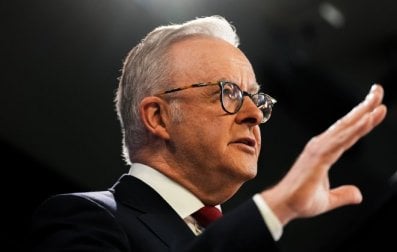
“They’ve abandoned seeking the vote of anyone who is serious about climate change,” the prime minister told The Saturday Paper this week.
“And that is right across seats. For many Australians, climate change is the No. 1 issue, and the complete abandonment of any serious policy by the Coalition after the decade of neglect will make it impossible to receive support from those voters.”
Peter Dutton and colleagues insist they are still fighting to win back inner-city seats lost at the last federal election, but they believe the contest will be over cost of living.
Dutton did not speak to other Liberals before telling The Weekend Australian that Australia’s goals under the Paris Agreement were “unattainable”. The interview implied he would not attempt to meet the country’s 2030 emission reduction target. It was met with alarm inside the party.
https://www.youtube.com/watch?v=1BJ_a5BNqCI
“I was like, ‘What the hell is this?’ And I’m sure I wasn’t the only one,” Liberal MP Bridget Archer told The Saturday Paper.
“None of it’s been to the party room or anything. We should hold the government to account. Not walk away from the targets.”
Since last weekend, Dutton has pulled back on his rhetoric, saying he was just stating his view that Labor has “no hope” of achieving the legislated 2030 target to cut carbon emissions by 43 per cent from 2005 levels – a charge the Albanese government rejects.
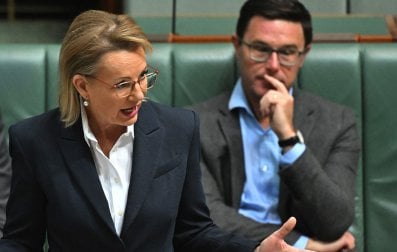
“Our approach to climate targets have not changed,” the Coalition’s shadow minister for climate change and energy, Ted O’Brien, told The Saturday Paper this week.
“We are holding the government to account for failing on the targets they have signed Australia up to. Emissions have not gone down under this government.”
O’Brien had to ring around “many people inside and outside of the party” after the Dutton interview and subsequent reporting.
“I want all and sundry to know that the Coalition remains committed to Paris and committed to net zero,” he said. “But we will not tolerate a government which is lying to the Australian people about emissions reduction.”
Dutton said his vision for net zero emissions by 2050 would be driven by nuclear power delivered by 2040 at the earliest.
Adding to his long-teased nuclear power policy, the opposition leader is not committing to a new Coalition 2030 climate target until after the next election. The government, under the Paris Agreement, will have to come up with a 2035 target by February, which may or may not be before the election.
“It’s more of denial and delay,” Albanese said. “And in the meantime, coal-fired power stations will continue to close, as occurred on their watch, without any plan to replace them.”
The prime minister points out that nuclear power costs eight times more than firmed renewables. “It’s extraordinary that they continue to ignore the science but they [are] also ignoring the economics, which everything says that is critical.”
There are members of the Coalition, such as the Nationals’ Barnaby Joyce and Matt Canavan, who want no part of the longer term 2050 target.
“My position hasn’t changed. I think we should get out of Paris. I don’t think it’s a good deal,” Canavan told The Saturday Paper.
“You do have these ridiculous ratcheting revisions, which notionally prevent the country from going backwards on previous commitments, even if that’s the democratic will of its people. It is quite an anti-democratic agreement.
“And then, of course, we just got the situation where we’re getting scammed effectively from China and India, Indonesia, who are doing nothing to reduce their emissions. Quite the opposite. And we’re losing jobs to them.”
O’Brien said Canavan’s view was freedom of speech and not the finalised position of both the Liberal Party and the National Party.
Neither he nor Dutton have confirmed whether the shift from the set Coalition government policy of 26-28 per cent reduction by 2030, a target that was reached in 2021-22, went through shadow cabinet or the party rooms.
On Wednesday, the opposition leader explained that a position on the government’s mid-term target was established when the party room agreed to oppose the Labor legislation in 2022. Archer crossed the floor to vote with the government.
“So, we had that discussion, and we were very clear about that at the time,” Dutton said.
While there is some alarm, there is also confusion. “I sort of think it’s been over-reported or misreported or something,” one unnamed Liberal said, before offering, “almost everyone supports the new policy”.
Archer pointed out it was a legislated target. “So, if you are planning, I would say, if you were planning on legislating something else, shouldn’t you take that to an election?” she told The Saturday Paper.
Dutton said an elected Coalition government would “make sure that we meet our international obligations”. As Canavan said, however, signatory countries cannot lower their carbon reduction targets, so it is not certain where a revised Coalition target could land.
No matter who wins the next election, electoral maths are clear that there will be a progressive Senate cross bench hostile to climate inaction and the repeal of Australia’s nuclear bans.
Liberal frontbencher Andrew Bragg, who has said publicly it is important to show Australians the pathway to net zero, backs his leader as doing a “really good job”, while accepting the new policy is electorally risky.
“I think everyone accepts there’s a level of risk here, sure, but I’d sort of rather we have our own plan than be a beige imitation of everyone else,” Senator Bragg told The Saturday Paper.
“I think it’s been blown out of proportion, that’s my sense. I don’t think people are going to vote on a 2030 target. I just don’t.”
Climate scientists and advocacy groups want nations to stick to commitments and increase them in line with warnings about the current trajectory on emissions. May 2024 was the 12th straight month of record-warm temperatures around the world.
Albanese has been readying for this fight since the end of the Howard years, when an Australian nuclear power industry was last seriously put forward and he was Kevin Rudd’s infrastructure spokesperson.
Labor is facing its own questions over departing from coal and gas, but the drill down on Coalition policy means it is taking a back seat.
“They’re asking Australians to vote for them first, and then they’ll tell them what they’re voting for. That’s not the way that democracy functions,” Albanese told The Saturday Paper.
“We have a credible plan based upon the safeguard mechanism … the new vehicle efficiency standards, the Capacity Investment Scheme, all of which they have opposed. They have opposed any [climate] policies, which is why they now have abandoned a target.”
In 2007, Labor successfully campaigned against nuclear power while in opposition, focusing on Australians’ right to know where the power plants would be built.
“It’s the Montgomery Burns solution for Australia’s future climate change challenge,” Rudd said at the time, referencing The Simpsons character.
That campaign may pale next to what is likely being cooked up by Labor in government, according to former Liberal strategist and RedBridge Group pollster Tony Barry.
“The scare campaign writes itself – guys in hazmat suits, people walking around with pretend Geiger counters, pretend nurses handing out pretend iodine tablets,” Barry told The Saturday Paper. “There’ll be 44-gallon drums dressed up as radioactive waste that are leaking. Young Labor are going to be exhausted by the end of this campaign, but I imagine they will have a lot of fun.”
It won’t be all laughs, however. “The federal members, who will be hosting these nuclear power plants if the Coalition wins, need to be 100 per cent certain that in the heat of the campaign, and in that final week, they can hold the line without the tiniest concession,” Barry said. “If there’s even the slightest equivocation by the MPs and candidates, the media will be all over it.”
The only path to Coalition victory includes the recapture of the inner-urban, relatively prosperous seats that were lost over the past two elections to independent professional women propelled by community-based campaigns on platforms of climate action, integrity and gender equality.
The independent MPs, such as Sophie Scamps and Kylea Tink, have joined the likes of former Liberal prime minister Malcolm Turnbull in saying any roll back on climate action will further alienate voters lost to the Liberals in 2022.
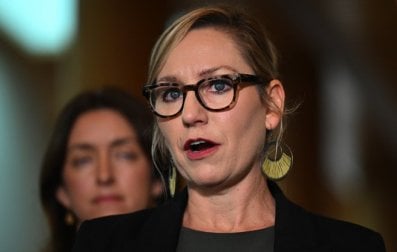
“This really is bad politics driving bad policy,” Tink told The Saturday Paper.
“If they continue to pursue this course of action, I think it’s the Liberal–National Party that’s going to see their own extinction, because it’s showing they are completely out of touch with what a forward-focused economy needs to look like.
Dutton’s position is “of course we can” win back the seats. He has launched an attack on the independents as “Greens who vote
with Labor” and who are not in touch with average voters.
“Monique Ryan is a Green. She’s not a disaffected Liberal. She is a Green,” he said. “And I think she’s completely disconnected with where families are in Kooyong at the moment.”
When The Saturday Paper put the teal seat conundrum to another Coalition member, who asked to remain anonymous, they said the Liberal Party and Nationals were on a “journey to 2050”.
“We believe we have to have a credible kind of pathway to get there,” they said.
“People will forget Scott Morrison’s role in the teal seat turn. Teal seats are still struggling with cost of living, particularly as the percentage of renters has gone through the roof.
“I think people have had up to their back teeth of fake promises. So will it take longer? Yes. Will Labor under their plan have to keep coal-fired power stations open longer than they’ve said? They will.”
According to Tony Barry, it is “lazy or delusional to blame everything on Scott Morrison”, but he agreed cost-of-living pressure was so acute everyone saw everything through the prism of “Now, what is this going to cost me?”
Albanese argues renewables are the cheapest form of energy and cost of living is best dealt with through energy supply.
“You have to make sure that renewables can be connected up with the grid. You have to make major emitters reduce their emissions, which is what the safeguard mechanism is aimed at doing. And you need to plan for economic growth, which is what the Future Made in Australia plan is about,” he told The Saturday Paper.
“This is about cost of living, as well as lowering emissions and ensuring that Australia is set up for the jobs in regional Australia as well as the cities.”
Liberal MP and former Coalition minister Karen Andrews sees the effects of higher costs in the community translating to lower levels of political engagement.
“One, people are sick of the political argy-bargy. Two, people have got more things on their minds. And three, that’s very personal what they’ve got on their mind because it’s taking more of their attention,” she told The Saturday Paper.
“Am I going to feed myself? How am I to clothe myself? How am I going to get my kids to school? Kids looked after?”
Dutton talks about destroying the economy through pursuing renewable energy, but there’s a cost of at least $121 billion, according to the Clean Energy Investor Group (CEIG), if climate and energy targets are lost and investor confidence is affected.
“Energy targets are a key mechanism to encourage investment in renewable energy,” the group’s interim chief executive, Marilyne Crestias, told The Saturday Paper.
“Looking at the estimates that were provided by the [Australian Energy Market Operator], there is around $121 billion worth of investment at risk, and that’s generation storage, firming and transmission based on their latest integrated system plan.
“That’s the investment that we need between now and 2050 to decarbonise the grid, based on the sort of currently agreed scenario that only gets us to 1.8 degree of warming.”
Albanese is confident Labor’s climate policies will connect with voters. He is equally confident the Coalition’s will alienate them.
“It is extraordinarily irresponsible,” he said, “that after up to 22 failed energy policies, none of which were landed by the former government, they’re now seeking to again go back to nothing happening.”
This article was first published in the print edition of The Saturday Paper on June 15, 2024 as "‘What the hell is this?’: Inside the Coalition’s climate division".
For almost a decade, The Saturday Paper has published Australia’s leading writers and thinkers. We have pursued stories that are ignored elsewhere, covering them with sensitivity and depth. We have done this on refugee policy, on government integrity, on robo-debt, on aged care, on climate change, on the pandemic.
All our journalism is fiercely independent. It relies on the support of readers. By subscribing to The Saturday Paper, you are ensuring that we can continue to produce essential, issue-defining coverage, to dig out stories that take time, to doggedly hold to account politicians and the political class.
There are very few titles that have the freedom and the space to produce journalism like this. In a country with a concentration of media ownership unlike anything else in the world, it is vitally important. Your subscription helps make it possible.
Subscriber exclusive
Send this article to a friend for free.
Share this subscriber exclusive article with a friend or family member using share credits.