News
After 1901 days in London’s Belmarsh prison, Julian Assange is now back in Australia and a free man. What does his show trial, conducted by the US on a small Pacific island, mean for the future of courageous journalism? By Mike Seccombe.
Julian Assange’s fight for freedom and what it means for journalism
A few elements are common to the varying dictionary definitions of a show trial: it is staged for political purposes, it delivers a predetermined outcome, it involves a forced confession to crimes that have not been committed and it is intended to strike fear into potential dissidents.
By any definition, says Geoffrey Watson, SC, the proceedings conducted on Wednesday in a court on the tiny United States territorial outpost of Saipan in the western Pacific Ocean, which saw WikiLeaks founder Julian Assange convicted of breaching the United States Espionage Act, was “absolutely” a show trial.
https://www.youtube.com/watch?v=qEbw5-RLclM
“It was textbook,” says the barrister and director of the legal think tank the Centre for Public Integrity. “Assange was forced to plead guilty to something that wasn’t true,” he says.
Watson is among those who believe Assange was guilty of no more than journalism. Many others don’t, but that doesn’t undermine his argument. Wednesday’s court proceeding was, he says, “not an exercise in law but in diplomacy”.
Theoretically, Ramona Villagomez Manglona, the US chief judge of the District Court for the Northern Mariana Islands, had discretion in sentencing. In reality, the outcome was determined long before Assange was released after 1901 days in London’s Belmarsh prison and flown halfway around the world.
Instead of facing a potential 175 years in US prison on multiple charges relating to the disclosure of some hundreds of thousands of classified or sensitive military and diplomatic documents, Assange would plead guilty to a single count: conspiracy to obtain and disclose national defense information.
He would be sentenced to time already served and released to return to Australia. All this was painstakingly negotiated in advance.
It suited the governments of three nations, the United Kingdom, the US and Australia, that the 14-year saga should come to an end.
The show simply required a confession.
Judge Manglona made doubly sure the US authorities got one. She asked Assange if he was pleading guilty because he was “in fact guilty of that charge”. After a significant pause, he replied, “I am.”
She pressed him to elaborate on “what it is you did” that led to the guilty plea.
“Working as a journalist I encouraged my source to provide information that was said to be classified in order to publish that information. I believed the first amendment protected that activity, but I accept that it was ... a violation of the espionage statute.
“I believe the First Amendment and the Espionage Act are in contradiction with each other, but I accept that it would be difficult to win such a case given all the circumstances,” said Assange.
It was really not much of a confession, more an exposition of the issues at the heart of the prosecution.
The indictment said Assange had “[f]rom at least 2009 and continuing through at least 2011, in an offense begun and committed outside of the jurisdiction of any particular state or district of the United States … knowingly and unlawfully conspired with Chelsea Manning … to receive and obtain documents, writings, and notes connected with the national defense, including such materials classified up to the SECRET level [and] willfully communicate” them.
He had received from Manning, a US Army intelligence analyst, hundreds of thousands of classified or sensitive military and diplomatic documents, some of which implicated the US in war crimes.
Manning was the source of a video that went viral on its release, showing US helicopter gunships firing on a group of civilians, including two Reuters journalists, killing eight people. WikiLeaks called the video “Collateral Murder”.
Manning was convicted of 17 charges under the Espionage Act and sentenced to 35 years’ imprisonment; however, her sentence was commuted after seven years, in January 2017, by then US president Barack Obama. She maintained she acted of her own volition and had offered documents to The Washington Post and The New York Times before contacting WikiLeaks.
Assange released the “Collateral Murder” video on April 5, 2010, during a press conference at the National Press Club in Washington, DC. Subsequently, WikiLeaks partnered with several mainstream media organisations, including The New York Times, The Guardian, Der Spiegel, Le Monde and others, in releasing the documents.
Which raised very big questions. Was Assange acting, as he has always maintained, and told Judge Manglona again on Wednesday, as a journalist? If he was, why did the US government go after only him? And what does the prosecution of Assange mean for the First Amendment of the US Constitution, which is supposed to protect freedom of the press?
For, as he told the judge – rather bravely under the circumstances – there appears to be a contradiction between the First Amendment and the Espionage Act.
The Obama administration wrestled with this. How could they charge Assange under the act but not the major news organisations that published documents obtained by WikiLeaks?
No espionage charges were laid – although Assange feared they would be – and in mid 2012 he sought asylum in the Ecuadorian embassy in London. The headline reason was he was seeking to avoid arrest on rape charges laid in Sweden, but he claimed those complaints were part of a devious plot to get him extradited to Sweden and from there to the US. He stayed in the embassy for seven years.
During that time, WikiLeaks continued to publish. Most controversially, during the 2016 US election it released thousands of emails stolen from the Democratic Party by Russian hackers, which were particularly damaging to then presidential candidate Hillary Clinton.
It was not until mid 2019, under then president Donald Trump, that Assange was indicted on 18 charges. Ecuador rescinded his political asylum and kicked him out, and he was immediately arrested for having breached bail in relation to the rape allegations – the last of which was promptly dropped – and incarcerated in HM Prison Belmarsh.
There he remained until this week, as his lawyers fought the long battle to prevent his extradition.
While the case got bogged down in British courts of law, Assange was winning in the court of public opinion – and in political terms.
The push to have him freed began at the political fringes. In the US some right-wing Republicans saw the pursuit of Assange as yet another example of over-reach by the deep state. Some on the progressive side of the Democratic Party saw the threat to freedom of speech and the press.
The pattern was similar in Australia. A parliamentary support group for Assange was set up in 2019 with, as co-founder Andrew Wilkie noted this week, “just a couple of members”.
“But it’s grown to 47 members and senators, from right across the political spectrum … from the hard left through the hard right and everything in between,” says the Tasmanian independent MP.
Mostly, though, early support came from the ideological edges. The power centre of politics – which until May 2022 was the Morrison government – was largely unmoved by Assange’s plight, even as it became clear his physical and mental health were deteriorating in the notoriously harsh Belmarsh, where he was locked in solitary 23 hours a day, in a two-metre by three-metre cell.
The Labor side of politics, though, was increasingly vocal in support of the Australian citizen.
On January 5, 2021, in response to a British court decision – subsequently appealed – that it would be unjust to extradite Assange to the US, then shadow attorney-general Mark Dreyfus released a statement calling on the Morrison government “to do what it can to draw a line under this matter and encourage the US Government to bring this matter to a close”.
Dreyfus noted that Obama had commuted Chelsea Manning’s prison sentence two years earlier.
“Given his ill health it is now time for this long drawn out case against Julian Assange to be brought to an end,” said Dreyfus.
Morrison was dismissive. “The justice system is making its way and we’re not a party to that,” he said that same day.
The long years of inertia ended with the change of government. Dreyfus, Minister for Foreign Affairs Penny Wong and, most importantly, Prime Minister Anthony Albanese pressed their US counterparts to bring the matter to an end.
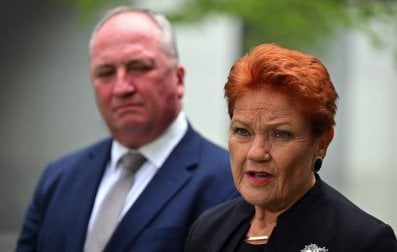
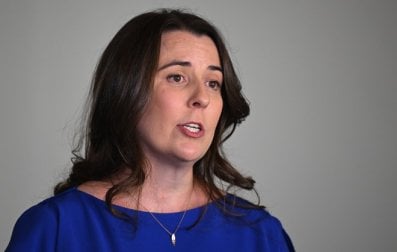
Last September a politically diverse delegation – comprising former Nationals leader Barnaby Joyce, Labor’s Tony Zappia, Liberal Alex Antic, independent Monique Ryan, and Greens senators David Shoebridge and Peter Whish-Wilson – went to Washington to lobby for Assange to be freed.
In January, Jennifer Robinson, the Australian barrister who has acted for Assange since 2010, warned he was suffering major depressive illness “and the medical evidence is if he was extradited to the United States those conditions would cause him to commit suicide.
“So his life is at risk, and I am not exaggerating that,” she said.
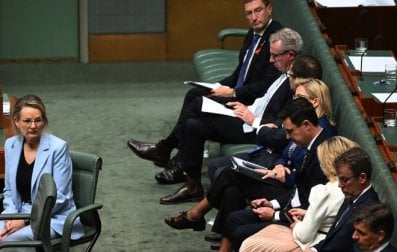
In February this year, Andrew Wilkie moved a motion in the House of Representatives calling for Assange to be freed and returned to Australia. “We have just about run out of time to save Julian Assange,” he said.
The motion passed 86 to 42, with support from Labor, independent and Greens MPs. Some Coalition supporters of Assange, notably Barnaby Joyce, were absent. Peter Dutton and the other present Coalition MPs voted against, except one.
Tasmanian Bridget Archer, who is one of four co-chairs of the Bring Julian Assange Home parliamentary group (along with Wilkie, Labor’s Josh Wilson and the Greens’ David Shoebridge) crossed the floor to vote with the majority.
Morrison and Dutton notwithstanding, the pressure to end the persecution of Assange for revealing uncomfortable truths was becoming irresistible.
In April, US President Joe Biden was asked to respond to Australian pressure to end the prosecution. “We’re considering it,” he said.
As we now know, the US did not end the prosecution but instead agreed to a compromise that freed Assange. After the deal was done, Robinson was effusive in her praise for the Australian politicians and officials who helped to seal it.
She thanked the Australian ambassador to the US, Kevin Rudd, for his “adept diplomacy and his relentless efforts in Washington that facilitated our negotiations with the US government and ensured this outcome”.
She praised also Australia’s high commissioner to the UK, Stephen Smith, for his “tireless” pursuit of a solution.
Above all, she lauded Albanese “for his statesmanship, his principled leadership and his diplomacy”. Robinson revealed that in a phone conversation on Wednesday night, Assange told the prime minister: “You saved my life.”
She also spoke of the enormous cost of that deal – something the government has avoided addressing.
“The terms of the plea deal are, unfortunately, that he … had to choose to plead guilty to conspiracy to commit espionage for publishing evidence of US war crimes [and] human rights abuse.”
The prosecution, she said, set a precedent “that can be used against the rest of the media”.
“It’s important that journalists all around the world understand the dangerous precedent that this prosecution has set.”
The same point was driven home by another member of Assange’s legal team on Saipan, Barry Pollack, one of America’s leading trial lawyers.
“It is unprecedented in the United States to use the Espionage Act to criminally prosecute a journalist or a publisher. In the more than 100-year history of this law, it has never been used in this fashion. It is certainly our hope that it will never again be used in this fashion.”
This returns us to the vexed question of what qualifies a person to be a journalist or publisher in an age when one does not need a printing press or barrel of ink – only a keyboard and a cause.
In a statement released following Assange’s guilty plea, the US Justice Department argued he had not acted as a responsible journalist would, and as those various media organisations who partnered with WikiLeaks had, in that he had not redacted sensitive details before posting those thousands of documents.
“Assange’s decision to reveal the names of human sources illegally shared with him by Manning created a grave and imminent risk to human life,” the statement said.
“For example, the State Department cables that WikiLeaks disseminated included information from journalists, religious leaders, human rights advocates, and political dissidents who had chosen to provide information to the United States in confidence at significant risk to their own safety.”
As Judge Manglona noted, however, before she rubber-stamped the plea deal on Wednesday: “The government has indicated there is no personal victim here. That tells me the dissemination of this information did not result in any known physical injury.”
In the Justice Department’s view, Assange’s commitment to radical transparency disqualified him from the protection of the First Amendment – whether or not any actual harm was done to those named.
It is not hard to see how such a test could be abused to shut down all sorts of politically embarrassing reporting. And not just in the US, as evidenced by the indictment against Assange for “an offense begun and committed outside of the jurisdiction of any particular state or district of the United States”.
As Charlie Savage, who writes for The New York Times about national security and legal policy and who has reported on WikiLeaks, Manning and Assange since 2010, wrote: “The agreement means that for the first time in American history, gathering and publishing information the government considers secret has been successfully treated as a crime. This new precedent will send a threatening message to national security journalists, who may be chilled in how aggressively they do their jobs because they will see a greater risk of prosecution.”
Savage quoted Jameel Jaffer, executive director of the Knight First Amendment Institute at Columbia University, who said, “He’s basically pleading guilty to things that journalists do all the time and need to do.”
This is the price of Julian Assange’s freedom.
The Greens’ David Shoebridge does not judge Assange for accepting the plea deal.
“He spent 1901 days in basically solitary confinement. And during that time, he stood up to the United States – they wanted him in jail for life – and at different times his own government and the UK government. And he’s now got a deal that means he can walk free and spend time with his wife and his kids. I actually think that’s a win.”
He too acknowledges, though, the “chill this has sent to others who might think of blowing the whistle on powerful governments or powerful militaries”.
That is indeed the primary purpose of a show trial.
This article was first published in the print edition of The Saturday Paper on June 29, 2024 as "Free at last".
For almost a decade, The Saturday Paper has published Australia’s leading writers and thinkers. We have pursued stories that are ignored elsewhere, covering them with sensitivity and depth. We have done this on refugee policy, on government integrity, on robo-debt, on aged care, on climate change, on the pandemic.
All our journalism is fiercely independent. It relies on the support of readers. By subscribing to The Saturday Paper, you are ensuring that we can continue to produce essential, issue-defining coverage, to dig out stories that take time, to doggedly hold to account politicians and the political class.
There are very few titles that have the freedom and the space to produce journalism like this. In a country with a concentration of media ownership unlike anything else in the world, it is vitally important. Your subscription helps make it possible.
Subscriber exclusive
Send this article to a friend for free.
Share this subscriber exclusive article with a friend or family member using share credits.