News
Fatima Payman has confirmed she spoke with election strategist Glenn Druery before crossing the floor, as colleagues say her defection from the Labor Party was months in the making. By Karen Barlow and Jason Koutsoukis.
Inside the Fatima Payman defection
Fatima Payman’s decision to leave the Labor Party has been in the works for months. According to colleagues, it goes back as far as March.
“Obviously something was building before the budget. So, I think the timeline goes through a longer period,” one senior government figure told The Saturday Paper.
“That carefully organised press conference, the day after the budget … was not a spur of the moment thing. It can’t be anything other than deliberate.”
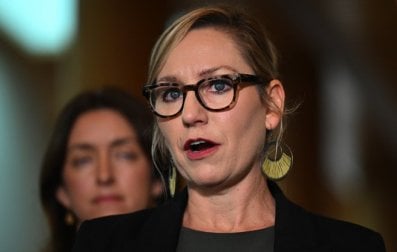
On Thursday, at a press conference in Parliament House, Payman was defiant and emotional as she announced her resignation from the party.
She said she was “deeply torn” but “compelled” to be the “true voice” for the diverse communities of Western Australia.
“On one hand, I have immense support of the ranking members, the unionists, the lifelong members, the party volunteers who are calling on me to hang in there and to make change happen internally,” she said.
“On the other hand, I am pressured to conform to caucus solidarity and toe the party line. I see no middle ground, and my conscience leaves me no choice.
“This definitely has been the most difficult decision of my life, and it has put me in a very tough position.”
She said, unlike her colleagues, she knew “how it feels to be on the receiving end of injustice” and accused the Albanese government of “indifference to the greatest injustice of our times”.
Payman rejected the prime minister’s assertion that she had not raised concerns about Gaza and the suffering of Palestinians in caucus. She says she has raised it on “multiple fronts” since November, including with the prime minister, the deputy prime minister, foreign affairs minister, caucus colleagues and her own Left faction caucus committee.
“I just felt,” she said, “that there was no place for me to continue these conversations and decisions were already made by the time it was brought to caucus.”
Payman confirmed she spoke to controversial election strategist Glenn Druery before she decided to cross the floor, but she insisted she decided to go against her party only while the divisions were taking place. She said she had received death threats and confronting emails since making the decision.
Payman confirmed she had conversations with other Muslim groups being advised by Druery but said she had not decided whether she might join one.
“For me, it was just purely a discussion that I had and I’m not going to go into details, but I do not, at this stage, I do not plan to form a party. And, you know, stay tuned.”
Before her defection, Labor colleagues such as Katy Gallagher, a leading Left faction figure and senior minister, had been offering support to the “exiled” senator. She did not return their calls.
“Many have reached out,” one MP said, while acknowledging it was obvious she wanted to leave the party. They said Labor had given her “cover” in a separate government motion supporting a two-state solution, but she chose to abstain and later cross the floor in support of the Greens motion on June 25. She was the first Labor member to vote against the party in almost 20 years, since Harry Quick in 2005.
The motion called for “the need for the Senate to recognise the State of Palestine”. It was defeated, as was a Labor amendment to make recognition “part of a peace process in support of a two state solution and a just and enduring peace”.
The member for Wills, Peter Khalil, whose Melbourne seat is a key target of the Greens, says he has spoken to Payman in the past about Gaza and he understands the pain in the Muslim community.
https://www.youtube.com/watch?v=rS9p4A-syQg&ab_channel=TheSaturdayPaper
“There is a real sense of pain about what is happening. It’s tragic,” he told The Saturday Paper. “We have voted multiple times in the United Nations for a ceasefire and for Palestinian membership in the UN. We have a position of Palestinian recognition based on peace, based on a two-state solution. We’ve increased our humanitarian aid. We’ve called for an end to the conflict time and time again.
“And the anger, if you’re talking about anger, may have been whipped up by a lot of the misinformation and disinformation that people are told different versions of this.”
Publicly, Labor members had been saying they would welcome her back into caucus, but privately they conceded Payman had long been withdrawing from the party.
The Saturday Paper understands that following her suspension this week, Payman stopped communicating with her office staff, believing they were too close to Labor. They had no insight into what she was planning to do.
A change in behaviour can be traced back to late March and April, according to several Labor figures, not long after Payman was married in Perth to WA Labor ministerial staffer Jacob Stokes. The February wedding was attended by WA Premier Roger Cook, Assistant Minister Patrick Gorman, Senator Jana Stewart and Senator Karen Grogan.
Labor sources says there was a change to Payman’s general activity on her social media feeds on March 29. On this day, she posted a statement clarifying “misconceptions circulating in the community” after she voted with Labor against a Greens motion on Australian exports to Israel. She insisted no Australian weapons had been supplied to Israel for at least the past five years.
“In light of the above, the Greens motion was nothing more than political manipulation, making claims that are not true,” she stated. “A vote on it was inconsequential.”
The week before the federal budget, activities ramped up. One Labor MP detailed disappointment with the Prime Minister’s Office, which had not seen the Payman controversy coming and allowed it to develop rather than addressing it.
On May 9, Payman broke from Labor lines to post: “We must hold the Netanyahu government accountable. There must be an end to the atrocities before this catastrophe reaches a point of no return.”
A day after the federal budget, on May 15, she again broke with Labor rhetoric, making a post that accused the Jewish state of genocide. She asked the prime minister directly for sanctions over Israeli actions in Gaza and ended with the call, “From the river to the sea, Palestine will be free.”
“My conscience has been uneasy for far too long and I must call this out for what it is,” she said.
Amid opposition calls for expulsion and Albanese’s attempts to show “restraint” in response, the prime minister said her words were “not what’s appropriate”.
On May 22, Payman was photographed at a university sit-in for Palestine in Melbourne, her fist raised in the air.
On May 30, she resigned from two parliamentary foreign affairs committees.
On June 17, she wrote an opinion piece for international broadcaster Al Jazeera urging Australia to “facilitate” peace and recognise Palestine, saying it was in a “strong position” to do so.
Eight days later, on June 25, she voted with the Greens on their motion to recognise Palestinian statehood.
On Sunday, June 30, she appeared on Insiders and said she would cross the floor again on the issue.
Following the broadcast, she was called to the Lodge for a conversation that Albanese described as “stern but fair”. She was suspended from caucus the same day.
“Yesterday, the prime minister suspended me indefinitely from the Australian Labor party caucus,” Payman said in a statement. “Since then, I have lost all contact with my caucus colleagues. I have been removed from caucus meetings, committees, internal group chats, and whips bulletins. I have been told to avoid all chamber duties that require a vote including divisions, motions and matters of public interest.”
Payman said she had been told to avoid chamber duties. She said she believed some members were attempting to intimidate her and force her to resign from the Senate. “I have been exiled.”
Speaking to the ABC this week, Albanese said: “Someone doesn’t just pop up on Insiders because they were walking past the studio on Sunday. Now, I asked for an explanation of why, what the motivation of that was. I haven’t received one.”
Payman later said Albanese gave her an ultimatum at the Lodge, to “either toe the party line and come back inside the tent or I give the position back to the Labor Party”.
The prime minister denies this ultimatum was given and Payman concedes she does not have a transcript of the conversation.
Labor MPs are filled with rage over what they say are Greens tactics to provoke division within the party. They are dumbfounded by Payman’s involvement with Druery, a political deal maker and consultant.
The Saturday Paper spoke to Druery, but he declined to comment. He noted, however, that there were “one million Muslim voters in Australia” and confirmed he was informally advising both Payman and a group called The Muslim Vote.
Druery has worked the upper house group-ticket system in various Australian parliaments for more than a decade to get micro- and minor-party candidates elected, sometimes with a remarkably low number of primary votes.
The Australian Motoring Enthusiast Party got a Senate spot for Victoria in 2013, for Ricky Muir, with a record low 0.51 per cent of the vote. Electoral reforms were passed in 2016 in an effort to stop this activity.
Other Labor figures say Payman is naive in her understanding of Labor rules and conventions available to raise issues. Solidarity is everything, they said. You don’t cross the floor, they say, but there are paths Payman could have taken to speak out with the party’s approval.
“The Greens motion achieved nothing for the rupture it has caused,” one pro-Palestinian Labor MP told The Saturday Paper.
“Everyone thinks the Greens are morally pure. The Greens just want to stuff Labor. They want to hurt Labor.”
The New South Wales co-convener of Labor Friends of Palestine, Anthony D’Adam, says branch members are “pretty distressed” about how the Payman matter has been handled.
“I think it’s just a tragic loss of a very capable, principled person for the Labor Party and I think Labor is the poorer as a result of it,” he told The Saturday Paper.
“I think we really need to just reflect on the kind of pressure we put on MPs. She is a young MP. She’s a new MP. She is a person from a culturally diverse background who the communities that she speaks to expect … to take a stand on this issue.
“She has been under enormous pressure to give voice to that community and we have done nothing to facilitate that. We have actively tried to stop her, and how can the Labor Party speak to these communities if we’re not prepared to allow those people that we put into parliament to represent those communities?”
Minister for Government Services Bill Shorten, a former Labor leader and powerbroker, says no one in Labor is critical of Payman’s views on Palestine and everyone should be allowed to bring their faith to Parliament.
He tells The Saturday Paper he is concerned, however, amid a fragmentation of politics around the world, about the people “organising around the promotion of one religion’s interests”. Specifically, he was referring to Muslim groups that have signalled they will run candidates in Labor seats.
“We want to make sure that people are able to practise their religion safely. So that’s all legitimate political debate,” Shorten says.
“But I worry if all of a sudden – and it’s not Islam, per se; it could be Hinduism, could be Pentecostals, it could be fundamentalist Christianity – I worry, though, that this country doesn’t need more fractures and frictions and fissures.
“And it seems to me the importation of arguments from elsewhere in the world.”
The Muslim Vote, a group that has been established to target Labor seats over the government’s handling of the war in Gaza, sees a chance with the usually safe Western Sydney seats held by Workplace Relations Minister Tony Burke in Watson, Education Minister Jason Clare in Blaxland and government whip Anne Stanley in Werriwa.
A separate Muslim Votes Matter website points to more than 20 seats where the Muslim community collectively has the “potential deciding vote” and highlights a significant Muslim percentage of voters in each target electorate.
“Our collective voting bloc is the most valuable, yet underutilised, asset we have,” it states.
The combined impact of the “Muslim vote” is untested, but as the teal independents and the independent outcome for the seat of Fowler showed in 2022, the threat to major parties cannot be discounted.
“Obviously, the margin would be with the Liberal Party,” political consultant Dean Sherr, a former adviser in Albanese’s office, told The Saturday Paper. “They have to get into the two-party contest.
“So, they need to peel off enough primary voters from both Labor and the Liberals, and other minor parties ... Then they need to get into the lead on the preferences of those other parties.
“The other kind of question would be what are the issues that they’re going to campaign on, especially to other voters who aren’t necessarily from the Islamic community? How will they be able to appeal and resonate with those people as well?”
Payman’s election in 2022, when she was 27, was as part of the most diverse federal parliament Australia has seen. Fifty-nine parliamentarians have non-English speaking ancestry and there is a record representation of women in both the House and the Senate. Of the 20 new caucus members, 10 were from culturally and linguistically diverse backgrounds.
“It’s the only party that has Jewish MPs and Muslim MPs in the federal parliament,” Sherr says.
“It’s the only one that has both on its front bench as well. But obviously, this is a really trying moment for Labor’s relationship with these two communities.
“I see the parallels between how both communities are feeling out there right now, but they feel very kind of isolated, they feel under siege.
“And the government has tried to, I think, play the kind of mature, balanced role, but they’ve been wedged in kind of both directions.”
Payman was a shock Labor winner in 2022. Such was the huge support for Labor in Western Australia, and in particular for then premier Mark McGowan, at the last federal poll, the ALP did not just pick up surprise House seats such as Tangney but snagged a Senate spot from the third position on the Labor ballot.
The United Workers Union asked Payman to run in 2021, but in a ballot spot that is usually there to prop up the numbers.
An unnamed Labor MP accused the union of not doing enough candidate “pre-checking”.
The Saturday Paper reached out to the United Workers Union, but a spokesperson said the union was not commenting on the Payman matter.
The daughter of an Afghan refugee who fled the Taliban in 1999, and arrived in Australia by boat, Payman spoke in her first speech of losing her father to leukaemia, of being made at university to feel like the “other” because of her hijab, and starting an “ambitious” journey in the union movement as a union organiser, through to the Labor Party. She was also president of Young Labor WA.
“I finally found a space where I felt seen, appreciated and like I belonged. I made friends with people who shared the same core values,” she said.
“As the daughter of a refugee who came to this land with dreams of a safe and better future, I gave myself that audacity to challenge the system and to see how far I would go, to see how much ground I could break, to see how much change I could initiate.”
She added: “I am small in stature, but my potential is limited only by how far my determination will take me. I am here to see that what matters to ordinary Australians is what matters to our politicians.”
This week, parliament rose for the five-week winter break, with MPs and senators told to go out and campaign as if the election had been called.
The opposition leader is putting Liberal and Nationals members on notice, warning an early election is a serious prospect due to inflation and Albanese’s decision not to attend the NATO summit.
While this is a possibility, there is a fairly full calendar for the rest of the year including the still expected royal visit by King Charles III around the Commonwealth Heads of Government Meeting in Samoa in October.
The Greens are setting off on a targeted doorknocking campaign for the next few weeks to urge MPs such as Khalil, Gorman, Ged Kearney, Graham Perrett and Justine Elliot to cross the floor over Gaza.
Khalil insists it won’t have any impact. Caucus solidarity, shaken by an extraordinary defection, has firmed again.
This article was first published in the print edition of The Saturday Paper on July 6, 2024 as "Inside the Fatima Payman defection".
For almost a decade, The Saturday Paper has published Australia’s leading writers and thinkers. We have pursued stories that are ignored elsewhere, covering them with sensitivity and depth. We have done this on refugee policy, on government integrity, on robo-debt, on aged care, on climate change, on the pandemic.
All our journalism is fiercely independent. It relies on the support of readers. By subscribing to The Saturday Paper, you are ensuring that we can continue to produce essential, issue-defining coverage, to dig out stories that take time, to doggedly hold to account politicians and the political class.
There are very few titles that have the freedom and the space to produce journalism like this. In a country with a concentration of media ownership unlike anything else in the world, it is vitally important. Your subscription helps make it possible.
Subscriber exclusive
Send this article to a friend for free.
Share this subscriber exclusive article with a friend or family member using share credits.