News
The prime minister’s slow reaction to supporting America’s unauthorised missile strikes on Iran’s nuclear sites shows the contradictions at the heart of Labor’s foreign policy. By Jason Koutsoukis.
Inside Labor’s response to the US strikes on Iran
The prime minister must have felt a certain amount of irony embedded in having to defend the strikes on Iran that the United States launched without explicit United Nations authorisation. A former staunch critic of the rationale that led America into Iraq in 2003, Anthony Albanese this week found himself reframing a violation of international norms as a necessary act of preventive self-defence.
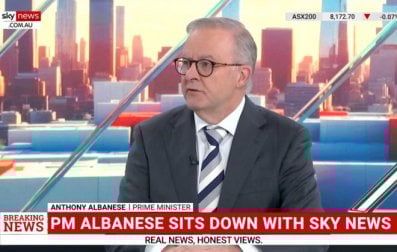
Albanese described the strikes as justified by the overriding imperative of nuclear nonproliferation. “What we want to see is the ceasefire announced by President Trump implemented,” he told Sky News on Tuesday. “We do want to see dialogue and diplomacy replace any escalation. And President Trump’s announcement we very much welcome.”
Asked why the endorsement of the US strikes took 24 hours – a delay that opened the door to criticism from opposition figures including former military officer Andrew Hastie – Albanese rejected accusations that his government’s response was slow or flat-footed.
“What my government does is act in an orderly, coherent way,” Albanese said. “We called for Iran to come to the table to ensure that the United States wouldn’t have to take the action which they did. The action that they took, we made clear that we supported action that would ensure that Iran couldn’t gain that nuclear weapon.”
Labor insiders push back on any suggestion the delay reflects any internal divisions over endorsement of the US action.
“The government has had no trouble to coming to its current position,” one government source tells The Saturday Paper. “This has not been a vexing issue at all.”
Albanese’s defence is grounded in consistency. Australia, he argues, has long maintained that Iran must be prevented from acquiring nuclear weapons, and the strikes were a response to that threat. But his language is careful – less a full-throated endorsement than a conditional approval tethered to the hope that diplomacy might still prevail.
That reticence reflects a deeper tension within Labor over its enduring commitment to the US alliance – the instinctive scepticism of unilateral force shared by some of the party’s most senior figures.
In 2003, as a young federal MP, Albanese was one of 41 Labor parliamentarians who wrote to then US president George W. Bush, warning that the war in Iraq set a dangerous and destabilising precedent. The other signatories still in the Labor caucus are Foreign Affairs Minister Penny Wong and Social Services Minister Tanya Plibersek – also from the party’s Left faction.
“The ALP firmly believes that international conflict should, wherever possible, be dealt with peacefully and through international co-operation under the auspices of the United Nations,” the 2003 letter warned. “What is to prevent other countries from following the example of our attack on Iraq, and arguing the right to preventative self-defence?”
That said, senior ministers view Iran as a fundamentally different proposition to Iraq: a theocratic regime that has, since the early 1980s, acted as a force for destabilisation across the Middle East and the Gulf, from Lebanon to Syria to Yemen.
Unlike the contested intelligence that underpinned the 2003 invasion of Iraq, Iran’s nuclear ambitions are, in the government’s view, well documented and accelerating – the product of more than a decade of calculated effort.
Albanese’s inner circle considers the prospect of Tehran acquiring a nuclear weapon intolerable not only for Israel but also for much of the surrounding region. The strikes, in that context, are seen as calibrated and deliberate – and, potentially, the beginning of an endgame. There is also the belief that this moment may offer a historic opportunity to reset the trajectory of the Iranian nuclear crisis and create space for a diplomatic resolution.
Cabinet ministers are also quick to distinguish the strikes on Iran from the war in Gaza, which they regard as a separate and more politically complex conflict. They point out that the Albanese government has taken steps critical of Israel – including recognising Palestinian statehood in principle, publicly condemning settler violence, and sanctioning two senior Israeli ministers.
There is, however, a historical pattern to Labor’s stance with respect to the US that can be read as structural rather than generational.
When Labor is in opposition, it often finds clarity in resisting American wars. Arthur Calwell defied the 1965 Vietnam commitment. Simon Crean also denounced the 2003 invasion of Iraq.
In opposition, Labor champions principle. In government, it manages power – as Bob Hawke did in 1990, when he swiftly committed Australian forces to the US-led coalition in the Gulf War, offering unambiguous support for American military action under the banner of international law. It is in the pivot between those positions that the contradictions of Labor’s foreign policy are most exposed.
That contradiction has only sharpened in the age of rivalry with China. Under Albanese, Labor has doubled down on the US alliance: expanding joint military facilities, committing to AUKUS and tightly aligning Australian foreign policy with Washington’s regional posture.
The space for dissent – once visible in debates over Vietnam and Iraq – has narrowed, yet the contradiction endures. A party shaped by opposition to past wars is again in government, defending another – and doing so in language that more closely echoes the White House than the UN General Assembly.
Albert Palazzo, adjunct professor at the UNSW Sydney and former director of war studies for the Australian Army, argues that while the government’s position may be understandable, it is ethically fraught.
“From a traditional political point of view, the Australian government is striving to walk the line of continued support to the alliance while trying not to annoy the Gulf states from which we get much of our liquid fuels and to whom we export agricultural and livestock products,” Palazzo tells The Saturday Paper. “So, Australia is protecting its interests on two levels – traditional allegiance to the alliance and national income.”
For Palazzo, this pragmatism comes at a cost: “Our policy towards the Middle East conflict could be summed up as pragmatic but morally bankrupt.”
He says Canberra’s position on the US strikes is less a statement of values than a diplomatic balancing act – designed to placate Washington, avoid offending key trading partners in the Gulf and preserve Australia’s own strategic ambiguity. The consequence, Palazzo suggests, is a widening gap between the moral instincts of many Australians and the realpolitik of those who govern them.
“Which may not be a major factor in national security deliberations but certainly does not make it any easier for Australian voters to view our leaders with respect.”
Compounding the awkwardness is that while the United Kingdom’s Labour prime minister, Keir Starmer, leader of the other AUKUS partner, quickly secured a meeting with Trump at the White House, there is a perception that Albanese has been left on the sidelines.
For a prime minister who has staked so much on deepening the alliance – from joint force operations initiatives to the AUKUS submarine deal – the lack of access is conspicuous. Australia is one of Washington’s closest security partners, yet Albanese is yet to secure an audience with the US commander-in-chief, other than two phone calls.
As officials quietly work to arrange a meeting with Trump in the coming months, the challenge for Albanese is not just one of optics. It is how to navigate a volatile ally whose foreign policy instincts remain transactional – and whose views on alliances such as AUKUS are still uncertain.
According to Palazzo, Australia’s deference to Washington may be nearing its limits. “Excessive loyalty to the US and its present seemingly irrational commander-in-chief could well have negative consequences,” he says. “Australia continues to double down on the alliance while it is getting very little in return – certainly no reliable assurance that the loyalty is mutual.”
Successive governments, he argues, have failed to grasp a basic truth of great-power politics: “The US has its own interests, we have ours, and the two are not the same no matter how hard we try to believe they are.” That miscalculation, he says, has drawn Australia into “military adventures that have ended badly, from Vietnam to Iraq”, with lasting damage to its credibility.
“Our neighbours must also look upon Australia as being somewhat immature and simplistic in our approach to foreign affairs,” he says. “How can any regional state rely on Australia when our foreign policy decisions are not made in Canberra but in Washington?”
Palazzo is particularly critical of the contradiction between the government’s support for the strikes on Iran and its professed commitment to a rules-based international order.
“That US action in Iran goes against the ‘rules-based order’, which the Australian government repeatedly cites as a foundational principle of its national security policy, can only undermine the credibility of the government’s justifications,” he says. “Additionally, Beijing must see the willingness of the US to violate these rules as freedom to do as it pleases, since the US has demonstrated that the strong are exempt from the rules.”
While Australia’s support may have satisfied alliance expectations, Ihsan Yilmaz, professor of political science at Deakin University, agrees it came at the expense of real autonomy.
He sees the shift as revealing deeper structural limits to Australian foreign policymaking. “Australia’s longstanding dependency on US security guarantees, intelligence cooperation and defence procurement – now institutionalised through AUKUS – makes a genuinely independent foreign policy difficult to sustain,” he says.
Yilmaz is no defender of Tehran. “Iran’s own record cannot be ignored,” he says, pointing to its repression of domestic dissent and support for proxy wars across the region. Its threats to annihilate Israel, he argues, “have strengthened the hand of hawkish Israeli governments and undermined any claim to moral authority on the Palestinian cause”.
But he also holds Washington responsible for the current crisis. “The US withdrawal from the Iran nuclear deal under Donald Trump was a grave mistake,” he says. “It dismantled an imperfect but functioning mechanism … and helped fuel the very escalation we now face.”
In the end, the Albanese government’s position on Iran captures something larger than a single foreign policy decision.
It reflects the narrowing space between principle and power, between Labor’s historical scepticism of American-led wars and the compulsions of governing in an age of great power rivalry.
For a party once defined by its opposition to Vietnam and Iraq, the calculus has shifted. Alliance management now shapes every major security decision, from AUKUS to the handling of the Middle East.
What remains is a foreign policy caught between its moral vocabulary and security priorities, one that talks of sovereignty, multilateralism and rules-based order, but continues to act within the confines of Washington’s interests.
For all the careful language and cautious choreography, the fundamental question endures: how much room to move does Australia really have?
This article was first published in the print edition of The Saturday Paper on June 28, 2025 as "Inside Albanese’s response to the US strikes on Iran".
For almost a decade, The Saturday Paper has published Australia’s leading writers and thinkers. We have pursued stories that are ignored elsewhere, covering them with sensitivity and depth. We have done this on refugee policy, on government integrity, on robo-debt, on aged care, on climate change, on the pandemic.
All our journalism is fiercely independent. It relies on the support of readers. By subscribing to The Saturday Paper, you are ensuring that we can continue to produce essential, issue-defining coverage, to dig out stories that take time, to doggedly hold to account politicians and the political class.
There are very few titles that have the freedom and the space to produce journalism like this. In a country with a concentration of media ownership unlike anything else in the world, it is vitally important. Your subscription helps make it possible.
Subscriber exclusive
Send this article to a friend for free.
Share this subscriber exclusive article with a friend or family member using share credits.