News
Immigration is a driver of GDP and a solution to Australia’s declining birth rate, but as housing pressures mount, polls showing strong support for reduced intake could force the government into a debate on population growth. By Mike Seccombe.
Immigration and the housing crisis
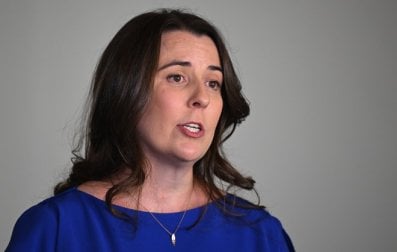
Rebecca Huntley assesses the public mood for a living. Right now, she says, it is grim, and the housing crisis is at the root of it.
“You actually can’t have a conversation about anything in any focus group about any topic that doesn’t begin and end with housing. There is a deep, almost intractable despair,” says Huntley, director at the strategic communications consultancy 89 Degrees East.
The way people in her focus groups see it, she says, “it doesn’t matter whether interest rates are up or interest rates are down, or unemployment is up or unemployment is down, doesn’t matter if it’s a pandemic, not a pandemic, GFC or not a GFC, housing is a horror show”.
To an ever-increasing extent, they see just one solution to their woes: cut immigration.
“They’re like, ‘We can’t get ourselves out of this mess, therefore, we just need less people lining up for the rental property, less people trying to buy the house. Just less people’,” says Huntley.
It’s not such a new sentiment, though perhaps not previously so keenly felt. Opinion polls have consistently shown over many years that a substantial majority of Australians want a smaller migrant intake and a significant number want a much smaller intake. One poll last year found as many as a quarter of respondents wanted zero net migration.
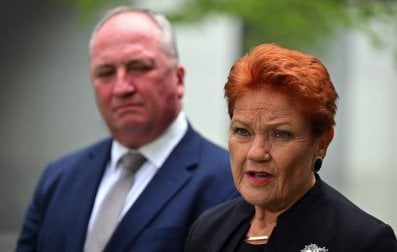
Pauline Hanson reeled off the results of 11 of these polls, conducted over the past six years, in a speech to parliament in March.
Of course, Hanson has been railing against immigration since she was first elected to federal parliament back in 1996, famously warning in her first speech that Australia was being “swamped by Asians”. Two decades later, after having lost her seat in the lower house, she made a triumphant return as a senator for Queensland in 2016, warning Australia was being “swamped by Muslims”.
In her March 21 speech, though, Hanson focused less on matters of race and religion than on the pressures of the sheer number of migrants on housing, transport, health, education and other services. In reciting the findings of various reputable pollsters, she claimed vindication. The major parties and big media had called her a racist and ignored her warnings that the numbers were “out of control”.
“Was I right?” she asked her fellow senators. “You’d never admit it, but yes I was,” she said.
It’s hard to think of any issue other than immigration on which public opinion has been so at odds with accepted policy for so long. The large majority of people want it cut; the great majority of the political, media and economic establishment have ignored their concerns.
It has long been the multipartisan political position that high immigration is a good thing, enriching the nation culturally and economically. Questioning the orthodoxy has been a reputationally dangerous act, leading many people and organisations to be reluctant to share their qualms about the size of Australia’s immigration intake.
Ian Lowe, emeritus professor in the School of Environment and Science at Griffith University, can attest to that.
Lowe was president of the country’s pre-eminent environmental organisation, the Australian Conservation Foundation, for 10 years until 2014.
During that time, he tells The Saturday Paper, he advocated for the ACF to “prosecute the idea that population growth was a significant environmental pressure”. The organisation was reluctant to take a position, however, on the basis that advocating for a lower intake would be “taken as a sort of Pauline Hanson-type racist comment”.
So the ACF avoided the issue, and it still does today – as do most other civil society groups concerned with environmental and social justice issues.
Meanwhile, Australia’s population is on track to grow to about 40 million people – an increase equivalent to the combined current populations of Sydney, Melbourne and Brisbane – by 2060.
That’s not a target, it’s just a projection, for Australia has no population policy, no official goal for how big Australia’s population should ultimately be or how fast it should get there. As Lowe and two co-authors wrote in a 2022 paper warning of dire consequences of heedless growth: “Any talk about population policy … routinely faces attempts to vilify, trivialise or shut down the potential conversation.”
In the absence of a population policy, immigration policy is the best we have. As things stand now it is out of control, says Abul Rizvi, a former deputy secretary of the Department of Immigration. Indeed, governments have been losing control for a couple of decades.
“It’s the fault of multiple governments because they’ve never planned for net migration,” he says. “They’ve always planned for permanent visas issued. And they always hit that target. But as net migration and the number of permanent visas issued diverge – and they’ve increasingly diverged for about the past 20 years – it is not sufficient to manage permanent visas. You have to manage net migration, which includes the much bigger flows of long-term temporary entrants, particularly students.”
Before the start of the pandemic, net overseas migration stood at almost 240,000 a year and polling already was showing most Australians thought that too high.
The failure to manage temporary visas became starkly obvious when the border closure necessitated by the pandemic was lifted and Australia registered well over half a million new arrivals.
“The 540,000-odd net migration to the 12 months to September 2023 was completely unplanned,” says Rizvi.
Of that record number of people, he says only about 10 per cent were permanent visa holders.
“Students accounted for around 50 per cent. Visitors changing status – that is people who had come to the country on a visitor visa and were attempting to change it – were about 15 to 20 per cent. Working holiday-makers about 10 to 12 per cent.”
To a significant extent, says Rizvi, the post-pandemic surge can be attributed to a panicked response by the Morrison government during the latter part of the Covid period “that the negative net migration would persist, overseas students and working holiday-makers would come back very slowly”.
“So the Coalition stomped on the accelerator. They did all sorts of things we’ve never done before, in order to increase the numbers, such as fee-free student applications, such as unlimited work rights for students, such as creating a so-called Covid visa, which anyone could get if they had any job, or had an offer of a job.”
It was left to the new Labor government to deal with the huge number of temporary visa holders. Last August, Home Affairs Minister Clare O’Neil ended the Covid visa, which had been accessed by an estimated 120,000 people.
The Labor government also has brought on a fight with Australia’s huge tertiary education industry by tightening visa conditions for overseas students.
Just this week O’Neil announced her department had sent warning letters to 34 education providers over “non-genuine or exploitative recruitment practices”. She threatened deregistration and jail time to “weed out the bottom feeders in the sector that seek to exploit people and trash the reputation of the sector”.
Labor has committed to reducing migration numbers to 375,000 in this financial year and to 250,000 next year. Abul Rizvi, among others, doubts the government will hit this year’s target. “It will be well over 400,000,” he says.
He also thinks there will be further measures to cut numbers announced in next week’s budget, possibly including increasing the visa application fee for students, which he says would be “very poor long-term policy but good short-term politics. So it will probably happen.”
The idea of such a price hike has been championed by the Grattan Institute. Hiking application fees from $710 to $2500 would raise about $1 billion a year, says Grattan’s economic policy program director, Brendan Coates.
“That would be enough to boost Rent Assistance by 20 per cent, putting another $1000 a year into the pockets of vulnerable renters,” he says.
Meanwhile, the opposition, so recently desperate to encourage more migrants, now accuses Labor of pursuing a “big Australia” policy. They are seizing on what is becoming so evident in the polls and in focus groups such as Rebecca Huntley’s – concerns about high immigration that are associated with unaffordable housing, clogged roads, overstretched services and declining quality of life.
Even Reserve Bank governor Michele Bullock conceded during her media conference after this week’s RBA meeting that while the current level of migration had not “added dramatically to inflation … it has put big pressure on the housing market, and that’s obviously working its way out in rents”.
Coates takes the orthodox economist’s view about the benefits of migration.
“Cutting migration will make housing cheaper, but it would also make us poorer,” he says.
“The average skilled visa holder offers a fiscal dividend of $250,000 over their lifetime in Australia.”
Typically, they’ve been educated before their arrival in Australia, or have paid for their own education here, he says. Then they work for 30 to 40 years, because they come through that program in their 20s.
“And so they earn far more and pay far more in tax than they ever draw in services over their lifetime, even after you account for pensions, aged care and any infrastructure.
“The boost to government budgets is enormous.”
Others, however, doubt the benefits. Leith van Onselen, chief economist and co-founder of MacroBusiness, and self-declared unconventional economist, is among them.
“You only have to look at Australia’s performance over the past 20 years of this ‘big Australia’ experiment. Australia’s per capita GDP has fallen significantly, our productivity growth has collapsed, we have experienced capital shallowing, [because] if you grow your population faster than you can grow infrastructure, business investment and housing, you’re going to have less capital per worker,” he says.
He also questions the non-economic benefits of squeezing large numbers of people into our cities.
“In 2011, 55 per cent of Sydney’s housing stock was detached houses. By 2057, according to the Urban Taskforce, only 25 per cent of stock will be detached houses. We’ll have 50 per cent apartments and 25 per cent townhouses. Is that an improvement in your standard of living?”
Van Onselen would set the intake at about 150,000. So would Ian Lowe. That would be enough to replace the 70,000-odd people who emigrate each year from Australia, and also account for this country’s below-replacement fertility rate.
Rizvi nominates 150,000 as a lower limit. The most important thing, he says, is that the nation’s infrastructure, particularly housing, can cope. “Above 300,000, all sorts of things begin to squeak.”
Not least the electoral chances of a government that fails to address the concerns of voters who want fewer migrants.
This article was first published in the print edition of The Saturday Paper on May 11, 2024 as "The dangerous debate".
For almost a decade, The Saturday Paper has published Australia’s leading writers and thinkers. We have pursued stories that are ignored elsewhere, covering them with sensitivity and depth. We have done this on refugee policy, on government integrity, on robo-debt, on aged care, on climate change, on the pandemic.
All our journalism is fiercely independent. It relies on the support of readers. By subscribing to The Saturday Paper, you are ensuring that we can continue to produce essential, issue-defining coverage, to dig out stories that take time, to doggedly hold to account politicians and the political class.
There are very few titles that have the freedom and the space to produce journalism like this. In a country with a concentration of media ownership unlike anything else in the world, it is vitally important. Your subscription helps make it possible.
Subscriber exclusive
Send this article to a friend for free.
Share this subscriber exclusive article with a friend or family member using share credits.