News
Tuesday’s budget will include a substantial support package for performing arts schools, several of which are on the brink of collapse. By Karen Barlow.
Exclusive: Budget to promise $115.2 million arts bailout
Australia’s leading performing arts schools will be pulled back from the brink of collapse in an election-setting federal budget to be released on Tuesday.
The Saturday Paper can reveal funding of $115.2 million over four years and a further $36.9 million in ongoing annual funding will be announced for members of the Arts8 collective.
The schools include the National Institute of Dramatic Art, the Australian Film Television and Radio School, the Australian Ballet School and the Australian Youth Orchestra.
Ahead of the government’s intervention, the group warned it was at “real risk of collapse” without added funding.
“You can’t have a vibrant arts and culture sector without the organisations that train our creators,” Arts Minister Tony Burke told The Saturday Paper.
“Because of the funding cliff left to us by the previous government, some of these organisations were at serious risk.”
It is the second major financial investment as part of the Albanese government’s five-year national cultural policy, Revive.
The first was a $535 million lifeline for the nine national collecting institutions, one of which, the National Gallery of Australia, was considering charging entrance fees and was infamously deploying buckets and towels to deal with leaks when it rained.
The National Gallery is continuing with overdue capital works to repair, protect and sustain its building. A third phase of works is due to start in 2025 and a design competition funded through philanthropy is under way for a revamp of the gallery’s sculpture garden.
The National Library of Australia also had a leaking roof and its digitised newspaper resource, Trove, was teetering on the edge of shutdown. An admittedly ambitious strategy for Trove has not yet been “fully achieved”, according to the library’s annual report, but the platform is being stabilised and new content uploaded.
The creative training schools received a $10 million lifeline last year, while consultants KordaMentha investigated their long-term sustainability. It was found government support for the eight had fallen below the level it was at 10 years ago. This happened in a rapidly changing technological environment while costs, particularly those related to employment, had risen.
“Unless we want to be a country where quality content overwhelmingly comes from overseas, we need to properly invest in our emerging talent,” Burke said.
“If we’re serious about wanting to make sure that work in the arts isn’t only available to people who can afford it, then we need to make sure these institutions are properly funded.”
The schools describe ballet barres that are coming off walls and floors that are uneven. The “human-intensive” programs are costly, and there is a constant, evolving need across the sector for innovative technology and infrastructure.
One of the hardest hit of the Arts8 is the National Institute of Dramatic Art. It will receive $51.9 million, almost half of the initial package.
NIDA also stood out as part of a 2020 cohort to receive a $250 million Covid-19 arts rescue package in grants and low-interest loans from the Morrison government.
Its problems go further back than the heights of the pandemic, however. It had an effective 25 per cent fall in funding over the past decade.
“This is a pivotal moment for NIDA. Traditionally the organisation has been vastly underfunded for its size and impact and our financial situation has been dire,” the institute’s chair, Catherine West, told The Saturday Paper.
“Without this uplift NIDA would have had to stop running core programs where there are major skills shortages across the creative industries.
“This more sustainable funding model enables NIDA to continue to contribute, generate and champion the future Australian storytellers on stages, screens, major events and in new forms of entertainment.”
Prior to this latest investment, the Australian Film Television and Radio School had experienced an effective 20 per cent cut to its annual funding. The immediate risk to AFTRS and the others in Arts8 would have been cutting the number and range of courses offered to students.
The $23.2 million AFTRS will receive over four years reverses the cut.
“As the new chair of AFTRS, on a very personal level I feel a huge relief, as one might imagine,” said Rachel Perkins, who took up the position last month. “We are now able to rely on predictable and sustainable long-term funding that will provide the school with the stability and resilience we need to fulfil our mandate to support and grow a thriving screen and broadcast sector. But I also feel for students of our school. They and their families have given so much to attend one of the world’s top-ranked media schools and the funding will enable them to get the very best education they have strived so hard to receive.
“In time, this funding will bear fruit for all Australians, who will experience the content these students will bring into the world.”
The rest of the funding, which the government describes as the “biggest uplift” in the history of the creative training schools, has the NAISDA Dance College receiving $13 million, the Flying Fruit Fly Circus getting $7.3 million and the Australian Ballet School $6.5 million. There is $6.5 million for the Australian National Academy of Music and $3 million for the Australian Youth Orchestra.
Tuesday’s budget has been flagged by Treasurer Jim Chalmers as having restraint, savings and “unavoidable” extra spending: “Some of it is automatic, some of it is desirable, all of it is warranted.”
Chalmers said this was not the time for scorched-earth austerity or free-for-all spending.
Australia’s creative and cultural industries are estimated to be worth $122.3 billion to the national economy. By comparison, the sports industry was found in a 2020 government funded analysis to be contributing just over a 10th of that at $14.4 billion.
Arts8 figures show 92 per cent of graduates get a job in the sector or take on further training.
Any uncertainty about Labor’s arts funding fix has revolved around the level of ambition. The five-year plan makes it a two-electoral-term proposition.
“The support announced in the federal budget is more than a lifeline,” Perkins said. “It will allow us to prioritise risk areas such as student wellbeing, staffing capacity, compliance, cybersecurity, information systems, infrastructure, inclusion and representation, outreach and remote teaching, and nationwide training.”
There are also strong links to other sectors and the funding decline over the past decade has been felt keenly.
“The fact that people who get a creative arts degree will often end up working in sectors alongside the creative arts – things like education, things like design, other sectors – where that training is directly benefiting and adding more value,” says Chris Summers, a University of Melbourne drama education lecturer and NIDA graduate.
“The last 10 years has really sort of weakened the landscape of students feeling like they can then go in and study vocational arts.
“There’s genuine concern that the lack of people doing the uptake of vocational arts degrees, creative arts degrees, means that flow-on effects will be felt in sectors like teaching where we will have less drama, music, visual arts teachers down the track, and that will really, really hit people hard.”
There has been a concerted attempt since the last budget, particularly by Labor’s special envoy for the arts, Susan Templeman, to build awareness and support within parliament.
The largely city-based schools, apart from Albury’s Flying Fruit Fly Circus, are a harder sell to MPs, senators and ministers than the national collecting institutions, as their impact is felt less directly.
Templeman said the government’s task was to “undo many, many years of neglect and, quite frankly, contempt for the arts and arts workers”.
The Saturday Paper contacted the opposition’s arts spokesperson Paul Fletcher about criticisms of the Morrison government’s arts policy. He pointed to the Coalition’s $200 million pandemic support fund, RISE, which supported 541 shows, performances, festivals and events around the country.
“For all of its rhetoric, the Albanese Labor government has a poor track record in getting funding to the arts frontline,” he said in a statement. “This was a priority under the former Coalition government.
“The funding associated with Labor’s much-hyped national cultural policy has largely gone to creating more jobs for bureaucrats in Canberra.
“Labor needs to recognise the vital role the arts plays everywhere – city and country, CBD and suburbs – and get the funding to the frontline rather than overwhelmingly favouring Canberra. But given their track record, it is hard to be optimistic.”
The RISE program was criticised for funding an “immersive-scale recreation of Jurassic World scenes in LEGO bricks” ($668,416), the Deni Ute Muster ($400,000) and a cover band tour paying “tribute to the world’s best – Rolling Stones, Nirvana, John Lennon and David Bowie” ($600,000).
It also restarted stalled music festivals such as Subsonic ($280,000), invested in new commissions for the Australian Theatre for Young People ($275,000), brought back the Newcastle Writers Festival ($200,000), funded Illuminate Adelaide ($520,000), backed a major tour by Western Australia’s Black Swan State Theatre Company ($700,000) and funded a reimagined Dark Mofo festival ($400,000) in Tasmania.
The Revive policy document asks to exempt the national creative training organisations from the Hawke-era budget saving efficiency dividend, levied at 1.25 per cent annually.
It is not on the cards in this budget, but key Senate crossbencher David Pocock said it would be a good start.
“It’s pretty dire times in the arts and I think in particular in the live music industry, and we haven’t seen the sorts of supports that I think a lot of people in that industry hoped or expected from a Labor government,” the independent ACT senator said.
“They contribute a huge amount to our country. Obviously, there’s the economic impact, but also just culturally, telling stories of who we are, where we’re going. We often hear, ‘Well, it’s about priorities.’ We’re not short on cash.”
A potentially harder fix needs to be found for the live music industry, the challenges for which were outlined by the government’s own “Soundcheck” report in April. They include the ongoing impact of the pandemic, a lack of funding and grants, extreme weather events, insurance, regulatory changes and rising operational costs.
Several music festivals have been cancelled this season, including Dark Mofo, Splendour in the Grass, the Falls Festival and Groovin the Moo.
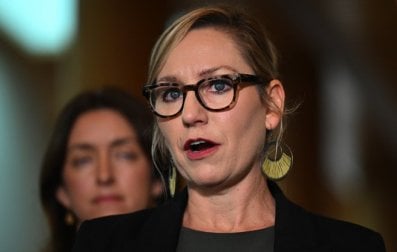
Greens arts spokesperson Sarah Hanson-Young, the chair of a Senate inquiry into Australia’s national cultural policy, is particularly concerned about the fate of small- to medium-sized festivals.
An interim report from the inquiry offers potential solutions, but Hanson-Young wants a government funding and support package. It remains an unknown request heading into budget week.
“After a string of cancellations, the Senate has heard compelling evidence that the government should step in to mitigate the rapidly rising cost of overheads, like insurance premiums,” she said.
“Funding is urgently needed to save our beloved small and medium Australian festivals from further cancellations and the Greens are calling on the government to act. This would be a minor budget measure that would make a significant difference.”
The committee is also urging the Albanese government to meet obligations to bring in local content requirements for streaming services. Labor had promised to introduce a quota system for a market dominated by overseas giants Netflix, Disney+ and Amazon Prime by mid-2024, to protect and support the Australian screen industry. What percentage the quota will land on is not known.
As for Australian songs, songwriters see a long-time block in commercial radio.
Pocock’s Fair Pay for Radio Play private senators’ bill seeks to remove the 1 per cent cap on what recording artists can receive from radio for their sound recording.
“No one else has a cap on their ability to just negotiate what they see as a fair rate,” the senator said.
“Commercial radio will say, ‘Well, this will bankrupt us.’ But we have the copyright tribunal to deal with any disputes and artists are just saying, ‘Just allow us to negotiate.’ This is about actually valuing the arts.”
It is one big, urgent arts fix at a time, and while some salves, even sensible ones, might not make it, the arts are firmly back in the political frame.
This article was first published in the print edition of The Saturday Paper on May 11, 2024 as "Exclusive: Budget to promise $112.5 million arts bailout".
For almost a decade, The Saturday Paper has published Australia’s leading writers and thinkers. We have pursued stories that are ignored elsewhere, covering them with sensitivity and depth. We have done this on refugee policy, on government integrity, on robo-debt, on aged care, on climate change, on the pandemic.
All our journalism is fiercely independent. It relies on the support of readers. By subscribing to The Saturday Paper, you are ensuring that we can continue to produce essential, issue-defining coverage, to dig out stories that take time, to doggedly hold to account politicians and the political class.
There are very few titles that have the freedom and the space to produce journalism like this. In a country with a concentration of media ownership unlike anything else in the world, it is vitally important. Your subscription helps make it possible.
Subscriber exclusive
Send this article to a friend for free.
Share this subscriber exclusive article with a friend or family member using share credits.