News
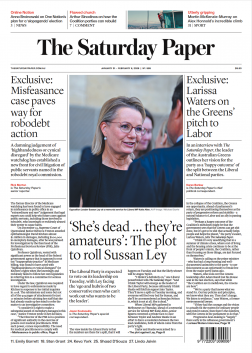
Larissa Waters won the Greens leadership without a formal vote, with party sources emphasising she will represent a reset from the party’s obstructionist image. By Mike Seccombe.
How will Larissa Waters reshape the Greens?
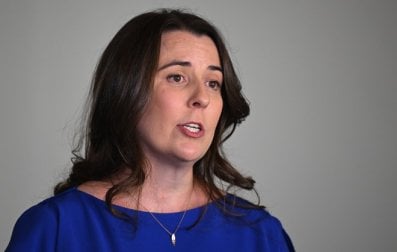
The new leader of the Greens, Larissa Waters, seems nice.
She’s certainly well-credentialled, holding degrees in both science and law, the latter with honours.
She’s also dedicated to the Greens’ original cause, having worked for almost a decade for the Queensland Environmental Defenders Office before entering federal parliament in 2010.
She has a strong track record of work in Senate committees and has shared the deputy leader position with three different co-deputies under two leaders, over seven years between 2015 and 2022. Throughout that time, she’s held several different portfolios.
In the party’s current circumstances, however, the most important thing may be that she seems reasonable and not unduly aggressive.
The Greens in 2025 have an image problem, a perception that they are obstructive and angry. The view has been assiduously cultivated by Labor and consistently referred to in the media.
Greens party members report picking it up at polling places during this month’s election, at which the party lost three of its four house of representatives seats, including that of leader Adam Bandt.
The perception has taken root with the public and was neatly summarised by a question from a young man in the audience of the ABC’s Q+A program on Monday night:
“The Greens have seen their support decrease during the previous term, particularly in electorates where members held seats. Given the decreased support for members who are directly associated with moves to block legislation … is now the time for the Greens to truly uphold their promise to constructively work with the government or will you continue to obstruct…”
Senator David Shoebridge, to whom the question was directed, recast it as “how do you make the parliament work?”
He went on to emphasise that with 11 members still in the Senate, giving the Greens the sole power to determine the fate of government legislation opposed by the Coalition, there was “no excuse” for Labor and the Greens not to work together constructively.
Although he acknowledged a “frustrating” relationship between his party and the Labor government in the previous parliament, Shoebridge did not go to the issue of whether the Greens had erred by taking a harder line than they had previously in negotiating with the government. Nor did he mention any names.
Another of the Q+A panellists did, however. Labor’s Ed Husic voiced support for Shoebridge’s approach to negotiating. “But there’s a difference between a David and a Max,” he said, referring to the Greens’ high-profile former housing spokesman, Max Chandler-Mather.
The Greens’ protracted blocking of the government’s attempts at legislation to address Australia’s housing crisis – on the basis that it was not sufficiently ambitious – is the example of alleged obstructionism most commonly cited by Labor.
No doubt Chandler-Mather did adopt a very aggressive approach, making an ambit claim for more radical changes, including rent caps and reform to negative gearing and the capital gains tax discount. No doubt, also, that he was supported in this by the party leader, Bandt.
The Greens eventually waved through the government’s measures, after negotiating an extra $3 billion for housing, which, as Shoebridge tells The Saturday Paper, was actually a pretty good result.
Despite this, and despite the fact the Greens managed to negotiate amendments to a raft of other government legislation, the perception is that the party is intransigent.
“We should acknowledge the rat cunning of Labor,” Shoebridge says, “in blaming three months of Greens resistance on a broken housing bill for 30 years of comprehensive failure by the Coalition and Labor.”
When both Chandler-Mather and Bandt lost their seats, it cemented the view, not only with voters, that it was a consequence of their tactical oppositionism.
Drew Hutton, who helped found the party but is no longer actively involved, was quoted in Nine media this week complaining of “a hyper-militant approach” over the past three years. He called on the party to “lose this terrible way they have of expressing their moral superiority over everyone else and their refusal to talk meaningfully with ordinary Australians”.
Members of the party room, speaking on condition of anonymity, suggest other factors. They say there was too much emphasis on attacking the Dutton opposition, as part of an attempt to win more lower house seats, rather than on articulating a positive agenda. There was also not enough concentration on climate and environment, which are the Greens’ traditional strengths.
There were concerns, too, about the party’s internal dynamics. Under Bandt’s leadership, the Greens’ longstanding process of collective decision-making became more of a “top-down” model, as one person puts it.
To some extent, they say, this was a matter of circumstances, with four new and inexperienced senators and three new lower house members – almost half the party room.
“But there was a clear A-team and a B-team,” the Greens source says.
The A-team, it should be noted, included all three of the mooted candidates for the party leadership: Sarah Hanson-Young, Mehreen Faruqi and Waters.
We say “mooted” because none of them ever declared they were contenders.
The Greens’ process for determining leadership positions bears some resemblance to a papal conclave, in that there are assumed frontrunners, and discreet jockeying and number-counting, but no public pitches.
Indeed, the selection process is even more inscrutable than a conclave, in that there is usually not even a formal vote taken. Most often, the party room seeks nominations and just talks until it reaches a consensus on who should be leader, deputy and so on.
That’s what happened on Thursday: the party room reached consensus that Waters was the one to lead. Hanson-Young and Faruqi pulled out. Faruqi was reconfirmed as deputy.
Of the three contenders to replace Bandt, Hanson-Young, from South Australia, has the longest political history. She was the youngest person elected to the Senate, at the age of 25, in 2007.
She has a reputation for being feisty but is generally well regarded across the aisle. During the last parliament, as party environment spokesperson, she developed a fair working relationship with her Labor counterpart, Tanya Plibersek. She has a high profile and has served as the Greens’ manager of business and chief negotiator in the Senate.
Faruqi, from New South Wales, historically the most radical Greens state, is a more contentious figure. While colleagues give her credit for garnering more multicultural support for the party, her strident support of the Palestinian cause and attacks on the government for being “complicit in genocide” in Gaza have infuriated Labor. She served in the NSW parliament from 2013 to 2018 before being selected to fill the vacancy created by the resignation of the far-left Lee Rhiannon.
Waters, from Queensland, has the lowest profile of the three, despite her long service, although she made worldwide news in 2017 when she breastfed her two-month-old daughter in the Senate chamber.
Yet even those who question her political impact do not deny her likeability. She is popular within both the parliamentary party and with the rank and file.
“She’s got an environmental background,” says one partyroom source. “She’s loved by the members. She presents really well.”
The question is whether she is tough enough. One source described her as the “vanilla” option.
Former leader and party elder Bob Brown, though, suspects she is underestimated.
“Often people put into leadership roles exhibit a zest and energy in it that was not thought there before,” he says, “and I can see that happening with Larissa.”
She will certainly be tested.
The government, and the prime minister in particular, are institutionally hostile to the Greens.
Despite Albanese’s much-quoted claim that he came to parliament to “fight Tories”, he will not have to do much of that for the next three years because they will be fighting among themselves.
Instead, the Greens sources say, they will be the focus of attack, because they hold the balance of power in the Senate.
They note Albanese’s call, a couple of days after the election, to “get out of the way” of the government. They worry about his replacement of Tanya Plibersek in the environment portfolio with Murray Watt, who they see as pro-development and mining.
Says Brown: “The appointment of Murray Watt is a torpedo into the hopes of environmentalists right around Australia. It’s confrontational by Albanese.”
Two days before they met to select a new leader, there was another meeting of the Greens, discreetly called to discuss issues of party structure and how it should present itself in the next parliament.
The party discussed ways in which the burden of leadership might be managed. There was even a suggestion that the party could do as the Greens in New Zealand have done and install co-leaders. It did not garner
wide support.
The broad view, sources say, was that the party leadership needed to be more consultative, but there did not need to be any major policy shifts.
Nor should there be, in the view of Richard Di Natale, who led the Greens
before Bandt.
“In terms of substance, the platform that they took to this election was the same as the one I took, the same as that Christine [Milne] took before that,” he says.
“You know, reforming capital gains tax and negative gearing – all those things were stuff that we’ve been banging on about for 10 years.
“It really is just a question of tone.”
He certainly doesn’t think the Greens should back off.
“I keep reading it’s not the party of Bob Brown anymore. But when it was the party of Bob Brown, they fucking hated it just as much. When Bob stood up and took on George Bush, when he was a lone voice on Tampa, he was getting smashed. The same criticism: that the Greens are too hardline.”
Di Natale sees the party’s poor showing at this election as a glitch.
“I’ve spoken to a few people who said, ‘Look, we voted for you last time, but we were just so worried about Dutton we voted for Labor,’ ” he says. “And that just reflects that a lot of people don’t get how preferences work.”
In the longer term, Di Natale believes, the party will do better as older voters are replaced by younger ones.
As Brown notes: despite Labor’s record haul of seats at this election, the party got only 34 per cent of the vote. “It won on the back of preferences from Greens and teals,” Brown says. “And the first thing they did after the election was start knifing the Greens. It was extraordinarily ungracious.”
The former leader believes the Greens should not preference Labor next time.
Until then, though, Waters has a tough row to hoe. She is up against a government that can argue a strong mandate, led by a politician who, despite his ordinary bloke image, is, as one Greens source put it, “a political killer”.
Waters presents a harder target than Bandt or Chandler-Mather, though. It’s really not a good look to assail someone who seems so nice.
This article was first published in the print edition of The Saturday Paper on May 17, 2025 as "Will Waters run deep?".
For almost a decade, The Saturday Paper has published Australia’s leading writers and thinkers. We have pursued stories that are ignored elsewhere, covering them with sensitivity and depth. We have done this on refugee policy, on government integrity, on robo-debt, on aged care, on climate change, on the pandemic.
All our journalism is fiercely independent. It relies on the support of readers. By subscribing to The Saturday Paper, you are ensuring that we can continue to produce essential, issue-defining coverage, to dig out stories that take time, to doggedly hold to account politicians and the political class.
There are very few titles that have the freedom and the space to produce journalism like this. In a country with a concentration of media ownership unlike anything else in the world, it is vitally important. Your subscription helps make it possible.
Subscriber exclusive
Send this article to a friend for free.
Share this subscriber exclusive article with a friend or family member using share credits.