News
Environment Minister Murray Watt rejects criticisms that he’s bowing to Western Australian interests on key reform, and wants to seize a window of opportunity to work with Opposition Leader Sussan Ley for a deal by the end of the year. By Karen Barlow.
Your subscription makes these exclusive articles possible
Subscriptions make these exclusives possible SUBSCRIBE NOW
Exclusive: Watt on his plans for urgent environment law reform
Murray Watt insists he isn’t beholden to mining interests in the west as he seeks to secure an enduring deal for nature and to boost productivity this side of Christmas.
The environment minister is on a mission to fast-track the tortured and long overdue reform of the Howard-era Environment Protection and Biodiversity Conservation (EPBC) Act and create a new environmental watchdog – following a thwarted attempt by his predecessor Tanya Plibersek before the May 3 election.
Watt can select a legislative path with either the Greens or the Coalition. The minister says he is open to both but is eyeing an opportunity while Sussan Ley leads the opposition.
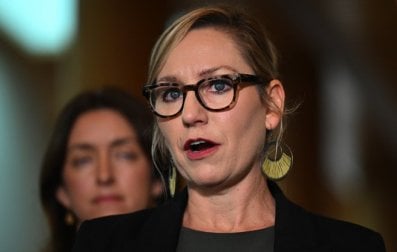
Making his presence felt in the deliberations is Western Australian Premier Roger Cook, who is on a self-described unity ticket with the state’s mining and business groups. Watt has met with Cook four times since taking on the environment “fixer” role for Prime Minister Anthony Albanese. Watt has met with his Greens and Coalition counterparts, Sarah Hanson-Young and Angie Bell, once each.
“I don’t think it’s any secret that these reforms were very contentious in Western Australia prior to the election and I thought it was wise to put quite an effort into talking with and consulting with people in Western Australia about the direction of these reforms,” Watt tells The Saturday Paper.
“I’ve been very personally involved in the consultation. I think we’re nearing 50 meetings that I’ve personally undertaken with stakeholders and that has partly been about establishing trust with a broad range of stakeholders.
“There’s a lot of mystique about what these reforms involve and it’s not always based on fact.”
Cook successfully counselled the prime minister last November to delay the EPBC Act reform beyond the WA state and federal elections, as Plibersek was trying to seal a deal with the Greens. The two men have met three times individually and once when Cook attended the federal cabinet meeting in Perth at the end of August. The premier also lobbied Albanese again late last month in Canberra.
Both Hanson-Young and Bell say their doors are open to the minister. Watt plans to meet both again over the next few weeks before parliament resumes. He says the non-controversial elements of the new version of the reform legislation are already being drafted.
Asked if Cook has particular sway on the reforms, Watt says, “I don’t think so. And I don’t think he’d claim that.
“I think he has found our conversations productive. He’s said as much. But, ultimately, it’s a decision for the Albanese government what reforms we put to the parliament and we will listen respectfully to a wide cross-section of views. But in the end, we have to make a decision as the elected government.”
The minister also points to this as a different time in the electoral cycle – four months since Labor’s thumping win over the Peter Dutton-led Coalition. He aims to seize this moment to make rapid progress.
“We’re operating in a very different political climate this side of the election,” Watt says. “It was very difficult, I think, to pass these reforms in the lead-up to an election because all the players have got incentives to take a political approach to something as controversial as this.
“Early in the term is the time, I think, while there’s still pretty good, strong goodwill, both towards the government and between the stakeholders to move fast on this.”
The minister promises to “categorically” commit to introducing the new legislation to reboot the EPBC Act and “unlock” projects such as renewable energy, housing projects and critical minerals projects “this side of Christmas”.
The acceleration after years of nature reform limbo was a strong recommendation from last month’s Economic Reform Roundtable, which focused heavily on ways to deregulate in order to speed the renewable energy and critical minerals projects essential to the green transition. Watt says legislation to address lengthy delays in assessing projects is “crucial” to the second-term productivity agenda of Treasurer Jim Chalmers.
While the government wants to highlight its application to green projects, the laws also cover the assessment and approvals of more controversial land-clearing requests, forestry projects, coalmining and gas extraction.
“If there’s one thing that unites all of the stakeholders, it’s the need for change and the need to move fast,” Watt says.
Watt has very deliberately and repeatedly pointed to the now opposition leader’s tenure as environment minister. It was Sussan Ley who appointed former Australian Competition and Consumer Commission chair and businessman Graeme Samuel and an expert panel to review the EPBC Act in 2019.
Samuel reported back in 2020 that the federal regime to facilitate approvals of major projects and developments that impact nature was “ineffective”, “outdated” and not fit for purpose.
“We’ve gone back and found comments that [Ley] made at the time supporting what Graeme had said, and I would like to think that she has some personal commitment towards delivering the reforms that she initiated.
“What I’ve said is that it is an opportunity for her to demonstrate that they do want to move to the centre. But I think more importantly it’s an opportunity for her to show that the Coalition is listening to the broader community but also to the stakeholders in this debate who want reform.”
It’s also clear that the Coalition is less likely to insist on elements of the reform that the Greens championed before the election.
Some of the most contentious proposals for reform are a “climate trigger” for approvals and ministerial input into the decisions. Watt says no decision has yet been made on either.
The Greens want a climate trigger to ensure the assessment process considers the greenhouse gas emissions of proposed projects and developments.
They argue this is necessary for Australia to meet its net zero targets – which will be updated shortly with a new 2035 goal – and in particular that all new approvals must take into account emissions from fuels burnt in Australia and overseas. The latter are the “scope three” emissions that apply to Australian fossil fuel exports.
Watt is not keen on this position and nor was Plibersek. Neither was Graeme Samuel, Watt points out. “We haven’t finalised our position on that yet, but I think it’s fair to say we’re more leaning towards where Graeme was at,” he says.
As for the idea and extent of ministerial responsibility for the decisions, the Greens say they are open to discussing how an environmental protection agency will work but have insisted it must be a robust body that does not delegate powers to the states.
Under the model proposed by Plibersek, a chief executive would have operated under the EPA with ministerial call-in powers.
Watt is considering the possibility of retaining the minister’s ultimate responsibility for environmental approvals – a model that industry groups and the Coalition would prefer.
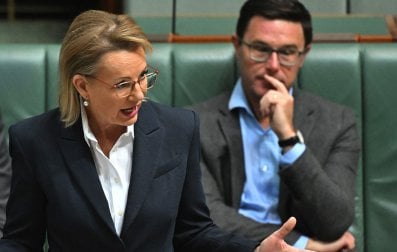
Bell maintains that ministerial discretion is part of the Westminster system, and the minister must be held accountable for decisions.
Hanson-Young is concerned the government will simply give exemptions for big projects to bypass proper environmental regulations.
“If there’s any more exemptions given, we are in a world of pain,” she says.
Watt has faced extensive criticism for conditionally approving – in one of his first acts as environment minister – a 40-year extension of Woodside Energy’s massive North West Shelf gas project.
He maintains that in the absence of reformed environmental laws, the decision was not required to consider emissions but, rather, the impact on the neighbouring Murujuga Indigenous rock art, which a government-commissioned survey found to be negligible. Just last week, he approved a thermal coalmine extension in the New South Wales Central West for an extra two years of operation.
“It wouldn’t surprise you to know that the environment groups would prefer an EPA that has total decision-making power and industry groups would prefer, in their ideal world, the minister to be making all decisions,” Watt says.
“I think there are some options in between as well, where some powers are shared between ministers and the EPA.
“Everyone’s going to need to give ground on these reforms. No one’s going to get everything they want.”
Watt says the Greens, like the Coalition, “paid a heavy electoral price for being obstructive in the last term and being seen to block the progress of reform.”
He says there’s an argument that the deal could be done between parties of government.
“One benefit of passing these reforms with the Coalition is that they are likely to be more enduring, well into the future. But we’re not going to do that at any price,” the minister says.
“If we can come up with a package that we think delivers for the environment and for business, and if we can get 80 per cent of it with one side of parliament and 50 per cent with the other, it’s pretty clear who we’re going to go with – 80 per cent. Whether that be the Greens or the Coalition, that’s the way we go.
“Again, it comes back to what are the demands from the Coalition in order to get that enduring reform? If we think we can get a better package of reforms for the environment, for business, through a deal with the Greens, then that’s the way we’d go. But there is that benefit with the Coalition.”
The opposition sees the EPBC Act as “well overdue reform” and insists it will be more pragmatic than the Greens in seeking the “best outcome for the nation”, according to a Coalition source, who says it “really wants to be part of the solution”.
“A sensible approach would be the two parties of government come to a central place on it,” the Coalition source tells The Saturday Paper.
“That’s notwithstanding we have red lines, and the Greens will have red lines, and Labor will have their difficulties that they have to overcome within their party room as well. So, it’s tricky.”
Ley and her nascent leadership are being tested by those within the Coalition who strongly oppose the net zero by 2050 target. And Labor has been more than happy to indulge Barnaby Joyce’s private member’s bill to ditch the policy, which the Nationals under David Littleproud supported in the last election. While most opposition policies remain under post-election review, Watt sees a shift in the Coalition.
“I think there is clearly a greater willingness from a Sussan Ley-led opposition to working constructively with us on these reforms than there was under Peter Dutton,” he says.
The Greens say Labor’s choice should err on the side of what needs to be cared for.
“If Murray Watt is only interested in delivering a political fix, then he’ll have to do that with the Coalition,” Sarah Hanson-Young told reporters on Tuesday. “The Greens are not interested in a political fix that simply removes the barriers for the fossil fuel industry and the logging companies.
“We want a solution for nature. We want an outcome for our koalas. We want to save our native forests. We want to stop pollution.”
The result of the May 3 election, with so many new, progressive Labor MPs joining the parliament in Albanese’s expanded 94-seat House majority, also suggests support for environmental ambition.
“I do recognise that climate change and environmental protection is a key issue for many voters and it’s a key issue for many of the new MPs who got elected,” Watt says.
“I am in regular discussion with members of our caucus about what they’d like to see in these reforms and I guess the point I keep making is that it is possible to deliver reforms that much better protect the environment while also helping business.
“One of the traps in this debate is that some politicians and some media outlets, frankly, want to frame it as a binary – ‘You can have the environment or you can have good business outcomes’ – you can actually have both.”
So far, as consultations continue and the reforms start to be drafted, the only definite change is that Nature Positive naming of the environment reforms under Plibersek is being dumped. There is no new name yet to help sell the reforms.
The minister expects environmental law reform will have a better chance of passing if the “broadest possible coalition of supportive stakeholders” is created, so he has moved to bundle the legislation again after it was broken up in three stages last term.
“Now that there has been a lot of consultation occur around the entirety of the reforms, I think it now makes sense to combine them into one broader bill,” Watt says.
He cites environmental groups explaining that they did not want to sign up to a new Environment Protection Authority without understanding the new national environmental standards that would underpin the new statutory body and show how it enforces the law.
Likewise, Watt says industry groups want to understand the new push for quicker approvals and how that is going to work.
“What I’m about is trying to maximise our chances of getting a bill through the Senate,” he says.
Watt also says he wants an EPA with credibility.
“We are very conscious that even when we pass a bill, that’s not the end of the story. There is a massive implementation piece to be done here to ensure that the reforms work,” he tells The Saturday Paper.
“There’s more work to do there to get to the quicker approvals. That will require agreements to be reached with states and territories, which will take some time to deliver. I do want to manage expectations that the whole world isn’t going to be different overnight once we pass a bill.
“There’s a huge amount of work to be done and that includes building an EPA that has credibility. That is partly the point of having an EPA – to have a credible regulator that has the confidence of the community, the whole community. So, our thinking is developing about how that’s done. But I guess the first priority is getting the bill through.”
This article was first published in the print edition of The Saturday Paper on September 6, 2025 as "Exclusive: Watt on his overhaul of environmental protections".
For almost a decade, The Saturday Paper has published Australia’s leading writers and thinkers. We have pursued stories that are ignored elsewhere, covering them with sensitivity and depth. We have done this on refugee policy, on government integrity, on robo-debt, on aged care, on climate change, on the pandemic.
All our journalism is fiercely independent. It relies on the support of readers. By subscribing to The Saturday Paper, you are ensuring that we can continue to produce essential, issue-defining coverage, to dig out stories that take time, to doggedly hold to account politicians and the political class.
There are very few titles that have the freedom and the space to produce journalism like this. In a country with a concentration of media ownership unlike anything else in the world, it is vitally important. Your subscription helps make it possible.
Subscriber exclusive
Send this article to a friend for free.
Share this subscriber exclusive article with a friend or family member using share credits.