News
The first week of the campaign has shown up an ill-disciplined opposition leader, with Coalition sources saying they are already ‘factoring in a loss’. By Jason Koutsoukis.
‘This is going to stick’: Inside Dutton’s Trump thump
Peter Dutton’s election campaign is faltering just as momentum should be building, fuelling growing unease inside the Coalition that his abrasive image and perceived ideological closeness to Donald Trump is pushing away the swing voters he needs to win.
What was meant to be a disciplined opening to a five-week campaign, centred on cost-of-living pressures and national security, was instead overshadowed by muddled messaging, strategic drift and a leader whose tough-guy persona – unyielding, combative, defiantly anti-woke – now seems misaligned with voters unsettled by Trump’s assault on the global rules-based order.
After a fresh round of opinion polls this week showed a shift back towards Prime Minister Anthony Albanese, Trump’s announcement of a 10 per cent levy on Australian exports to the United States sharpened an already uncomfortable question for the Coalition campaign: is Peter Dutton’s affinity for Trump the calculated alignment it was once believed to be or is it becoming politically corrosive?
“I remember being in the car a few days after the inauguration, and Peter was on Ben Fordham’s [Radio 2GB] show telling everyone how happy he was that Trump was back in the White House,” one Coalition MP told The Saturday Paper. “And I remember thinking: this is going to stick. You don’t wrap yourself in Trump’s rhetoric and expect Australian voters to ignore it. Now we’re seeing the fallout.”
While Labor and Liberal insiders agree that the week leading up to Tropical Cyclone Alfred making landfall in south-west Queensland and northern New South Wales on March 8 was a shifting point in the political cycle, Labor operatives insist the real work of turning things around began on January 6, the first Monday of the year, when Albanese held a press conference in Gympie announcing $7.2 billion in new funding to fix the Bruce Highway.
“The PM hit the road very early,” one Labor adviser tells The Saturday Paper. “I think by the end of that first week we had completed a full tour of Queensland and Western Australia, with three, sometimes four, media commitments a day, and he hasn’t stopped since. It was less about reaching voters and more about getting himself into the zone. That’s why he’s looking and sounding sharper.”
Dutton began the week declaring that should he win the May 3 election, he would live at Kirribilli House overlooking Sydney Harbour instead of the Lodge in Canberra. He also pledged to end “woke” activism at universities and floated the idea of forcing changes to school curriculums by attaching strings to federal funding for state schools. This, along with the lack of clarity surrounding proposed cuts to the Australian Public Service, has made it easier for Albanese and other senior ministers to accuse Dutton of copying Trump’s agenda.
At the National Press Club on Tuesday, former prime minister Malcolm Turnbull weighed in on Dutton’s preference to reside at Kirribilli House, saying that Dutton would come to regret the comments. “If I was running in a seat in Brisbane, I wouldn’t be saying the minute I become prime minister, I’m leaving to live in Sydney,” Turnbull said. “I don’t think it’s a wise thing to say.”
Dutton’s campaign has been affected by other distractions and miscues: his decision to oppose the tax cuts in last week’s budget, his attendance at a fundraiser at the Sydney home of hospitality mogul Justin Hemmes during a natural disaster in his own seat, his unexpected announcements of referendums.
“First thing to remember is that after a huge loss in 2022, we were never supposed to be doing this well, and Dutton has done an amazing job to get us into a potentially winning position,” one Liberal MP tells The Saturday Paper this week. “But having had the expectation raised that we could win, what is becoming more obvious to me are the reasons we won’t make it, and top of my list is not enough policy. Whispers about who might be the leader if we lose is also a bad sign, because it means people at the top are already factoring in a loss.”
Outbreaks of disunity haven’t helped either. On March 13, The Australian newspaper carried a story flagging growing concern among Liberal MPs that the opposition lacked a clear agenda – with several warning that an overreliance on public service cuts will not be enough to persuade voters, and others expressing frustration at the absence of commitments on income tax relief and industrial relations reform.
Coalition treasury spokesman Angus Taylor also came under fire, with colleagues describing him as disengaged and ineffective, fuelling fears the Coalition is unprepared to challenge Labor on economic credibility.
The following day, The Australian Financial Review reported on an escalating “tit-for-tat war” between Liberal camps aligned with either Dutton or Taylor, citing proposed break-up powers for the insurance sector and the Coalition’s plans to dramatically curb work-from-home rights for federal public servants as examples of policy drift that could confuse the pitch to voters.
“They’re firing arrows at each other, but the people who pay the price for that kind of activity are the marginal seat holders,” the AFR quoted one MP as saying.
This week, the The Australian reported that Liberal Party operatives had conducted a “witch-hunt” to find those responsible for sharing their views that the Coalition needed to better articulate its economic plan.
According to Andrew Carswell, who was head of media and communications to prime minister Scott Morrison and is now director of Headline Advisory, context is important.
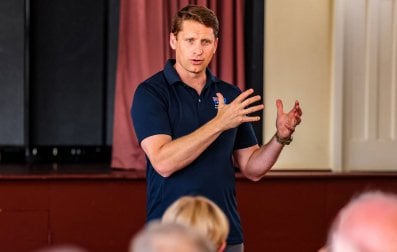
“This is Peter’s first campaign, and nothing can prepare you for the rigours of the campaign,” Carswell tells The Saturday Paper. “It is far and away more difficult to grapple with than any press conference you’ve ever done before. So that’s the context, and most first-timers, you know, they take a while to find their groove, and when they find it, they do exceptionally well thereafter.”
Carswell points out that Albanese struggled in the first week of the victorious 2022 campaign, as did his predecessor as Labor leader, Bill Shorten, in the first week of the 2016 campaign he almost won.
“Albanese has had the benefit and the advantage of having a campaign to be able to understand what those rigours are,” says Carswell. “And the reason why that is important is the stress that can come on. Getting things right is far more important than it is normally, because one mistake can cost you a couple of days. So leaders are very, very much aware – and even experienced leaders on the campaign trail are very much aware – of the importance of being tight and being focused and not getting sidetracked and not saying the wrong thing, because when you do say the wrong thing in a campaign, it could last for a week.”
Carswell adds that Coalition supporters feeling concerned about Dutton’s performance need to take into account that early missteps can end up having a positive impact on the course of a campaign.
“I said the other day that the stumbles the Coalition had prior to the budget would actually work to their advantage, because it would make them sharper in the campaign itself,” says Carswell. “I think that’s the same as Peter’s first week as well, where he’s trying to feel things out, trying to work into his own groove, and he will benefit from that in the later stages of the campaign.”
Carswell cautions against trying to push Dutton towards a radical course-correction, arguing that a significant chunk of voters, men in particular, have gravitated towards his perceived strength.
“The thing about Peter is that he runs towards crisis, he’s the ex-Queensland copper who has learnt to run towards danger, as opposed to some other politicians whose first instinct is to flee from danger or crisis. That’s who he is and he doesn’t need to soften that to win over voters,” says Carswell.
Most of Dutton’s parliamentary colleagues remain sanguine about their chances under Dutton, pointing to a tarnished Labor brand in Victoria, where Liberal hopefuls believe they could pick up as many as six seats.
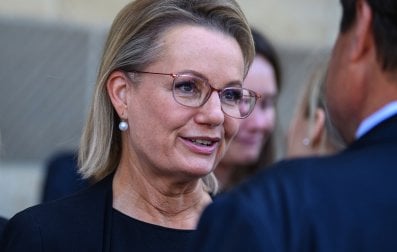
“Labor and Anthony Albanese have few fans in Victoria,” Sarah Henderson, the shadow education minister and senator from Victoria, tells The Saturday Paper. “Victorians are feeling the full effect of Labor’s cost-of-living crisis and see no light at the end of the tunnel.
“Many young families have told me that they are feeling the dream of owning their home slipping away, while those who own their own business are saying they are finding things harder than ever before,” she adds.
“The crime rate and how safe people feel in their own home is also constantly raised, with people wanting action from all levels of government. Peter Dutton is seen as a strong leader who can keep people safe and manage the economy.”
As the campaign continues, Dutton is apparently dealing with a breakdown in relations with resources billionaire Gina Rinehart, one of the Liberal Party’s most influential backers. According to the ABC, the relationship has “cooled” in recent weeks over Dutton’s plan to force energy companies to sell gas into the domestic market at a capped price, a move criticised as anti-investment and poorly detailed.
Rinehart, a major investor in Queensland gas producer Senex, is also said to be frustrated by Dutton’s failure to walk away from the Coalition’s net zero target and his lack of bold, pro-business commitments on tax and industrial relations. The rift, while possibly temporary, risks weakening the Coalition’s fundraising capacity heading into the final stretch, particularly given Rinehart’s deep pockets and close ties to other influential donors. “She felt like he talked a big game until he had to deliver,” one Liberal told the ABC.
Some within the Labor campaign are privately beginning to question whether the Coalition has the machinery to go toe-to-toe with Labor this time around. One Labor insider, speaking on background, described the Coalition operation as “skinny” – both in terms of policy and campaign infrastructure.
“They just don’t have the same depth,” the source says. “Labor’s got a collaborative set-up – multiple research firms, multiple ad agencies, all working under Paul Erickson, who’s calm, strategic, knows how to keep things tight.”
While Labor has brought in experienced operators such as Dee Madigan, Darren Moss, The Shannon Company and two separate research agencies, Talbot Mills and Campbell White’s Pyxis Polling & Insights, the Liberal set-up is more stripped back, the Labor insider says.
“It feels like they lowballed it,” he said. “Their ads look like they’ve just been lifted from the TV news, and the policy offering feels light. We’ll see what the post-mortem says, but if Labor outperforms expectations, it’ll be because they ran a nimble, well-coordinated campaign. Right now, it just feels like [the Coalition are being] outgunned.”
While Dutton’s campaign has struggled for narrative clarity, Labor has quietly settled on a strategy built around stability, healthcare and a subtler, more effective kind of contrast. According to the same Labor campaign adviser, the pivot to put Medicare and public health at the centre of the election pitch in February should not be discounted.
“It gave people something solid to associate with us again,” the adviser says. “Before that, when you asked voters what Labor had done, they’d struggle. Then Medicare started coming up – and even though Dutton was matching the funding, no one gave him credit. He was being dragged onto our turf.”
For Labor, it has also been a chance to reopen old wounds. Dutton’s controversial stint as health minister gave them a ready-made archive of attack lines, reinforced by a broader narrative that he wanted to “Americanise” Australia’s health system.
“It’s the perfect way to talk about Trump without actually saying the word ‘Trump’,” the Labor source says. “And that’s the bind they’re in. They haven’t figured out where they stand on Trump. Dutton can’t go anti-Trump without alienating his base, but if he backs Trump, he’s standing against the national interest.”
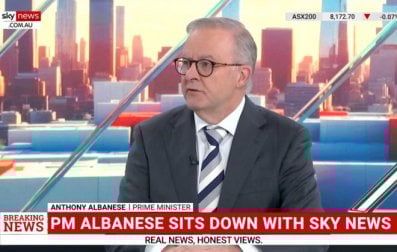
Trump’s tariffs have made that bind more acute. As Albanese delivered a measured but firm response on Thursday – assertive enough to signal strength, restrained enough to avoid escalation – Dutton has found himself awkwardly mirroring the government’s position.
“So now the guy who’s selling himself as the tough one is following the so-called weak leader,” the source says. “It breaks the frame they’ve been trying to build.”
Beneath it all is a broader strategic shift in how Labor wants the electorate to think about the stakes. Where the Coalition’s early pitch was built around hardship and strength, Labor is now framing the choice as one between volatility and steadiness.
“The world’s dangerous and uncertain,” the campaign source says. “People aren’t looking for a hero. They’re looking for someone who doesn’t spill the drinks.”
In this telling, Albanese’s unflashy persona becomes the point. “It’s not soaring rhetoric, it’s not exciting, but that’s the appeal. He’s the boring guy off the piss who won’t crash the car.”
This article was first published in the print edition of The Saturday Paper on April 5, 2025 as "‘This is going to stick’: Inside Dutton’s Trump thump".
For almost a decade, The Saturday Paper has published Australia’s leading writers and thinkers. We have pursued stories that are ignored elsewhere, covering them with sensitivity and depth. We have done this on refugee policy, on government integrity, on robo-debt, on aged care, on climate change, on the pandemic.
All our journalism is fiercely independent. It relies on the support of readers. By subscribing to The Saturday Paper, you are ensuring that we can continue to produce essential, issue-defining coverage, to dig out stories that take time, to doggedly hold to account politicians and the political class.
There are very few titles that have the freedom and the space to produce journalism like this. In a country with a concentration of media ownership unlike anything else in the world, it is vitally important. Your subscription helps make it possible.
Subscriber exclusive
Send this article to a friend for free.
Share this subscriber exclusive article with a friend or family member using share credits.