News
The Coalition is questioning the independence of teal incumbents and challengers for the next election in a new Liberal ‘teals revealed’ campaign. By Karen Barlow.
The teals are ready for an election battle
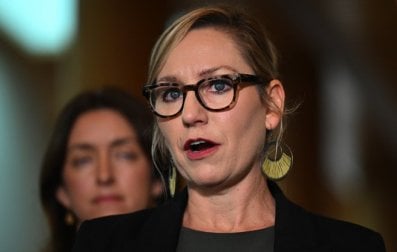
Zali Steggall has been waiting for the Coalition to start its trench run to take back a clutch of prized inner-city seats lost to independents in 2022.
Now seeking a third electoral term, the independent member for Warringah is well acquainted with Liberal Party and conservative lobby group efforts to turn the seats back to blue.
“During my first term of parliament, I had [the now] Senator Andrew Bragg authorising – and paying for with public funds, I should say – a website and a Facebook page called ‘Zali has failed’, and it used to pump out Facebook advertising,” Steggall tells The Saturday Paper.
“Clearly, that was not very effective, and included claims in relation to voting X amount of times with Labor and the Greens.
“There’s nothing new about this. It’s old-school fear and smear.”
A “fightback” against the independents, with a pledge to restore the trust of voters, has been building within the Coalition since its 2022 election review picked over the coals of Scott Morrison’s loss.
Independent MPs and any teal-like “Voices of” candidates challenging Liberal and Nationals incumbents are now the targets of the new Liberal “teals revealed” campaign. The multimedia pitches zero in on independent voting records, policies, progressive campaign ties and any wealthy donors.
“The next election will be close, with many commentators predicting a hung parliament. A Labor-Greens-Teals minority government? Don’t risk it,” a Liberal campaign video warns.
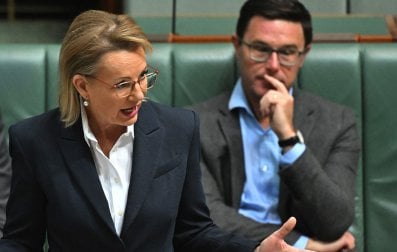
Deputy Opposition Leader Sussan Ley tells The Saturday Paper it is about holding the independents to account.
“We need to hear about everything that the teals have done and said in the same way that every member of parliament is accountable for their actions and their words from the day they put their hand up as a candidate, and I feel very strongly about that.
“People can make their own judgements.”
A website, mass email and other materials accuse the crossbenchers of being “weak on security”, disproportionately targeting Liberals and Nationals, and secrecy over who they will support in the event of a minority government. They’re also cast as hypocrites when it comes to the core issues of integrity and climate change action. On the topic of donations, the materials highlight a $100,000 donation to Steggall from the family trust of a former coal investor. The former barrister has described her acceptance of the donation two years ago as a “rookie error”.
The Coalition is questioning the independence of the candidates, pushing the line that they are bankrolled by wealthy donors in Sydney and Melbourne – citing Simon Holmes à Court’s Climate 200 funding vehicle and the support of progressive campaign outfit Populares. The Coalition points to “deep links to the Labor Party and GetUp!”.
Populares chief executive Ed Coper, an expert in disinformation, was instrumental in starting GetUp! in Australia.
“Populares is a professional campaign and communications agency,” Coper tells The Saturday Paper, noting its staff has “a range of political backgrounds and experience”.
“The majority of our clients are commercial and the work we do is non-political. This story was fully explored and explained years ago without incident. There’s nothing new to add here.”
Member for North Sydney Kylea Tink said Populares played an important role in her campaign, but ultimately she won her seat because voters wanted “politics done differently”.
The independents The Saturday Paper spoke to say the Coalition’s campaign is a reminder of the urgent need for truth in political advertising laws. The Coalition’s most senior female politician insists it is about transparency and pointing out double standards.
“I’m never, by the way, attacking these women personally. I mean, they’re all good people in their own right. This is not about that, and neither is this website about that,” Ley says.
“This is about saying this is their record, these are their actions.
“The teals have been very strident in being the opposition to the opposition. Zali has certainly done that by calling Peter Dutton a racist in parliament.”
Steggall’s two terms, the re-election of regional independent MP Helen Haines and the rise of six other independent MPs, backed by Climate 200, present a significant mathematical block to majority government for the Coalition.
Though the Liberal Party is widely seen as focusing on the outer suburbs of the bigger cities, Ley says it needs to win back urban seats.
“I said from day one, the road back to government goes through every single teal seat,” she says.
Party strategists say the task of taking back the Sydney seat of Wentworth from Allegra Spender is difficult. They have greater confidence in the Melbourne electorates of Goldstein, where former Liberal assistant minister Tim Wilson faces Zoe Daniel, and Kooyong, with Amelia Hamer challenging Monique Ryan.
Ley argues that parliamentary voting records question if the independents truly represent the former Liberal seats. The Liberal campaign uses the “They Vote For You” website to compare each MP with the leaders Anthony Albanese, Peter Dutton and Adam Bandt, as well as parliamentary Hansard records of votes.
In the show of the numbers, the independents are found to most often vote with the Greens and far more often with Labor than the Liberals.
That’s cherrypicking and misrepresenting data that is already available to constituents, according to Steggall. She has dismissed the campaign as a Trump-style “fact-resistant” donation drive.
“The irony is, if they spent half the amount of time they spend on data and trying to drive up fear-and-smear campaigns on actually coming up with some real policies with some real numbers, like, for example, costings and some kind of evidence around their nuclear policy proposal, voters might actually have something of substance to consider.”
The independents say often highly political procedural motions sway the voting numbers, and on legislation they are moving amendments in a bid to make improvements.
“If I’m calling a division on behalf of my community, because this is a point of policy that they care about, I can’t turn around and say, ‘Oh, but the Greens aren’t allowed to come and vote for it, right?’ I don’t have control over how other people vote,” Steggall says.
Kylea Tink says there’s more to the opposition’s story.
“Most recently in parliament, I moved an amendment to the superannuation changes that the government was trying to bring in, which would have seen the $3 million indexed. The opposition did not support my amendment,” she tells The Saturday Paper.
“No sooner did I sit down, than somebody from the opposition moved up and tried to move an almost identical amendment and said on record we would have voted with you, but essentially we weren’t allowed.
“They’re choosing to home in on numbers in a certain way and it really is, at the heart of it, quite misleading and deceptive.”
Spender cites fellow independent Kate Chaney’s attempt last year to amend the Fair Work Act by reducing the powers of unions to enter the workplace. She says the Coalition voted against the move.
“It’s truly hilarious because they actually had an amendment that was almost identical,” the Wentworth MP says.
“I remember going up to [shadow treasurer] Angus Taylor and to others and saying, ‘Do you know what you’re voting on? You’re voting for unions having greater powers to come into workplaces.’ But that’s the kind of games that they play in relation to these votes.
“I look at every single vote on the merits of the piece of legislation or the amendment in front of me, and I think that’s actually what the community expects from us.”
The Liberal campaign is insisting the independents front up now on which way they would go in offering support in the event of a hung parliament.
“That’s a test for them. They should answer those questions. It’s not far from the election. By the time we get through Christmas, the election will literally be upon us, and they need to answer those questions,” Sussan Ley says.
Tink, who is yet to announce plans after the abolition of her seat in a redistribution, says it is an impossible proposition.
“How would I make a decision on who I’m likely to back in the case of a minority government when I do not have clear line of sight on what policies the opposition and the Labor Party are actually offering up to myself and others across the community?” she says.
“If you want to know whether I’d back you if you were in a minority position in government, tell me what your policies are. Tell me how much your nuclear policy is going to cost.”
Suzie Holt, who will contest the regional Queensland seat of Groom for a second time in the next election, says the focus has to be on the needs of the electorate.
“I’m really open to giving confidence and supply to a leader that will align their party with the needs of our electorate. So, at the moment, neither Peter Dutton nor Anthony Albanese have come close, but when I’m elected, I will take all of those variables into consideration,” says Holt. At the last election, the social worker and community advocate pared the margin for Liberal National Party MP Garth Hamilton back to 6.9 per cent.
She says she isn’t bankrolled by a wealthy donor but won’t say if she has had discussions with Climate 200. “We’re self-funded. We just want to see positive change.”
For Holt, the Coalition’s campaign against the independents is great for name recognition. “It means that up here, we’re doing our job,” she says.
This article was first published in the print edition of The Saturday Paper on November 2, 2024 as "Teal lines of attack".
For almost a decade, The Saturday Paper has published Australia’s leading writers and thinkers. We have pursued stories that are ignored elsewhere, covering them with sensitivity and depth. We have done this on refugee policy, on government integrity, on robo-debt, on aged care, on climate change, on the pandemic.
All our journalism is fiercely independent. It relies on the support of readers. By subscribing to The Saturday Paper, you are ensuring that we can continue to produce essential, issue-defining coverage, to dig out stories that take time, to doggedly hold to account politicians and the political class.
There are very few titles that have the freedom and the space to produce journalism like this. In a country with a concentration of media ownership unlike anything else in the world, it is vitally important. Your subscription helps make it possible.
Subscriber exclusive
Send this article to a friend for free.
Share this subscriber exclusive article with a friend or family member using share credits.