News
Despite increases to JobSeeker and rent assistance, the national housing crisis has reached a flashpoint – and most Australians are affected in one way or another. By Mike Seccombe.
The real forces driving Australia’s rental crisis
Four. That was the number of places available to rent in all of Australia, affordable for a single person on JobSeeker, according to Anglicare Australia’s 2023 survey of 45,895 listings. All four were for rooms in share houses.
That “snapshot” was taken on March 17, before Treasurer Jim Chalmers delivered the federal budget, which raised the rate of JobSeeker by $40 a fortnight, or $2.86 a day, and increased rental support. Anglicare ran the numbers again to see how many people might be able to make rent as a result of that increase.
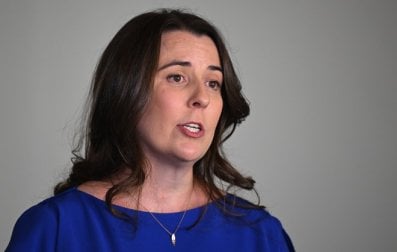
On Tuesday, at the National Press Club, executive director Kasy Chambers presented the results: five. “Five out of 46,000. No one on government benefits fared any better,” she said.
Chambers went on to make the point that it was not only those on benefits who were priced out of the market. For the first time since Anglicare began taking its snapshots 10 years ago, she said, “a single person working full-time on the minimum wage could afford less than 1 per cent of all the rentals. That’s the national picture.”
The housing crisis directly affects the great majority of Australians in one way or another. According to the 2021 census, only 31 per cent own a home outright – down from about 43 per cent in the mid 1990s. For this group, the house price declines over the past couple of years are only paper losses. Even they feel it, though, if they plan to renovate, which will expose them to the soaring price of construction – up about 12 per cent last year.
Another 35 per cent have a mortgage and are feeling the strain of steep interest rate rises to varying degrees, depending on the size and recency of the debt taken on. But most, according to the Reserve Bank, are actually ahead on their repayments. Only a minority – mostly young families in newly bought dwellings – are in real financial strife.
That’s not to downplay their hardship, but it is the third group of Australians, the roughly 31 per cent who are renters, who are really getting screwed by the market. These people were the focus of Chambers’ Press Club speech and of this story.
The most recent national dwelling rental index from real estate analytics firm CoreLogic found rents had gone up an average 10.1 per cent over the year to April.
“The combined capitals annual rental increase of 11.7% in the past year was a new record,” said the report.
That is, way above the general inflation rate of 7 per cent.
And the reason landlords can get away with gouging tenants? It comes back, essentially, to the old law of supply and demand.
“Over the four weeks to April 30th, the total supply of capital city rental listings was 20.9% below the level recorded this time last year and 39.8% below the five-year average,” notes CoreLogic.
Anglicare’s snapshot of places advertised for rent was also the lowest it had ever recorded: down some 30 per cent on the figures of recent years. Between 2018 and 2021, the number of available rentals listed was consistently above 65,000.
So, why so few vacancies?
If you believe Opposition Leader Peter Dutton, the reason so many Australians struggle to find a place to rent is the same reason others struggle to buy a house: migration. He hammered it hard in his reply to the budget.
“Amidst a housing and rental crisis, our migration numbers will increase massively by 1.5 million people over five years – the highest number in our country’s history and more than the population of Adelaide,” he said. “Without addressing housing supply and infrastructure, where will these people live?”
“The Albanese government’s Big Australia approach will make the cost-of-living crisis and inflation worse.
“It’s the biggest migration surge in our country’s history and it’s occurring amidst a housing and rental crisis.”
Dutton has continued to blame migrants for Australia’s housing crisis at every opportunity since.
His figures are accurate but his recitation is hypocritical. When in government, the Coalition – and Dutton as the responsible minister – also championed a Big Australia. During the three years before the Covid pandemic, the former government presided over net overseas migration of about 260,000 to 270,000 a year. In 2019, the last pre-pandemic year, Australia’s total population, comprising migration plus natural increase, grew about 1.5 per cent.
But with the arrival of the virus, Australia’s population growth all but stalled as the borders were closed to new arrivals, and those already here were pushed to leave. In 2020, the population grew just 0.1 per cent.
There are two key points to be made here. First, without migration, Australia would soon become a smaller, older, and according to most analyses, poorer nation. Without migration, says Peter McDonald, emeritus professor of demography at the Australian National University, Australia’s population would start to shrink in about a decade, as a result of a fertility rate that has long been well below replacement levels. Second, the high net overseas migration numbers in this year’s budget – 400,000 this financial year and 315,000 next year – amount to playing catch-up. After that, numbers will return to about what they were before Covid, when Dutton’s side of politics was in government.
Dutton has not suggested what level of migration he would prefer.
He has been accused of xenophobic dog-whistling, a charge regularly levelled at the conservative parties ever since then opposition leader John Howard warned that migrants from Asia threatened Australia’s social cohesion, back in 1988. Among Dutton’s contributions to this record are his claims that “illiterate and innumerate” refugees were taking Australians’ jobs, and that allowing medical evacuations of asylum seekers from offshore detention on Manus Island and Nauru would bring rapists, murderers and paedophiles into the country.
The fact Dutton has form, though, does not mean his latest claims will not resonate with sections of the electorate. Or that he is entirely wrong about the strain of population growth.
Minutes from the Reserve Bank’s April meeting recorded some concern among board members that the high rate of population growth “could put significant pressure on Australia’s existing capital stock, especially housing, which would in turn manifest in higher consumer prices”.
They also noted, however, that “higher immigration might reduce wage pressures in industries that had been experiencing significant labour shortages”.
Which is to say, higher immigration might be somewhat inflationary in the short term, but the alternative also might be inflationary, if labour shortfalls led to higher costs.
This dilemma is particularly well illustrated in the housing sector, where the pandemic exacerbated a shortage of skilled tradespeople. The result was tradies’ incomes grew rapidly during the pandemic and the post-pandemic housing boom – even before inflation took off and as most Australians’ wages remained stagnant.
Over this period, says Tom Devitt, senior economist with the Housing Industry Association, “the price of skilled tradespeople was increasing at around 7.5 per cent a year, until mid 2022”.
Since the middle of last year, the inflation in the price of trades labour has slowed dramatically, but, he says, “they’re still up 21 per cent since the end of 2019”.
“The shortage of skilled trades is still quite acute; not quite as bad as it was last year and the return of overseas workers is likely to continue helping that moderate for the rest of the year.
“It is a bit of an awkward situation that we need the return of overseas workers to aid some of these skill shortages but, at the same time, they can need somewhere to live. It’s really a push-and-pull situation.”
As to the effect higher migration will have on the housing shortage, McDonald says it is less than the numbers might suggest. The impact of returning foreign students, for example, is often overstated, as large numbers of international students tend to group in share houses.
And anyway, says Hal Pawson, professor of housing research and policy at UNSW Sydney’s City Futures Research Centre, the surge in net migration is only compounding a pre-existing problem.
“It’s fair enough to say that the current situation has been made worse by the bounce back of migration, but the claims that are often made that migration is the dominant factor in influencing house prices and rents are obviously wrong. They’ve been disproved conclusively by the experience of the pandemic. We were already in the grip of a house price boom … during the period when we had negative migration,” says Pawson.
The real causes are far more complex and long entrenched, he says. The seeds of today’s crisis were planted some 40 years ago.
Negative gearing, the financial leverage by which an investor can claim a tax break on interest payments and other costs associated with buying a property, is a factor, albeit hardly a new one, says Pawson. “The rules which allow the gearing of residential property have been in the tax system since the 1920s,” he points out.
It was the combination of negative gearing with other changes in the 1980s and 1990s that really lit a fire under the property market.
“One was the liberalisation of mortgage finance, which made it so much easier to get a loan to buy an investment property, which, before the 1980s was still quite difficult to do.”
Then in 1999, the Howard government changed the capital gains tax, instituted as an equity measure by the Hawke government 14 years previously. The rate of tax was halved and other changes made, enabling the wealthy to turn more highly taxed income into less-taxed capital gains.
“That was a very significant moment,” says Pawson.
He regrets that Labor has abandoned the “very moderate” proposed reforms to the negative gearing and capital gains tax breaks that it took to the 2016 and 2019 elections.
“It was a very unfortunate thing that in the post-mortem after the 2019 election [loss] they took the view that everything that was put into that particular manifesto had to go. I think they threw the baby out with the bathwater.
“I think is debatable whether reform to negative gearing, capital gains tax for properties … contributed in a big way to Bill Shorten not becoming prime minister,” he says.
Pawson also cites another big, regressive change during the Howard years, to the Commonwealth–state funding agreements, so the states “were no longer expected to use it to invest in new housing provision – they were allowed to use it as they think fit”.
The damaging consequences of those changes, made in the ideological belief that the best way to provide housing was to incentivise the private sector to do the vast bulk of it, continue to play out.
Only this week, The Sydney Morning Herald reported that the previous Liberal–National government in New South Wales offloaded 4858 homes across the state between 2011 and 2023. Despite promises the proceeds would go back into providing more public housing, only 4500 homes were built.
The story is basically the same everywhere: governments have substantially pulled out of the business of public housing. They have built fewer and sold more.
As Kasy Chambers reminded her audience at the Press Club, before the shift government “used to fund and build homes as its answer to housing affordability”.
“This provided secure homes for working people on low incomes and freed up affordable rentals for people on middle incomes. It also ensured that regional communities got the homes they need, instead of being left to the mercy of whether builders found it profitable to build there.
“Since the 1980s, we have shifted that expenditure into Commonwealth Rent Assistance, negative gearing and capital gains tax concessions.”
That and providing grants to home buyers, which have only stimulated demand and pumped up prices, making housing more expensive for everyone, and particularly impacting those in the rental market.
“We spend more now per capita on housing through these payments than we ever did, and yet housing has never been less affordable by any measure,” said Chambers.
“Anyone can see that this approach is failing. The shortage of affordable rentals has been soaring since 1996, even though every region in Australia has an oversupply of homes.”
And that is the extraordinary thing, says Maiy Azize, spokesperson for housing campaign Everybody’s Home. “We’ve never had more dwellings per head of population than we do now. We build between 160,000 and 240,000 new homes in Australia every year.”
That’s more than enough to cope with population growth, she says.
And they are increasingly big and empty homes.
The average Australian dwelling has more than three bedrooms and newer homes have more than older ones. Meanwhile, the number of people living in them is declining, from about 2.9 in the mid-’80s to 2.5. The pandemic contributed to this, as more people worked from home, requiring more space. Tens of thousands of spare bedrooms became home offices.
On census night in 2021, more than 10 per cent of dwellings, more than a million homes, were unoccupied. There were many reasons for this: some had been sold but the new owners had not yet moved in, some were being renovated, some were owned by people who were travelling or overseas and some were simply unliveable. And some homes were being “land banked”, that is, held vacant until they could be sold or redeveloped.
But many, says Azize, were second homes for wealthier Australians.
“Definitely, wealthier people are taking up a lot more space, living in smaller households, buying holiday homes,” she says.
And when they are not living in those holiday homes themselves, those people are increasingly apt to put them on the short-stay rental market, through Airbnb and similar companies.
The likes of Airbnb, says Azize, “make a big difference in particular locations”.
As a result, we are seeing moves by some state and local authorities in this country – as elsewhere in the world – to limit the supply of short-stay accommodation in desirable locations and/or tax unoccupied houses.
But such measures to improve the supply of long-term rentals have so far been piecemeal. Azize says it is far from clear that they will do much to boost the amount of affordable long-term accommodation.
“There’s been this big assumption that’s been driving housing policy in Australia for decades, that if we just have enough supply … it puts downward pressure on rents. That’s just been the economic orthodoxy,” she says.
No doubt there are issues around supply, mostly to do with providing it in the right places, as the HIA’s Tom Devitt says. And that goes to the “nimby” problem, often expressed through local governments whose residents do not want increased density, let alone social or affordable housing in their neighbourhoods.
“Planning frameworks often limit heights and densities in existing suburbs. They make it really difficult to build enough housing, and that just puts more and more pressure on urban sprawl, and by extension, the infrastructure needed.”
So, the housing problem, and particularly the affordable rental problem, is far more complex than Peter Dutton would have us believe. And dealing with it, many analysts suggest, will require a lot more from government than Jim Chalmers offered in his budget.
As we have already seen, the small increase in welfare payments will do little to make rents more affordable. Nor, as CoreLogic noted in its analysis, will the modest increase to Commonwealth Rent Assistance (CRA) – the government’s largest single housing assistance program. The 15 per cent increase to the maximum rate from September will cost $2.7 billion but will equate to only a $31 rise in CRA a fortnight, CoreLogic says.
“While this at least recognises challenges faced by renters ... imputed rent values suggest the national median rent has increased the equivalent of $113 a fortnight in the year to April alone.
“Under the budget proposals, some households receiving CRA will also see a boost from the $40 increase for JobSeeker payments from September, continued indexation of support payments and relief on energy bills. However, with housing supply initiatives not scheduled until 2024, and no ceiling on rent increases for private landlords, there is a greater risk of these income supplements simply putting further upward pressure on rent values.”
Simply subsidising renters so they can pay higher rents in the private market, the evidence suggests, does not work. And the need is growing.
It’s time, say the renters’ advocates – and one political party, the Greens – for the government to get more directly involved in providing social and affordable housing. Like it used to.
“We have a shortfall of 640,000 social homes, and that’s not going to get built unless the government takes money out of the budget and spends it. There’s about 400,000 people on waiting lists around the country. But a lot of people just aren’t joining waiting lists, because they’ll be on them for 10 years,” says Wendy Hayhurst, chief executive of the Community Housing Industry Association.
“We treat social and affordable rental housing … simply as an extension of the welfare system, so a service that’s provided to the very, very needy who have no other option.
“We don’t recognise or think that for a much greater proportion of the population than those housed in public and community housing at the moment, trying to find good-quality accommodation provided by the market is virtually impossible.
“We could improve market private rental but we would still be left with a reasonable number – I would say, probably 10 per cent but potentially more – people who, at any point in time, would not be able to satisfactorily find a housing option in the private market, whether that was home ownership or private rental.”
Which brings us, finally, to the current government’s modest plan to actually build houses, the Housing Australia Future Fund. The proposal would invest $10 billion in the markets, with estimated annual returns of $500 million to be channelled into a social and affordable housing construction subsidy.
Via this scheme, the Albanese government claims it could build 30,000 social and affordable homes in five years – a number that rises to 40,000 under the National Housing Accord reached with the states.
The proposal is now stalled in the senate, blocked by the conservative parties – for no clearly articulated reason, although they have long preferred to leave it to the private market – and the Greens, who say it is inadequate. They argue that the fund has no floor and could well return less than forecast, depending on the state of the sharemarket, and caps spending at $500 million. They are open to negotiation but advocate spending 10 times as much.
That $5 billion seems like an awfully big sum until you consider that the government is preparing to proceed with the stage three tax cuts, the cost of which, according to new analysis by the independent parliamentary budget office, has now blown out to $313 billion over a decade. Half of that would accrue to people earning more than $180,000 a year.
You could build an awful lot of homes for a fraction of that money. The question is, would they prefer to fund holiday homes for the wealthy or affordable ones for the struggling?
This article was first published in the print edition of The Saturday Paper on May 20, 2023 as "Rent asunder".
For almost a decade, The Saturday Paper has published Australia’s leading writers and thinkers. We have pursued stories that are ignored elsewhere, covering them with sensitivity and depth. We have done this on refugee policy, on government integrity, on robo-debt, on aged care, on climate change, on the pandemic.
All our journalism is fiercely independent. It relies on the support of readers. By subscribing to The Saturday Paper, you are ensuring that we can continue to produce essential, issue-defining coverage, to dig out stories that take time, to doggedly hold to account politicians and the political class.
There are very few titles that have the freedom and the space to produce journalism like this. In a country with a concentration of media ownership unlike anything else in the world, it is vitally important. Your subscription helps make it possible.
Subscriber exclusive
Send this article to a friend for free.
Share this subscriber exclusive article with a friend or family member using share credits.