News
Polling shows at least four teal independents are at risk of losing at the next election, as the government prepares donation reforms that favour major parties. By Jason Koutsoukis.
Teals at risk in Goldstein, Kooyong, Mackellar and Curtin
The teal independents who won a string of seats at the 2022 election are at risk of being wiped out at the next election, according to unpublished polling.
Political operatives who have seen polling from multiple sources tell The Saturday Paper the data shows the teals are at real risk of losing in the Melbourne seats of Goldstein and Kooyong, Mackellar in Sydney and Curtin in Perth.
“The idea that an independent, once elected, is there for three or four terms is not supported by the current data,” says a political operative who has seen the polling. “There is a very strong possibility that at least four of those MPs could lose their seats.”
With the seat of North Sydney, held by teal MP Kylea Tink, abolished under a draft redistribution released by the Australian Electoral Commission in June, that leaves only Allegra Spender in the Sydney seat of Wentworth and Zali Steggall in Warringah in relatively secure positions ahead of the next election. ACT independent David Pocock is also likely to retain his Senate spot.
Climate 200 convenor Simon Holmes à Court said the group’s polling showed incumbent independents backed by the group were “about where we’d expect” in terms of numbers. One poll had Monique Ryan holding Kooyong by the narrowest possible margin.
“They are at least within the margin of error where they were in April 2022 and we’re seeing the Liberal vote softer,” he said. “It’s not in the bag and independents will have to work really hard to maintain visibility in an environment that favours the majors.”
Conversely, Climate 200 research suggests those community independents backed by them could still threaten the Liberal–National Coalition in a handful of other federal seats, including the rural Victorian seats of Wannon, Nicholls, Monash and Flinders, the rural NSW seats of Cowper and Calare, and Bradfield on Sydney’s north shore. Climate 200 is also talking to groups in McPherson, Moncrieff, Fairfax and Fisher in Queensland, Grey in South Australia, and Moore and Forrest in Western Australia.
Undermining those hopes are fears that a package of electoral reforms set to be introduced to parliament by Special Minister of State Don Farrell will mirror electoral reforms passed in NSW and Victoria, and which are on the table in South Australia, which make it harder for new independent candidates to win seats.
“If you come at Labor’s political machine, then Don comes at you,” one independent-aligned political operative told The Saturday Paper, arguing that Farrell’s record in politics suggests he will always act to protect the interests of Labor and the two-party system. “Labor would be shooting itself in the foot if it does that, because it would limit the chances of independents winning further Coalition seats.”
Farrell hit back at claims independent candidates needed more money, telling The Saturday Paper there was little doubt about what the main source of the problem was when it came to the current electoral system.
“The problem is clear, and that problem is big money in our politics,” Farrell says. “I don’t care what colour your money is, the electoral system should be protected, regardless of what side you’re coming from.”
The Saturday Paper understands that following a series of recommendations made in the final report of the Joint Standing Committee on Electoral Matters inquiry into the conduct of the 2022 election, Farrell’s proposed reforms will focus on three key pillars.
These will be: caps on the amount of money that can be donated to individual candidates or political parties; caps on the amount of money that candidates or parties can spend on campaigns; and increased transparency and disclosure rules surrounding political donations.
The new laws will require all donations of more than $1000 to be publicly disclosed, down from the current disclosure level of more than $16,900.
Disclosure laws will also be changed so all donations over $1000 will have to be disclosed in real time, compared to the current system in which donations are not disclosed until about 19 months after the donation is made.
While the new laws will cap how much each donor can give and how much each candidate can spend, exact figures are still being finalised.
Labor insiders say the main intent of the legislation is to keep big money out of politics and halt the spread of misinformation. They point to concern at attempts by billionaires such as Clive Palmer to sway elections with massive donations to far-right parties such as United Australia Party and Pauline Hanson’s One Nation, as well as the pressure group Advance.
Emphasising a commitment to lasting structural changes, Labor sources insist Farrell has consulted widely across the parliament, making it clear he wants consensus and that his door is open to anyone wanting to put forward sensible ideas about electoral reform.
“Australia has an electoral system that is the envy of the modern world, but the system is not perfect,” Farrell says. “It can and should be strengthened, not just to improve our democracy, but to protect it against future threats. One thing is clear – our system needs to be protected, including from billionaires who try to influence our elections.”
While the teal independents have worked well with the Albanese government in the current parliament, tensions have grown over the course of the term.
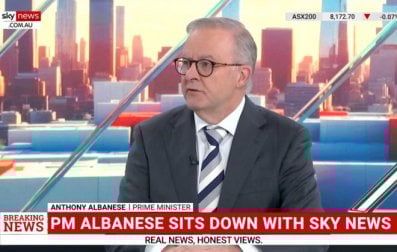
Addressing the teals privately at the start of the term, Albanese was understood to be only half-joking when he told them that while he was “happy” with their current make-up, he wanted “no more, please”.
Albanese’s attitude hardened when Zali Steggall, the Climate 200-backed member for Warringah who unseated former prime minister Tony Abbott at the 2019 election, publicly attacked him over government proposals to cut the number of personal advisers available to crossbench MPs.
In May, Albanese slapped down teal independent Monique Ryan when she asked “whether any fossil fuel industry lobbyists or other fossil fuel industry representatives” had attended a $5000-a-head Labor fundraiser that Albanese had addressed the night before.
“I’ve stood and had the great honour of being the Australian Labor Party candidate in 10 elections,” Albanese told parliament, perhaps signalling the likely direction his government would take when it came to electoral reform. “During those 10 elections as the candidate for Grayndler, I have spent less money on those 10 campaigns than the member for Kooyong did in her one.”
Ryan raised $1.8 million from 3762 donors for her successful campaign to unseat former Liberal treasurer Josh Frydenberg, while independents and other individual candidates collectively spent about $21 million across the entire 2022 campaign. By comparison, the two major parties spent a combined total of $513 million over a three-year period.
With behind-the-scenes campaigning over Farrell’s legislation intensifying, another fear being expressed by crossbench MPs and senators is that a grand bargain between the major parties would build a wall of public funding that would make it near impossible for new independent candidates to win seats, as evidenced by the most recent NSW and Victorian election results.
Crossbench MPs and senators are also pointing to proposed changes to South Australia’s electoral laws introduced by Premier Peter Malinauskas, a Farrell protégé, which they believe were likely designed in consultation with Farrell.
In addition to capping donations and imposing spending limits, the Malinauskas model would introduce a new category of “operational funding”.
Over the course of a four-year term, that would provide $5.6 million extra funding for the South Australian branch of the ALP, half of which can be spent on political expenditure such as political advertising, and the rest can be spent on administrative costs such as staff. By contrast, it would limit funding to only $30,000 per year for incumbent independents and $2500 for challengers.
If applied nationally, independents are worried that, when combined with existing rules surrounding per-vote public funding, this would give the major parties about $100 million in extra taxpayer funds over the course of a three-year term.
“Guess who the South Australian premier’s mentor is? Have a guess. It’s Minister Farrell,” independent Tasmanian Senator Jacqui Lambie told federal parliament last month during a debate over a private member’s bill for fair and transparent elections introduced by teal independent Kate Chaney, the member for Curtin.
“That’s right: Minister Farrell and Peter Malinauskas are from the same faction of the South Australian Labor Right. Peter Malinauskas, when it comes to voting reform, is nothing but the muse of Minister Farrell. That’s what you South Australians are getting: an absolute dud.”
According to a campaign finance reform brief compiled by Climate 200, donation and expenditure caps introduced in NSW and Victoria have had a stifling effect on democratic participation and accountability by serving to entrench the two-party system.
“We recently analysed the impact of the NSW rules for the NSW Electoral Matters Committee and were stunned by the numbers,” the briefing note said. “Going into the last NSW election, Labor and the Coalition had a combined total of nearly $300 million in publicly funded benefits. Election campaigns fund: $26.5m; administrative funding: $35m; communications allowance: $35.3m; salaries and other allowances: $201.5m.”
According to the brief, Victoria’s laws allow the major parties to make a sizeable profit from public election funding and channel huge sums towards priority seats. It argues that the NSW expenditure caps are also skewed in favour of the major parties and do not reflect the benefits of incumbency.
Kate Chaney, whose private member’s bill aims to level the playing field in elections for new political candidates, improve the transparency of political donations, and reduce the ability of political donors to buy influence, tells The Saturday Paper that transparency is a bare minimum for her when it comes to the federal electoral reform legislation.
“At the very least, before the next election, we need transparency – real-time disclosure of donations above $1000 and a truth in political advertising framework to protect voters from outright lies,” Chaney says. “To rebuild trust in our political process I think we also need to ban social harm industries and government contractors from making political donations.”
She adds: “My fear is that the major parties stifle future challengers by replacing private donations with public funding – making taxpayers pay more to lock in the major parties. Given the declining primary vote going to major parties and declining trust, communities will be outraged by any donation or spending cap model that reduces future political competition.”
In 2013, under then prime minister Julia Gillard, federal Labor and the Coalition agreed in writing to proposals that would have increased taxpayer funding for political parties.
Negotiated in secret a year earlier between then special minister of state Gary Gray and his opposition counterpart Bronwyn Bishop, with the full knowledge and support of Labor’s then national secretary George Wright and Liberal Party federal director Brian Loughnane, the deal unravelled amid public outrage when it became public, forcing a revolt from the Coalition back bench.
With Coalition powerbrokers concerned about the further encroachment of teal independents into heartland areas, and Labor facing challenges in traditional strongholds such as Wills in Melbourne and possibly in Western Sydney seats such as Blaxland, McMahon and Watson, Climate 200 believes there are plenty of incentives for the major parties to try to collude again.
“The major parties have a history of changing electoral laws to their advantage. In Victoria and NSW, the parties have made it almost impossible for independents to run competitive campaigns, and have given themselves huge increases in public funding,” Climate 200 convenor Simon Holmes à Court tells The Saturday Paper.
“In Victoria the parties gave themselves $15 million each in public funding. Before the Victorian ‘reforms’ there were three independents in the lower house. Now there are none. In NSW the parties can receive more in public funding than they’re permitted to spend. NSW’s expenditure caps tilt the playing field even further in the favour of parties.
“Peter Malinauskas’s proposed reforms in South Australia might sound good, but when you dig into them, they’re a form of financial gerrymander.”
This article was first published in the print edition of The Saturday Paper on August 3, 2024 as "Teals at risk in Goldstein, Kooyong, Mackellar and Curtin".
For almost a decade, The Saturday Paper has published Australia’s leading writers and thinkers. We have pursued stories that are ignored elsewhere, covering them with sensitivity and depth. We have done this on refugee policy, on government integrity, on robo-debt, on aged care, on climate change, on the pandemic.
All our journalism is fiercely independent. It relies on the support of readers. By subscribing to The Saturday Paper, you are ensuring that we can continue to produce essential, issue-defining coverage, to dig out stories that take time, to doggedly hold to account politicians and the political class.
There are very few titles that have the freedom and the space to produce journalism like this. In a country with a concentration of media ownership unlike anything else in the world, it is vitally important. Your subscription helps make it possible.
Subscriber exclusive
Send this article to a friend for free.
Share this subscriber exclusive article with a friend or family member using share credits.