News
Labor is looking past ailing polls as it lays the policy groundwork for the next election, while strategists and pollsters say even a minority government may be tough to secure. By Jason Koutsoukis.
‘A race towards minority’: Labor’s fight for re-election
The oldest political axiom in Canberra is that every first-term government gets a second chance.
It has held true for the better part of 100 years, with Labor’s James Scullin the last to fall at the first hurdle, in 1931, after only two years in office.
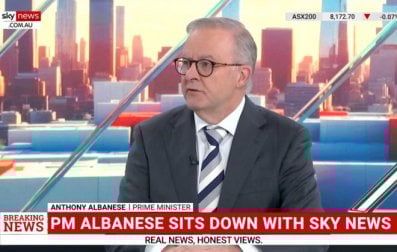
Two years into the current electoral cycle and the omens, prophecies and occasional hard facts that are starting to pile up around Anthony Albanese suggest Labor will struggle to retain majority government when voters go to the polls, likely about a year from now.
“I spoke about two elections,” Albanese told the first meeting of the Labor caucus following his 2022 election win. “I said I had two dates in mind – one, election day on May 21; but secondly, as well, where we would be positioned in 2025 … all the measures that we put in place, and that we would be able to point to that.”
In the House of Representatives, Labor holds 78 of the 151 available seats, the narrowest majority for any first-term Labor government since Federation.
In other words, no fat to cut.
While many Labor insiders expressed optimism for the party’s chances at the next election, not everyone is convinced its hard heads are coming up with the right answers.
“It’s been a pretty uninspiring contest so far, a race towards minority government,” says one Labor veteran.
“All the things we didn’t deal with over the last two years – the hard economic reforms, the big changes in health and education that voters elect governments to bring on – we’ll have to try to get through by negotiating with all the different fringe groups who now have a seat at the table.”
Not even minority government is guaranteed, says Tony Barry, director of corporate affairs and communications at Melbourne-based political consultancy RedBridge Group.
“The political orthodoxy has always been that if you get one term, you definitely get two and probably three,” says Barry, who is a long-time adviser to conservative leaders. “But there is such a total lack of hope, and such high levels of frustration out there, that I can now see the preconditions existing for a one-term government.”
Stacked against Labor is the fact that of the seven governments seeking a second term since 1945 – three led by Labor prime ministers and four led by Liberal prime ministers – all went backwards.
From the 1950s through to the early 1990s, the average loss of votes for the ruling party was about 0.9 per cent in two-party terms – enough to consign Labor to minority government.
That trend has only accelerated since the 1998 election, with the average loss of votes for governments seeking a second term rising to 3.4 per cent – almost enough to make Opposition Leader Peter Dutton prime minister, if all those votes ended up on his side of the ledger.
A uniform two-party swing of 3.1 points – the smallest suffered by any of the past three first-term governments – would leave Labor with 70 seats and the Coalition with 66. A 4.6 per cent swing – the biggest to impact any of those three governments – would see Labor lose another four seats.
Emeritus professor Murray Goot, of Macquarie University’s Department of Politics and International Relations, believes the notion first-time governments are protected in some way because they’ve only been in power for two or three years is wrong.
“Traditionally, first-term governments are able to win a second term because they have enough of a margin to withstand the swing that all governments since the war have suffered,” says Goot. “The problem for Albanese is that he doesn’t have much of a margin, and if the current polls don’t change much between now and election day, then the best he could hope for would be minority government.”
The most recent set of polls came out on Monday.
Newspoll, published by The Australian and widely considered the gold standard of Australian polls, showed while Labor’s primary vote rose one point to 33 per cent, it’s hanging on to the barest of two-party advantages – 51 per cent to the Coalition’s 49 per cent.
The Resolve poll published in The Age and The Sydney Morning Herald calculated a two-party preferred vote of 50-50 based on the respondents’ stated voting intention.
More alarming for Albanese, Resolve showed Labor’s primary vote slipping to 30 per cent, down from its record-low of 32.6 per cent at the last election.
Goot, whose detailed analysis of polls over the past 50 years demonstrates the two-party preferred vote is the most reliable predictor of seats won or lost, faults Resolve’s method because it doesn’t allocate preferences based on how they were distributed at recent state and federal elections, which is how Newspoll calculates its two-party vote.
Goot also has a problem with Resolve’s failure to give respondents the option of answering “don’t know” when asked how they would vote, making it more likely they register as voting for an independent candidate.
Whatever the power of newspaper opinion polls to take the electorate’s pulse at any given moment, political professionals in both major parties regard them as not particularly accurate assessments of what will happen in the election.
Liberal prime ministers Tony Abbott and Malcolm Turnbull both led governments that famously lost more than 30 Newspolls in a row to Labor, yet the Coalition managed to keep winning elections.
That Labor hasn’t lost a single Newspoll under Albanese, even after 12 interest rate rises during his incumbency, and despite stubbornly high inflation, probably explains why Albanese and other senior ministers do not yet seem overly concerned.
“I’m not worried per se about the government’s electoral fortunes,” Minister for the National Disability Insurance Scheme Bill Shorten told Radio National’s Patricia Karvelas this week. “For me, and I know for most members of the government, what matters is how people are coping and it’s all about cost of living.”
In May 2022, when the Reserve Bank of Australia began raising interest rates, the conventional wisdom was rates would keep rising over the course of 2022 and then start heading back down. Then the opposite happened, with the RBA’s cash rate reaching 4.35 per cent in November last year, its highest level since December 2011.
When people under that kind of cost-of-living pressure are asked what they think about federal politics for opinion polls, it’s no surprise the government of the day would record modest results.
“With all the inflationary pressures that people are facing, in areas such as insurance, rents, rising energy costs, the fact that we aren’t in a world of pain in terms of the polls is just insane,” says one Labor insider. “The Coalition’s weak economics team is one of the factors that is helping us.”
With the next election not due until September 27 next year – a full 17 months away – some believe there is still time for the interest-rate cycle to turn in the government’s favour.
Another rationale for the optimism within Labor ranks is the view that voters are not yet in a decision-making cycle and so are not really thinking about their actual voting choices. Instead, they are answering pollsters’ questions based on how they feel about the government at that particular moment.
So, as Treasurer Jim Chalmers and Finance Minister Katy Gallagher put the final touches on the May 14 budget, which will lay the groundwork for the government’s re-election bid, what is Albanese’s strategy to win “back-to-back premierships”?
If he is to have any hope of hanging on to majority government, the one state where he has to make gains is Dutton’s home state of Queensland. In the past two weeks alone, the prime minister has made separate trips to Brisbane, Gladstone and Mackay, to spruik his Future Made in Australia plan.
“My government wants to make more things here,” Albanese said at a press conference to mark the Mackay Waterfront Riverside Revitalisation Project.
Pointing to a boat moored nearby, Albanese noted it was an “example of how we can boost manufacturing here by boosting jobs, making our economy stronger as well … that will be a focus of our budget, as well as cost of living.”
In addition to booking a second consecutive surplus, the budget will contain a number of easy-to-understand cost-of-living relief measures Labor strategists believe will buy the government enough time until the RBA starts cutting rates, likely towards the end of this year or early next year.
Then there is Labor’s plan to target what it sees as the harsher aspects of Dutton’s character and his record as health minister under the Abbott government. This strategy worked to the government’s advantage in the two byelections both sides have contested since the 2022 federal election.
In the seat of Aston, located in Melbourne’s more affluent eastern suburbs and vacated by former Liberal education minister Alan Tudge, Labor won with a 6.4 per cent swing. That was the first time in 103 years a government won a seat from the opposition in a byelection. Despite a 3.6 per cent swing to the opposition, Labor also comfortably held the seat of Dunkley, in Melbourne’s south-east, in a vote triggered by the death of Labor MP Peta Murphy.
There is a belief within Labor ranks that voters don’t have a fully formed picture of who Dutton is and what he stands for, despite his having been a major figure in the parliament for more than 20 years.
Another issue Labor believes will create problems for Dutton is his nuclear energy plan, with bickering between Liberal and Nationals MPs over the selection of six sites for proposed nuclear reactors already delaying the release of the Coalition’s broader energy plan.
A more oblique budget outcome, which Labor strategists are hoping for, is that it brings Dutton’s policy-free days to an end and forces him to start defining a range of alternative positions.
If and when that happens – whether in the form of detail on the location of the Coalition’s proposed nuclear power stations, or surrounding its plan to allow people to use their superannuation for housing, or how the Coalition will roll back Labor’s industrial relations changes – Labor strategists believe it will help clarify the choice between the two major parties.
The danger for Albanese, says Tony Barry, is while voters recognise that a combination of global issues such as the war in Ukraine and high energy prices are largely to blame for cost-of-living increases, they don’t think Albanese has the answers either.
“Never in over 25 years as a consumer and provider of political polling, have I ever seen one issue dominate the issues of the day as much as cost of living at the moment. It is all-pervasive,” Barry says.
“He got some small reward for his stage three tax cuts in January because people thought that at least he was listening and recognising that there was a problem. But I can easily see Albanese losing quite a lot of seats just because of the politics of grievance.”
This article was first published in the print edition of The Saturday Paper on April 27, 2024 as "‘A race towards minority’: Labor’s fight for re-election".
For almost a decade, The Saturday Paper has published Australia’s leading writers and thinkers. We have pursued stories that are ignored elsewhere, covering them with sensitivity and depth. We have done this on refugee policy, on government integrity, on robo-debt, on aged care, on climate change, on the pandemic.
All our journalism is fiercely independent. It relies on the support of readers. By subscribing to The Saturday Paper, you are ensuring that we can continue to produce essential, issue-defining coverage, to dig out stories that take time, to doggedly hold to account politicians and the political class.
There are very few titles that have the freedom and the space to produce journalism like this. In a country with a concentration of media ownership unlike anything else in the world, it is vitally important. Your subscription helps make it possible.
Subscriber exclusive
Send this article to a friend for free.
Share this subscriber exclusive article with a friend or family member using share credits.