News
One of Julian Assange’s fiercest supporters describes the endurance needed to repel the coordinated attacks, lies and isolation to win a 14-year battle for his release. By Felicity Ruby.
Life after Julian Assange’s release
Freedom suits Julian just fine. The sun is kind to his face. Family adventures in nature are under way. Everything we hoped for is happening, although that’s not my story to tell.
We who worked for Julian’s release these past 14 years are also free. That part of the story ended on June 26 last year, when the Canberra Airport touchdown rendered our campaign blissfully redundant. Yes, investigative journalism remains imprisoned by the precedent of prosecuting a publisher for doing his job, so a pardon campaign is needed, but the campaign to bring Julian home is done.
I deleted Twitter before he’d left the airport and can highly recommend that freedom. I have been bouncing between jubilation, disbelief, protective fear and exhaustion. To get some perspective, I took a road trip, read books by rivers and cried for joy but also in anger and grief.
Relief is very real, but it also sees me dredging through what could have happened. It reminds me of horrors such as jail visits and politics in the pub, things from which I will now be spared.
It has taken time to believe that what seemed impossible wasn’t. The campaign aged many of us and we lost a few along the way, but it was all worth it, wasn’t it?
Many street activists in London, who for seven years stood winter after winter outside the Embassy of Ecuador and then for five years week after week outside Belmarsh prison and Australia’s embassy, tell me it was. Some say it was the best thing they ever did.
Julian’s lawyers must have wondered if taking the case was the maddest thing they had ever done, given its length and viciousness. The journalist unions – Australia’s Media, Entertainment & Arts Alliance, the International Federation of Journalists and the European Federation of Journalists – were justified in standing up for one of their own and needed a win during a time of great peril for their profession. That peril is far from over.
The United Nations actually functioned and exercised its authority, and some politicians even redeemed themselves by representing their constituents. Organising and attending endless public meetings, signing statements and letters, staging street theatre stunts and sharing photos of the graffiti all coalesced to bring him home. Maybe even Twitter threads were worthwhile.
Vindication is worth a lot but it costs a lot, too.
Now Assange is free, is it safe to be honest about the costs? To grieve the theft of years of his life and the deliberate and menacing toll on his family and friends?
Perhaps if it’s not dangerous anymore to talk about dark days, it’s just self-indulgent.
Certainly, the cost will be even greater if we don’t learn from what the attack on WikiLeaks taught us about power, or if we forget how organisations, movements and global networks of solidarity built a campaign that brought Julian home despite these attacks.
Any retrospective analysis must credit endurance as the chief feature of this campaign. Julian’s endurance was remarkable in the face of physical confinement and increasing psychological, economic and legal stress. The reputational mutilation he endured was designed to normalise this persecution and also to corrode his base, to intimidate and deter supporters.
Its purpose was to frighten off people, and it did. After each incursion, after each smear-filled hit piece, the implied threat of professional harm or loss of social standing drove people away.
The then UN special rapporteur on torture and other cruel, inhuman or degrading treatment or punishment, Nils Melzer, explained what Julian endured as “a relentless and unrestrained campaign of public mobbing, intimidation and defamation”. He faced an endless stream of humiliation, ridicule, insults, debasing and threatening statements, open instigation of violence and repeated calls for his assassination in the press and on social media, including by senior political figures and even some judicial magistrates who were involved in proceedings against him.
Following a visit to His Majesty’s Prison Belmarsh in 2019, Melzer stated, “In 20 years of work with victims of war, violence and political persecution, I have never seen a group of democratic states ganging up to deliberately isolate, demonise and abuse a single individual for such a long time and with so little regard for human dignity and the rule of law.”
Now Assange is free, it’s safe to point out that the abuse targeted at the individual was designed to enact an unbearable cost on anyone who would speak up for him, to smear and assassinate character by association. It was disheartening, but we were hardly surprised.
Leaked documents prepared by Palantir Technologies showed how major corporations were preparing to deal with WikiLeaks after Julian was first arrested: “Feed the fuel between the feuding groups. Disinformation. Create messages around actions to sabotage or discredit the opposing organization. Submit fake documents and call out the error … Media campaign to push the radical and reckless nature of WikiLeaks activities. Sustain pressure. Does nothing for the fanatics, but creates concern and doubt among moderates.”
Despite witnessing the brutal creativity of the attacks Julian endured, and who he was up against, people were often willing to risk surveillance and professional impacts only to be ground down by perpetual conversations with friends and family. It was a real endurance test to repeatedly correct outright lies or misperceptions that had become credible through sheer repetition.
All campaigning involves making a case, formulating arguments and countering ideas, but this one sentenced me to more than a decade of absurd discussions about Julian’s personality with people he had never met. We are no longer hijacked into those tiring conversations that too often diverted our attention from what was actually happening to Julian or the scandals and war crimes WikiLeaks revealed.
The campaign also endured infiltration, people sent into our lives to get to know us in order to inform, undermine and sabotage. Trolls and mischief-makers caused a lot of upset and wasted a lot of time. Some of them have confessed, others have become apparent through their chosen career paths or research pursuits. Whatever their gain, financial or professional, we outlasted them and they lost.
Despite the resources of our opponents, there grew a politically broad and diverse global solidarity movement. Every year, more artists, journalists, activists, academics and policy wonks demanded an end to Assange’s torture, in different languages and mediums.
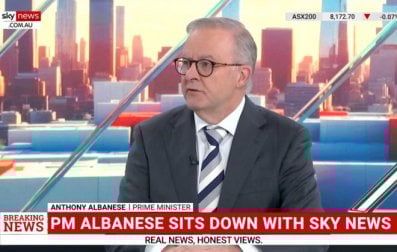
It took all of us, not necessarily acting in concert or as one, but pushing where we were and how we could. It took all the grand and small actions before Kevin Rudd and Anthony Albanese made that plane journey happen.
The lesson here is the indispensability of perseverance. Endurance in activism is not merely about physical presence but also about the mental and emotional fortitude to continue advocating for justice, even when the odds seem insurmountable.
I hope Julian’s freedom can bolster the resilience of those campaigning for David McBride, Richard Boyle and other whistleblowers and journalists in trouble. The work can be difficult and crushing, so find your people and never think you have to do it all alone. You might even win.
Another crucial lesson from the campaign was the importance of forgiving people, including prominent personalities who initially attacked Assange but later changed their minds. Welcoming former critics into the fold expanded the support base and deepened general understanding of the broader implications of Assange’s case on press freedom and democracy.
The ability to forgive and embrace those who have shifted perspectives is vital for any movement. It demonstrates that the movement is being successful and underscores the significance of open dialogue, education and empathy in changing hearts and minds. As for the haters and mischief-makers, it’s not for us to forgive them. Let them live with what they did. It is, however, a pleasure to forget them.
Finally, about the truth. It can be obscured, distorted and dismissed, but it continues to resonate. Despite the years of legal battles, misinformation and the erosion of trust in traditional media, the underlying truths of what Julian and WikiLeaks shared about war crimes, corruption and human rights violations have persisted.
Julian observed in his first public statement, to the Council of Europe in October: “As I emerge from the dungeon of Belmarsh, the truth now seems less discernible, and I regret how much ground has been lost during that time period when expressing the truth has been undermined, attacked, weakened and diminished.”
Regaining that ground will take courage and persistence. Most importantly, it will take all of us.
The campaign to destroy WikiLeaks attempted to isolate and divide people whose only crime was wanting to know the truth about what governments were doing in their name. That campaign was a failure and Julian Assange is free. What we do with this moment is up to us.
This article was first published in the print edition of The Saturday Paper on February 1, 2025 as "Life after Assange’s freedom".
For almost a decade, The Saturday Paper has published Australia’s leading writers and thinkers. We have pursued stories that are ignored elsewhere, covering them with sensitivity and depth. We have done this on refugee policy, on government integrity, on robo-debt, on aged care, on climate change, on the pandemic.
All our journalism is fiercely independent. It relies on the support of readers. By subscribing to The Saturday Paper, you are ensuring that we can continue to produce essential, issue-defining coverage, to dig out stories that take time, to doggedly hold to account politicians and the political class.
There are very few titles that have the freedom and the space to produce journalism like this. In a country with a concentration of media ownership unlike anything else in the world, it is vitally important. Your subscription helps make it possible.
Subscriber exclusive
Send this article to a friend for free.
Share this subscriber exclusive article with a friend or family member using share credits.