News
As the government faces the prospect of its housing agenda unravelling, with two key bills stalled in the Senate, Labor and the Greens are locked in a bitter fight over an issue that could decide the next election. By Karen Barlow.
Labor’s bitter housing feud with the Greens
Facing a cool response to the billions of dollars’ worth of cost-of-living measures to help struggling Australians, the prime minister’s plan this week was to shift the pressure onto the two parties thwarting the housing measures he says would deliver further assistance.
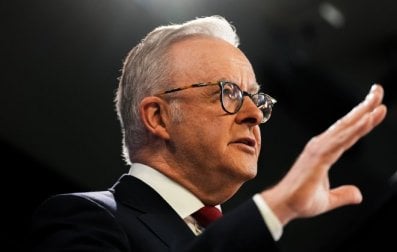
“If it’s good reform, they should vote for it. If not, they shall be judged for just playing politics rather than looking for the solutions that are required,” Anthony Albanese told reporters in Sydney ahead of a Senate vote on Labor’s two key housing bills.
Labor has been furious over what Albanese has called the “Noalition” between the Greens, the Coalition and crossbenchers such as Pauline Hanson and Ralph Babet in rejecting Labor’s housing agenda. Early in the week, the prime minister even indulged speculation of a double-dissolution election over the impasse. His “wait and see” response to that suggestion from reporters on Tuesday drew dry comment from Greens leader Adam Bandt on the ABC’s RN Breakfast.
“I think it hasn’t dawned on the government that they don’t have a majority in the Senate.”
Labor faced the fiery debates in this Senate-only sitting week lacking not only a majority but also any inkling of a deal or inclination towards concession. Its sole tactic was a willingness to let the Help to Buy shared equity scheme be defeated – just to highlight the other parties’ position as housing “blockers”.
The government’s strategy backfired spectacularly. Labor lost control of the upper house for several hours, and the vote that would have seen the Help to Buy scheme defeated fell down the day’s agenda until time ran out. The government was outmanoeuvred as the Greens teamed up with opponents of Help to Buy to delay debate for two months.
“You are so desperate! You are so desperate! So desperate. That is the Greens not wanting to vote,” Senate leader Penny Wong said with her hands in the air. “To call a quorum so we can’t move to a vote!”
Albanese’s attempt to deflect blame appears only to have left Labor with two stranded pieces of legislation on the issue that voters routinely cite as their top concern, as the campaign for the next election gains momentum. The prime minister has since said there will be another “crack” at the bill in October.
In weeks of negotiations, with the last meeting as late as Monday, the government had focused on the Greens as the path ahead for its housing agenda. But Labor would not concede to the party’s demands for a phasing out of negative gearing and capital gains tax concessions – policies that Labor brought to the 2019 election and blames in part for its defeat. Nor would Labor concede the Greens’ proposal for a cap and two-year freeze on rents. Caps are largely a state and territory matter, but the Greens want federal incentives to bring them in. The party insists it is in the hunt for a “genuine counteroffer”.
The government argues its Help to Buy proposal would see 40,000 low- and middle-income earners enter the housing market with a minimum 2 per cent deposit and the government offering up to 40 per cent of the value of the property. It was announced way back at Labor’s campaign launch in 2022 and has been subject to more than two years of discussion.
The equally friendless Build to Rent legislation, which also failed to come to a vote this week, offers tax incentives to encourage foreign investors to build Australian rental properties.
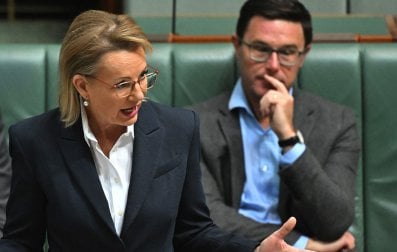
Housing Minister Clare O’Neil, who took over the portfolio in a reshuffle that shifted her from home affairs at the end of July, describes the Greens’ position as “breathtaking hypocrisy”.
“For two years, they have made a lot of noise about helping these people and then, having the opportunity to do something genuine to help them, they’ve decided to grandstand and try to hold the home ownership aspirations of this group to ransom,” she tells The Saturday Paper.
O’Neil says the Greens have not been genuine in negotiations.
“It’s not a delay; it’s a block. There’s no indication of any interest in the Greens in pursuing this,” O’Neil says.
“I think they wanted it to go down because they would prefer that the government not be seen to be able to make progress, because their political capital is wound up in despair and the false sense that the government isn’t listening to people’s concerns.
“That gives them a platform to play politics for longer,” the minister says.
“Never once have the Greens suggested to me that there was any problem with the bill in front of the parliament. That’s because it’s a good bill. It’s in their 2022 election platform to construct a shared equity scheme of exactly this nature.”
The Greens say their shared equity scheme was far bigger and was government backed and government owned.
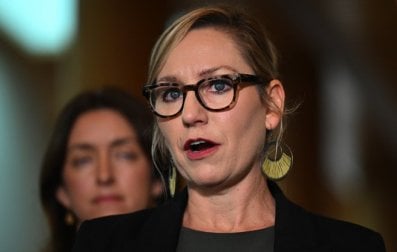
It’s O’Neil who is not budging, according to Greens spokesman Max Chandler-Mather, who takes umbrage at any suggestion of not negotiating in good faith.
“That is, and I don’t say this lightly, a direct and bald-faced lie,” he tells The Saturday Paper.
“I have said to the housing minister directly in private, as I have in public, this is our opening set of asks, but I made it crystal clear as to how we’re willing to move.
“That says to me, they’re not actually interested in negotiating at all, if they are willing to lie like that. That never happened during the Housing Australia Future Fund. There was a lot of fierce debate, but there weren’t lies about what was going on in private conversations, and I actually find that quite alarming.
“We accept we’re not going to get everything. And then we asked them to make a counteroffer, and they refused.
“They literally offered nothing, and I think they concluded that they could get away with just trying to bulldoze through parliament.”
Chandler-Mather says the delay is “about giving Labor a chance to come to their senses and come and actually negotiate. We think that’s necessary, given the scale of the housing crisis.”
Both the Greens and the opposition say Labor’s bills are not enough to address that crisis, with Liberal spokesman Andrew Bragg describing Help to Buy as a “pimple on the elephant’s backside” and Bandt calling it a “bringing a bucket of water to a house fire”.
The Greens insist the scheme was a “terrible” housing lottery that would help only 0.2 per cent of renters – a figure derived from the scheme’s 10,000 places a year and the five million renters in Australia. As for the rest, the Greens say it will push up house prices based on other “demand-side” subsidies.
Another criticism is that the price caps in the scheme are greater than the median dwelling values in most places, particularly Sydney, Melbourne and Brisbane.
“There are fewer first home buyers, there are fewer houses being built and the government has one callous scheme, Help to Buy, which it knows won’t touch the sides in every major capital city except for Melbourne,” Bragg told the Senate on Wednesday.
His colleagues clearly enjoyed the session’s unravelling.
“The Albanese government cannot even execute a strategy to have one of its own bills defeated,” opposition Senate leader Simon Birmingham said.
In the three-way fight that is now being described as the housing version of the climate wars, the Coalition has also dug into its position – from a very different direction – that Labor’s housing reforms are not good enough. The Coalition’s main housing push is to allow people to divert superannuation savings for later retirement to pay for a housing deposit instead. It is a policy that Labor regards as a super raid and part of the opposition’s ideological opposition to superannuation.
Under the Coalition’s Super Home Buyer Scheme, people would be allowed to withdraw up to 40 per cent of their super up to a maximum of $50,000. If the house is sold, the money returns to the super pot.
“Unless you are lucky enough to have access to the bank of mum and dad, which is now the sixth-biggest lender in Australia, super is likely to be your only hope if you are an average worker,” Bragg says.
“But Labor says, ‘No, we can’t let you use your own money.’ ”
Independent economist Saul Eslake, in a report commissioned by the Super Members Council, assessed the scheme as destined to further push up house prices in an already hot market and heavily favouring older and wealthier non-home owners while doing little for the younger, low-income people who most need help.
Eslake says 78 per cent of single Australians aged between 25 and 34 could not withdraw more than $20,000 under the scheme.
Bragg argues that Millennials around the age of 39 have more scope as they would likely have put away about $90,000. He accepts, however, that more needs to be done to boost housing supply.
“You don’t need to be Einstein to work this out: if you build fewer houses, you make the problem worse. This is a massive supply problem,” he told the Senate.
“We need to be building over 250,000 houses a year to arrest this major problem, and what we’re seeing is Labor building only 160,000 houses.”
Meanwhile, Chandler-Mather has some time to reflect on how far and how profitably the Greens can obstruct Labor’s housing agenda – a strategy the party seems to be leaning into in the lead-up to a cost-of-living election, most likely in May.
“Labor made the argument on the stage three tax cuts that where the economy changes so should government policy,” Chandler-Mather tells The Saturday Paper. “Rents have gone up over 30 per cent since Labor was elected. House prices have skyrocketed. They can make a similar argument on the capital gains tax discount and negative gearing.
“On that, we’re willing to talk about what those changes might look like, and it might not be what our policy is. That’s fine. In public housing, there’s an opportunity for a much larger investment in public housing, direct investment in public housing now.”
The Greens had the same demands last year during drawn-out negotiations over Labor’s $10 billion Housing Australia Future Fund – the funding vehicle for social and affordable housing. They did not get their wish list, but they point to the pressure extracting extra billions of dollars for public and community housing, including a $2 billion social housing accelerator to fund the fast-track of thousands of new social homes.
Would the Greens accept a similar multibillion-dollar injection this time around?
“We don’t expect to get moving in all three areas, but what we do expect is genuine movement and then genuine negotiation that actually starts to help people,” Chandler-Mather says.
Albanese is determined not to concede any wins to the Greens, and insisted in a radio interview on Thursday the additional money had nothing to do with Greens pressure.
“There was $2 billion delivered to states and territories in June in return for them fixing existing housing. That work is under way. The Greens complained at the time that they didn’t know anything about it,” the prime minister told RN Breakfast.
“They continue to block. It’s up to them to justify why they are blocking legislation...”
Independent Senator David Pocock, who backs Help to Buy while wanting more ambition, also called out Labor over its negotiating position.
“We hear publicly from the government that they’re open to negotiating, but in private, despite that, are told there can be no amendments to this bill. It doesn’t sound like negotiation to me,” he told the Senate.
Fellow independents such as Allegra Spender and Jacqui Lambie just want the Help to Buy passed.
“The Greens are the reason that people are going to continue to live in tents with their children longer than what they have to,” Lambie told the ABC.
“This is the Greens. It is the Greens’ way or the highway. I can tell you rent freezes are never going to happen, so stop playing with people’s lives.
“They are just god-awful, and I tell you what, they have no heart.”
Pocock has labelled the super-charged debate over housing and stalled action as the new climate wars.
“It is deeply concerning to see housing affordability being politicised the way the climate debate has been,” the ACT representative says.
“We know all that happened was a delay to the actions we so desperately needed. I’m really concerned we are now seeing the same thing here on housing.”
In O’Neil’s view, this legislation should not be such a hard sell: “There’s a lot of complexity in housing policy – this one’s not that complicated.
“My honest view is that Labor is the only one in this debate actually trying to solve the problem,” the minister says. “I think the Liberals are doing what the Liberals do on housing, which is stuff all, and then try to obstruct us from engaging on it.
“And then the Greens see this as a great campaigning tool, and they certainly don’t want us being perceived to be solving the problem before their election. The people losing out in all this are the Australians who need a leg up.”
Chandler-Mather suggests his party must now push Labor harder.
“It’s clear now that we’re going to have to build a big enough political pressure on the Labor Party to come to their senses and realise we need to take real, substantial action on the housing crisis,” he tells The Saturday Paper.
“The positions we are putting are policy positions the Labor Party used to believe in. Nothing we’re proposing hasn’t been done in Australia before. That’s the big difference between this and the climate debate.”
This article was first published in the print edition of The Saturday Paper on September 21, 2024 as "Inside Labor’s housing feud with the Greens".
For almost a decade, The Saturday Paper has published Australia’s leading writers and thinkers. We have pursued stories that are ignored elsewhere, covering them with sensitivity and depth. We have done this on refugee policy, on government integrity, on robo-debt, on aged care, on climate change, on the pandemic.
All our journalism is fiercely independent. It relies on the support of readers. By subscribing to The Saturday Paper, you are ensuring that we can continue to produce essential, issue-defining coverage, to dig out stories that take time, to doggedly hold to account politicians and the political class.
There are very few titles that have the freedom and the space to produce journalism like this. In a country with a concentration of media ownership unlike anything else in the world, it is vitally important. Your subscription helps make it possible.
Subscriber exclusive
Send this article to a friend for free.
Share this subscriber exclusive article with a friend or family member using share credits.