News
Labor will soon unveil a foundation of its cost-of-living election pitch: a proposal to introduce universal, affordable childcare. By Karen Barlow.
Labor poised to launch universal childcare plan
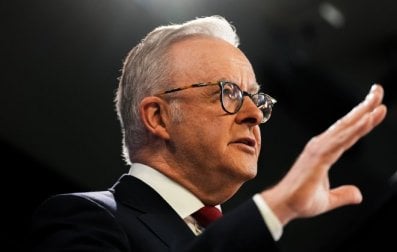
A key part of Anthony Albanese’s strategy for a second term has been in plain sight since his first budget reply as Labor leader.
Alongside the rough contours of a Future Made in Australia agenda, the then opposition leader made a clear promise to “fix” early childhood education and care with the “real reform” of making it universal and affordable.
“Labor created Medicare – universal healthcare. We created the NDIS – universal support for people with disability. We created superannuation – universal retirement savings for workers,” Albanese said in October 2020.
“And – if I’m prime minister – I will make quality, affordable childcare universal too.”
The Saturday Paper understands a soon-to-be-released Productivity Commission report into early childhood education and care – itself a 2022 Labor campaign promise – will set the scene for a major push towards universal childcare in the lead-up to the next election.
The report from the independent body is currently in the hands of Education Minister Jason Clare. It is being digested alongside recent recommendations from the Australian Competition and Consumer Commission (ACCC) after its examination of childcare costs.
As Albanese nears the end of his first term, the promise of better and cheaper childcare services is even more freighted with expectation, amid the cost-of-living crisis. For thousands of families, childcare is either too expensive or simply unavailable. Some areas have centres with hundreds of children on waitlists, others are childcare “deserts”.
For Georgie Dent, chief executive of the parents and carers group The Parenthood, Albanese’s promise was momentous.
“We have never had a prime minister who has articulated that vision,” she tells The Saturday Paper.
The prime minister, who’s faced criticism for lacking ambitious vision, is a stickler for institutions and mandates to drive reform. The government formally tasked the Productivity Commission in February 2023 with investigating the feasibility of an “affordable, accessible, equitable and high-quality” early childhood education and care system, or a pathway to a universal system.
The terms of reference asked the commission to consider a universal 90 per cent childcare subsidy rate.
The draft report, released in November, describes universal childcare as making “quality services accessible to all children and families” while warning that availability, affordability and inclusion gaps will need to be tackled.
It recommended offering up to 30 hours or three days of care to all children up to the age of five, free of cost for households earning up to $80,000. That’s about 30 per cent of all families with young children.
Currently, 90 per cent of childcare costs are covered for these families, following the government’s allocation last year of $15 billion in new funding. Households earning more than $80,000 and up to $530,000 have access to some support, depending on the amount of work, leave and other activity – paid or unpaid, according to definitions provided by the government – they undertake per fortnight.
The draft report did not recommend abolishing this childcare subsidy activity test, rather a relaxation of it, so it is “not a barrier for any family”. The cost of this affordability offering was estimated to be $2.5 billion a year.
This stance on the activity test is a shortcoming in the draft, according to Georgie Dent. “The interim report wasn’t as ambitious as it might have been,” she says. “Universal means every child and it means every child regardless of their postcode, regardless of their parents’ income status or their activity, it means every child is entitled to access quality, early childhood education and care.”
While Minister Clare prepares to release the PC’s final report within the next fortnight, he echoed the framing of Albanese’s initial promise in a statement this week to The Saturday Paper, with a distinctly election-campaign flourish: “In the great Labor tradition of creating a universal healthcare system, Medicare, and universal superannuation, the Prime Minister has made it clear he wants to do the same by charting a course to a truly universal early education system.
“The draft report from the Productivity Commission told us it’s kids from poor families who are the least likely to go to early childhood education and care, and the most likely to benefit from it,” the statement said.
Significant childcare and education reform will of course require bipartisan support to sustain the rollout over the years.
The Saturday Paper understands that while the Coalition has not yet landed on its early childhood education and care policy, it accepts “more work needs to be done”.
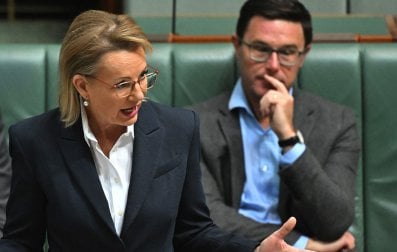
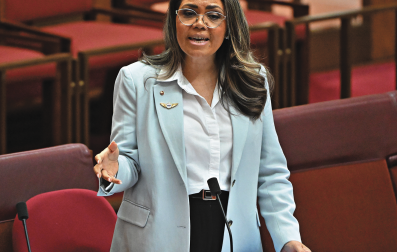
“We believe in choice and flexibility for all families, however we know that those living in regional, rural and remote communities are being left with little to no choice at all,” the shadow minister for early childhood education, Angie Bell, tells The Saturday Paper. “We recognise this is one of the biggest issues facing the sector, amongst many others, and we want to see the government deliver more for those families.”
Free, universally accessible early childhood education for all families has been a consistent plank of the Greens campaign at each federal election. The party, which is eyeing the possibility of holding the balance of power, also believes all such centres should be run by government or community non-profit operators.
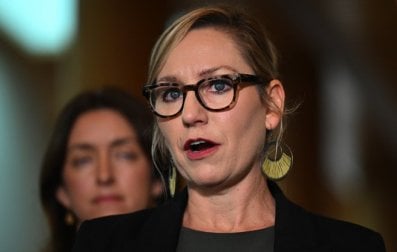
New Greens Senator Steph Hodgins-May wants more ambition for what the party sees as an “essential service”, like primary school education.
“We have been calling for the abolition of the activity test. We think it’s punitive. It’s punishing parents and families,” the Greens’ early childhood education and care spokesperson tells The Saturday Paper.
“We also don’t believe that it should be means-tested. We think it should be fully universally available and free for all families. Ultimately, we want early childhood education to be viewed as education, not just care, and so, like primary school and secondary school, it should be available to everyone – regardless of income, regardless of postcode.”
Taking universal childcare to the election has vote-winning potential for Labor, according to pollster and former Labor strategist Kos Samaras.
How it is sold to voters will matter, however, given only a relatively small cohort of the population is currently engaged in the childcare system. According to Education Department data, just over a million families attended a childcare subsidy-approved service in the 2022 March quarter. That said, data from demographic resource group .id (informed decisions) suggests that just over a fifth of households in Australia have young children.
“This will provide elements of younger Australians with some hope that they can actually live a life that is akin to the one that their parents lived,” Samaras says.
“One of the things that we come across regularly in all our research amongst younger Australians is that they feel they will not be able to walk in the footsteps of their parents. And it makes them quite depressed.
“Now, if Albanese is able to market this and say it’s not just about the young Australians who plan to have a family but also those young Australians, their parents who are worried about their children not being able to have grandchildren because of the financial burden, he will be able to talk to multiple generations of Australians.”
Universal childcare is “wildly popular” across the community whatever age, gender and political persuasion, according to Jay Weatherill, the former South Australian Labor premier and now chair of the Minderoo Foundation’s Thrive by Five initiative.
A recent early-learning survey from Thrive by Five found that 73 per cent of respondents agreed the education system should be extended to include early education, and seven in 10 agreed cheaper childcare would be good for the Australian economy.
“Name me another policy that addresses cost of living, productivity, gender equity and the benefits for children in a way which is non-inflationary,” Weatherill tells The Saturday Paper.
“It’s a really powerful policy that’s incredibly popular and the first party that gets themselves organised to put a crisp, clear message about it is going to be in great shape.”
There was another, more ambitious, pathway offered to the government just last month by think tank the Centre for Policy Development (CPD).
Its report, like the draft commission report, recommended three days of free early learning and childcare for households with a combined income of $80,000 or less.
CPD also proposed – in a $7 billion-a-year plan – that parents earning more could pay $30 for three days of care for one child, and an additional $5 a day for second and subsequent children. Highly vulnerable children would receive five days of free care.
A major item to be addressed, according to the centre’s chief executive Andrew Hudson, is increasing the wages of the childcare workers, part of a recommended “sustained effort” to have enough staff to meet the long-unmet demand for more childcare places.
“We wanted to provide the government a framework for it to be able to implement a universal system,” Hudson says.
“We do think that there should be supply-side funding, that there should be set fees, that we should get rid of the childcare subsidy and the activity test. Those are the essential building blocks of the funding model. But that would also mean that it’s more affordable and accessible, and it’s simpler for families and it supports all children.”
The Albanese government has committed to funding a pay increase for early childhood educators, a largely female workforce.
A provision was made in the May budget, but it comes down to the Fair Work Commission. It is mulling an extra increase for workers including those in early childhood education and care after boosting the wages of workers on awards by 3.75 per cent in June.
The CPD says it could take a decade to fully implement true universal childcare in Australia, and at least as long to realise all of the savings to the system accruing from increased tax revenue with more Australians working.
“At the moment, we’re spending about $15 billion on a system where 22 per cent of children are starting school developmentally vulnerable,” Hudson says. “Hundreds of thousands of kids are missing out on early learning because of the current rules, the activity tests rules, and others.
“So, we know that this is going to be a win-win.”
Universal early childhood education and care could radically change the choices that parents and carers are able to make, Georgie Dent says.
“We know that the trajectory of children would change for the better,” she says. “You’ve got that profound window of brain development between zero and five.”
The other significant benefit, she says, would be for the workforce participation of parents.
“The cost of care is so high and the way that the cost of care interacts with our tax system, it has created a really genuine financial disincentive for a lot of women to work at all or work more than sort of three days a week.”
In government, the Coalition was critical of Labor’s aspirations on childhood care and education, calculating that an expansion to a 90 per cent subsidy for all families would ask taxpayers to spend an additional $34 billion over a decade.
Now in opposition, with a leader whose family business has recently been in childcare centres, the Coalition argues that work the government has done so far has led to an increase in childcare fees.
“We need to understand how it would impact on the supply-and-demand situation in relation to childcare, we need to understand what happens with wages, we need to understand what happens in situations where in regional communities, for example, they just don’t have access to long day care. What would be the solution in those communities? And what would the cost be?” Peter Dutton said to reporters in June.
“I think childcare is incredibly important and we’ll look very carefully at anything the government proposes, but what detail do we have?”
It is in the Coalition’s interest to get behind making childcare more accessible and affordable, and “suicidal” for a party not to, says Jay Weatherill.
He points to the increased dominance of regional and remote interests in the Coalition after the loss of many city-based seats at the last election.
“If you go to the bush this is probably, if it’s not the first, No.1 issue, it’s pretty close to it,” he says. “I’d be staggered to think they would resist a Labor reform in this area.”
This article was first published in the print edition of The Saturday Paper on July 27, 2024 as "Labor poised to launch universal childcare plan".
For almost a decade, The Saturday Paper has published Australia’s leading writers and thinkers. We have pursued stories that are ignored elsewhere, covering them with sensitivity and depth. We have done this on refugee policy, on government integrity, on robo-debt, on aged care, on climate change, on the pandemic.
All our journalism is fiercely independent. It relies on the support of readers. By subscribing to The Saturday Paper, you are ensuring that we can continue to produce essential, issue-defining coverage, to dig out stories that take time, to doggedly hold to account politicians and the political class.
There are very few titles that have the freedom and the space to produce journalism like this. In a country with a concentration of media ownership unlike anything else in the world, it is vitally important. Your subscription helps make it possible.
Subscriber exclusive
Send this article to a friend for free.
Share this subscriber exclusive article with a friend or family member using share credits.