News
Independent MP Kate Chaney’s new bill proposes banning political donations from consultants, and may help strengthen crossbench efforts to break the cosy relationship between the big firms and the major parties. By Mike Seccombe.
Consultancies’ political influence targeted by Teals
Real courage, as Atticus Finch said in To Kill a Mockingbird, is “when you know you’re licked before you begin, but you begin anyway...”
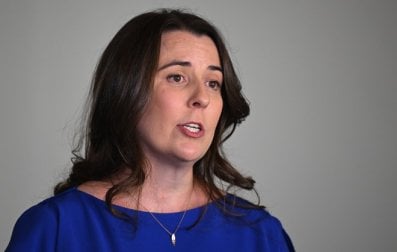
Kate Chaney’s media conference at 9.30am on Monday in the Mural Hall of Parliament House had that feeling about it. The independent member for Curtin, Western Australia, accompanied by several other members of the crossbench and accountability advocates, announced a private member’s bill she would introduce that morning, aimed at substantial reform of Australia’s electoral laws.
It was a big piece of work, 60 detailed pages of changes, many of which had been flagged before by advocates of tightening Australia’s woefully lax laws. One new element of the Chaney package, though – the one that made her bill particularly timely and topical – appeared about halfway through in the section related to prohibited donations.
Listed along with the “social harm industries” of gambling, tobacco and alcohol, the bill included contractors to the Commonwealth and their subcontractors, and contractors bidding for Commonwealth work if, in the two years prior to making a donation, they had been paid more than $200,000.
The bill did not specify which businesses she was targeting, but it wasn’t hard to guess. And Chaney is more than happy to spell it out: Australia’s major accounting/consultancy firms, particularly the four big ones: PwC, KPMG, Deloitte and Ernst & Young (EY).
The provisions – which she says she was working on even before the scandal over PwC’s behaviour broke earlier this year – were prompted by her understanding of the unhealthy “co-dependency” that has developed, “where the Big Four have donated $4.3 million in the past 10 years to political parties, during which time the value of their contracts has increased fourfold”.
So if courage is determination in the face of defeat, Chaney’s was a truly valiant effort to make the big political parties deprive themselves of millions of dollars in donations from government contractors, or accept the other far-ranging provisions of her bill.
She also proposed transparency measures that would go a long way to making it easier to understand who was giving how much to whom. Over the past 20 years, Chaney says, “only 21 per cent of major parties’ private funding has been in disclosed donations”.
Some of her proposed changes, such as lowering the disclosure threshold for donations from the current $16,300 to $1000, real-time reporting of donations, and new truth-in-advertising provisions, do have the support of Labor – but not the Liberal and National parties.
Other measures, such as requiring union members’ or company shareholders’ approval before any donations could be made, are trenchantly opposed by Labor and Coalition alike.
Anyway, Chaney duly introduced her Restoring Trust Bill, and it was promptly kicked into the parliamentary procedural long grass, unlikely ever to be brought on for debate, much less passage. As she expected.
“Private member’s bills don’t actually get passed,” she tells The Saturday Paper, matter of factly a few days later. While it is “a little bit disheartening”, that does not make them pointless exercises, because they sometimes get adopted in substance into government bills, and then change happens.
She cites the example of the National Anti-Corruption Commission, a major reform that began with the crossbench.
Private members’ bills were repeatedly proposed and rejected before a critical mass of public opinion forced the issue. First Labor and then the Coalition committed to establishing a commission. Scott Morrison reneged on that promise, which played a significant role in his government’s defeat and the election of a record number of Greens and independents, including Chaney. The incoming Albanese government read the writing on the wall.
That’s the model, she says. You engage civil society groups and think tanks and get broad support from the crossbench, you produce your bill, you get your proposed reforms on the agenda, discussed in the media and gradually into the public consciousness.
There is another factor as well though, and that is the need for reform has to be perceived to be obvious and urgent. Proposals for an anti-corruption commission had been floated for many years before the manifest corruption of process under the Morrison government – most notably including robo-debt and the massive rorting of numerous grants schemes for political ends – provided the impetus to get it done.
Now, the mounting evidence of malpractice and conflicts of interest among the Big Four consultancies – beginning with the revelation PwC had used confidential information about government plans to curb multinational tax avoidance to subvert those plans and monetise their inside knowledge – is providing similar impetus for action.
The flow of disturbing revelations about the practices of these accounting/consultancy firms has been unrelenting since the PwC scandal first became public in early May.
We have learnt of cosy relations between government departments and consultants and the revolving door between them.
The inadequacy of the response by government regulatory and enforcement agencies, in many cases stacked with former Big Four people, under-resourced and labouring under tax secrecy laws that were a barrier to action, has been exposed.
Just this week material supplied to a senate committee by the Australian Taxation Office showed it had directly raised concerns as far back as 2019 with former PwC chief executive Luke Sayers about the firm’s actions in aiding clients to avoid multinational tax laws. And it raised them again in 2020. Sayers has denied any recollection.
The ATO time line also showed the Tax Office’s attempts to investigate further, and to get the Australian Federal Police to act, were frustrated for years by a combination of weak laws and PwC’s legal obfuscation.
Labor committee member Deborah O’Neill, whose question elicited the ATO time line, did not buy Sayers’ denial, which she called “obvious misrepresentation of fact”.
“[I]t is now beyond doubt that for more than five years PwC had knowledge that senior members of their tax practice had inappropriately misused government information in an attempt to benefit private companies,” she said in a statement.
The ATO document, she said, showed “numerous” senior people at PwC, including Sayers’ successor Tom Seymour, were aware of the misconduct and “clearly failed to act to reform or redress the serious ethical wrongdoing occurring within their firm”.
It’s not just PwC under scrutiny. Also in the past week, the ABC’s Four Corners aired allegations of massive overcharging of the Department of Defence by KPMG. Guardian Australia revealed that another of the Big Four, EY, was contracted to the giant gas miner Santos at the same time as it was advising the New South Wales government on a gas policy that endorsed the company’s Narrabri project.
The details of all that has gone wrong in the consulting industry are complex, but the indications are the public, even if not across those various allegations, are coming to a broad understanding, and they don’t like it.
Polling released this week by The Australia Institute found 74 per cent of respondents supported banning political donations from organisations that receive funding from government contracts.
It found support for a ban was particularly strong among Coalition voters, which is interesting given the last Coalition government was largely – but not wholly – responsible for the current mess.
In addition to Chaney’s sweeping bill, the Greens have produced another, the Fairer Grants and Government Contracts Bill, which is more narrowly focused. It too would ban any donations from contractors, and also prohibit the government from awarding grants to donors.
Such a move would not be radical or unprecedented. Says Chaney, “Only one-quarter of OECD countries actually allow donations from government contractors.”
So far, the Australian government shows no signs of moving on donations. When Chaney challenged Prime Minister Anthony Albanese in question time on June 20 to do as most of the developed world had done and ban donations from contractors, he fudged. He did not address the donations issue at all, and instead talked about the government’s intention to strengthen the public service and so reduce the need to rely on outside help.
Which is a worthy endeavour, but it will take a lot of time and effort, says Andrew Podger, honorary professor of public policy at Australian National University, who formerly held a number of senior public service roles, including public service commissioner.
“Two trends of the past 20 or so years,” he says, “have adversely affected the capability of the public service: politicisation and externalisation.” The latter refers to increased reliance on consultants, contractors, labour hire and such.
There have been similar changes in other anglophone countries, he says, “but Australia’s gone a lot further, particularly on externalisation”.
“This is not to say that there aren’t legitimate times when you do use consultants and contractors, but we’ve gone way too far … particularly under the previous government.”
The Coalition government, most egregiously under Scott Morrison, did not want a frank and fearless public service. It wanted a meek, compliant and smaller public service.
Lack of resources and experience, exacerbated by staffing caps, Podger says, “forced departments to go outside even when they knew it was not value for money to do so”.
For the government, outside consultants came with certain advantages, however. They were not subject to questioning by parliamentary committees in the same way as bureaucrats. And they were more inclined to give the advice the government wanted to hear.
The consultants’ business model “is that you want to get the next contract”, says Podger. “That doesn’t mean you don’t provide some reasonably good professional advice. But you will nonetheless tailor in a way which allows you to get the next contract. So you won’t [say] things which the government doesn’t want to hear. And you’ll also look for extensions of contracts, and propose those extensions, to get more money…
“And this, over time, replaced the capabilities of public service, but also meant the public service was no longer an informed buyer. When you’re no longer an informed buyer, then you can be exploited significantly.”
There is no doubt the government understands the need to break the co-dependency with the consultocracy. An obvious sign Chaney points to was at budget time this year.
For many years PwC hosted grand dinners on budget night, at which ministers would mingle with several hundred business heavy-hitters. It did the same for the opposition on the night of the budget reply.
This year tickets were $5000 each. That was before the scandal broke, though. PwC was dumped as sponsor, although the dinners went ahead.
This, of course, is essentially window-dressing. The government also has taken more substantive action aimed at curbing consultants’ misbehaviour. Last Sunday it announced a raft of measures, including a 100-fold increase in maximum penalties for advisers and firms that promote tax exploitation schemes, from $7.8 million to more than $780 million. It also promised to reform the tax secrecy laws that bedevilled the investigation of PwC, and give greater powers to regulators, including the Tax Practitioners Board (TPB).
And it announced seven different reviews by the departments of Treasury and Finance to consider further reforms.
All of which are “moves in the right direction”, says Greens senator Barbara Pocock, who, along with O’Neill, has been a principal inquisitor of the senate committee.
“A massive increase in penalty makes the risk of advising a multinational on how to avoid tax, like PwC did, you know, a really high-stakes exercise. But as a measure on its own, it’s nowhere near enough,” she says.
Just as important as increasing penalties, Pocock says, is increasing the chances that such behaviour will actually be caught.
“So the capability of the ATO to pursue things, by making it easier for them to communicate with other government departments, I think that’s a good thing,” she says.
“My concern is that some of those [reviews] will take two years to come up with specific recommendations.”
That leaves open the prospect of watered-down responses once the public heat has gone out of the issue. Pocock would like more action now, against PwC.
“My view is that the TPB … should remove the entity of PwC from tax practitioner work, to deregister it, for a two-year period.”
She also wants more action to slow the revolving door between the bureaucracy and the firms. Pocock has long lists of people who have been “aggressively” recruited straight from bureaucracy into the firms. She suggests some kind of cooling-off period.
“Another one of the things that is not yet addressed, is getting the fox out of the henhouse,” she says.
There should be more action to ensure appointees to the TPB or other senior regulatory positions have really left the “boys’ club” of consultants, and have no trailing loyalties, in her view.
There are positive signs the Albanese government is serious about addressing half the problem. It has promised to cut spending on consultants and contractors by $3 billion over four years.
As for the other half – restoring the public service – the signs are not so good, say Podger and Chaney.
The Public Service Amendment Bill, which recently passed the house and is now being reviewed by a senate committee, purports to put in place measures to strengthen the capability and independence of the bureaucracy.
“But there’s nothing of consequence in it,” says Podger. “The bill’s hopeless.”
That is a complex story for another day.
In the meantime, there’s a simple measure at the government’s disposal. It could just take the hint from Chaney, the crossbench and the Greens, and stop accepting those millions in tainted donations from government contractors.
This article was first published in the print edition of The Saturday Paper on August 12, 2023 as "Breaches of contractors".
For almost a decade, The Saturday Paper has published Australia’s leading writers and thinkers. We have pursued stories that are ignored elsewhere, covering them with sensitivity and depth. We have done this on refugee policy, on government integrity, on robo-debt, on aged care, on climate change, on the pandemic.
All our journalism is fiercely independent. It relies on the support of readers. By subscribing to The Saturday Paper, you are ensuring that we can continue to produce essential, issue-defining coverage, to dig out stories that take time, to doggedly hold to account politicians and the political class.
There are very few titles that have the freedom and the space to produce journalism like this. In a country with a concentration of media ownership unlike anything else in the world, it is vitally important. Your subscription helps make it possible.
Subscriber exclusive
Send this article to a friend for free.
Share this subscriber exclusive article with a friend or family member using share credits.