News
Staffers and politicians say workplace culture has been slow to improve. Unredacted survey results obtained by The Saturday Paper reveal the full extent of the failures that prompted the reforms. By Karen Barlow.
Exclusive: Parliament House still unsafe in post-Jenkins world
It is two and a half years since the landmark “Set the Standard” report found “revolting and humiliating” practices were extremely common in the workplaces of Parliament House – an accepted culture without consequence that left a “trail of devastation”.
The change envisaged in that report has been agonisingly slow to arrive, judging by accounts from inside the building.
Some parliamentary staffers in the high-pressure environment say the drive to speak up has, in fact, made them targets. Another points to bullying in “certain pockets”, such as the parliamentary library.
One female politician said, to protect herself, she did not drink alcohol while in Canberra and had only female staff. Another said she now refused to go out at night while parliament was sitting.
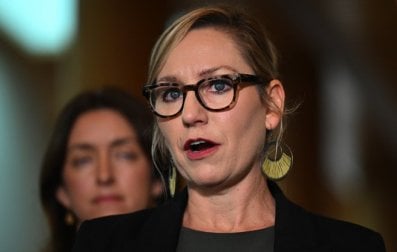
“I think it’s outrageous that, once again, women have to keep ourselves safe, and I think men need to learn to keep your fucking hands to themselves,” says Greens Senator Larissa Waters.
The report, delivered in 2021 by then Sex Discrimination Commissioner Kate Jenkins, found 63 per cent of female parliamentarians experienced sexual harassment. The national average for women is roughly a third.
To get a sense of the progress made since the report landed, The Saturday Paper spoke to dozens of women and men, working in a range of capacities in the building, up to senior ministers. This newspaper has also obtained the unredacted version of one of the last full Department of Parliamentary Services censuses, which reveals the full extent to which leadership was falling short.
In the meantime, however, there are still concerns about speaking up. Though one staffer said the Jenkins inquiry gave people “licence” to share their experiences, “That sort of manifests as complaints to some people, which would have been suppressed or attempts would have been made to suppress them ... I think that attitude continues.”
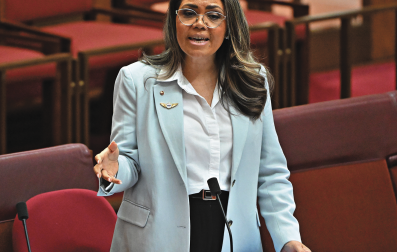
Independent Senator Lidia Thorpe sees evidence of bullying in the recent reaction to Labor’s Senator Fatima Payman breaking ranks in her criticism of Israel.
“What reform? Nothing’s changed,” Thorpe says. “No one went to her, just like no one went to me.”
Thorpe is almost a year into a sexual harassment and intimidation case against another senator, David Van, who contests her allegations. The case is being reviewed by the Parliamentary Workplace Support Service (PWSS).
“As far as safety in the workplace, it’s still not a safe workplace to go to. Discrimination, racism, bullying, just bad behaviour is normalised in that space. The boys’ club still exists,” Thorpe says.
The Jenkins review was ordered in 2021 after former Liberal staffer Brittany Higgins said she had been raped by her colleague Bruce Lehrmann in a Parliament House minister’s office in 2019. The rape has recently been proved to a civil standard in a defamation trial. Lehrmann is still considering his options. No staffer in Parliament House has come out publicly with fresh claims about anybody since Higgins.
The “Set the Standard” report Jenkins handed to the Morrison government in November 2021 made 28 recommendations. One of the first, the public apology in parliament to victim-survivors, was delivered by then prime minister Scott Morrison in February 2022.
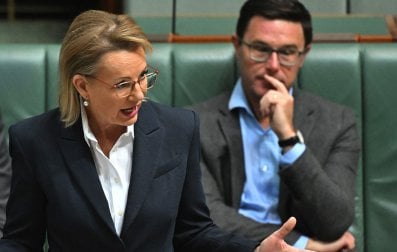
The Albanese government is committed to all of the recommendations. Implementation is being led by a cross-party Parliamentary Leadership Taskforce, headed by intelligence specialist Vivienne Thom and including Waters, Minister for Women Katy Gallagher, Deputy Opposition Leader Sussan Ley and independent MP Zali Steggall.
Gallagher tells The Saturday Paper, “There’s definitely been improvements, but we’ve got a way to go.”
This is a big set of reforms that is now getting down to the most difficult work. “The feedback I get is that people feel that it has changed, the behaviour in the building has changed, but there is still, because of the unique environment that we work in, in that building, we have to be vigilant,” she says.
The hold-ups are the two reforms where the behaviour of MPs and senators is affected: a new alcohol policy and the independent parliamentary standards commission, a body that would sanction individuals for serious code-of-conduct breaches.
“It is slowly moving towards better standards. We are gradually working our way through the recommendations,” Steggall says. “Whilst a member of the party might be very supportive of it, they’ve got to take it back to their party room, and then the broader party room has to be willing to embrace those changes.”
The reforms cross into areas of parliamentary privilege and how the various codes of conduct relate.
Gallagher insists there has been a “big change” in alcohol consumption across the building.
As for the broader reforms, she says, “I think there’s definitely a willingness to get it done, but there’s also some caution in making sure what we’re establishing has natural justice across the board for everybody.”
Reforms have also been rolled out by the Department of Parliamentary Services (DPS) – all intended to improve the safety of the 4000 to 5000 people who work at Parliament House on any given sitting day.
Supporting or interacting with the MPs and senators are security guards, horticulturists, cleaners, researchers, childcare workers, political staff, parliamentary office holders, broadcasters, transcribers, librarians, journalists, food servers, sports trainers, guides and art specialists.
Among the DPS initiatives: nursing rooms for new mothers, vending machines for urgent personal items, doctor and physio services added to the on-call nurse, law changes to make clear that parliamentarians are employers with responsibilities, respect training for MPs and an adjustment to sitting hours and weeks to make the building more family friendly.
The latter is adjusted by the government when it suits, says Steggall.
“It’s been a joke,” says the independent MP. “We’ve had, I think, a record number of legislation where the government has moved a special management order where they’ve extended the sitting till 10 o’clock at night.”
One female parliamentary staffer says, “There are more people popping their heads up to say, ‘Wait a minute, there’s a problem here’ or ‘This isn’t okay’ when speaking out about burnout or excessive workloads or those sorts of things, but then [there’s] the pushback and the fallout from that.
“People are still working in the early hours of the morning. They are just not doing it at Parliament House. Managers know this but seem to think it is okay,” the staffer says.
One reform delivered early in the process was the independent and confidential Parliamentary Workplace Support Service, set up in 2021, which is the place to privately go with grievances. It is busy and there are issues around its resourcing, but it has broad support.
By contrast, the parliamentary standards commission – another of the report’s recommendations – is seriously delayed and already controversial. Concerns range from it being toothless to possibly becoming a tool for revenge.
The commission is intended not just for politicians, but for all who work in the building as the definitive, complainant-focused way to investigate complaints and, where substantiated, to impose penalties – proposed to be 2-5 per cent of a parliamentarian’s base salary, removal from committees and potential termination for staffers.
Delays with the legislation have been compounded by leaks that appear to have come from frustrations with the taskforce’s slow progress.
The delays are a function of getting it right, says Gallagher. “We wouldn’t be going through all this to have no consequences,” she says. “There’s definitely going to be consequences and I think that’s why people are so invested in making sure we get the legislation right, because there’s a lot of risk as well.”
The new commission is expected to have the power to enforce confidentiality agreements, so some cases may never see the light of day, but it will have an overriding duty to make Parliament House a safe workplace.
Lidia Thorpe is not convinced. “Every politician is looking after themselves as far as I’m concerned,” she says.
As a latest example, there is disquiet in the building over the circulation of a crude 2014 social media post of Kooyong independent Monique Ryan, directly after she asked the prime minister an uncomfortable question in the chamber over political lobbying.
The Albanese government is confident the parliamentary standards commission will be in place by October, and the May 14 budget included a boost of $10 million over four years to help set it up. There’s agreement to start a recruitment process.
“I’m optimistic and hopeful because that’s how we got the PWSS up. I think people agree that’s the best process,” Gallagher says. “It will have real teeth.”
Part of the job of holding the process to account is gathering feedback. Until 2019 this was fulfilled by an annual DPS census of the public service, before moving to a smaller in-house survey. The results of the past two censuses taken were buried for four years and released in 2022 only after a freedom of information battle and with crucial sections on senior leadership redacted.
The Saturday Paper can reveal for the first time the full contents of the 2018 census. The redacted passages showed just 38 per cent of that year’s respondents believed the senior executive team of the DPS was “high quality” – a result 27 per cent lower than the overall Australian Public Service response. Asked if the research branch’s senior executive manager “effectively leads and manages change”, just 21 per cent of respondents agreed – a figure 36 percentage points below the overall result. And only 28 per cent of respondents agreed the senior executive manager “engages with staff on how to respond to future challenges” – a 32 per cent lower result than the 2018 result for the entire APS.
What was released in 2022 was damning enough. For the wider DPS cohort in 2019, while more than half of respondents declared senior executives high quality, 13 per cent said they had been discriminated against in the past year and almost one in five said they had been bullied or harassed in the workplace.
Only 18 per cent, in one DPS area, said they were satisfied with opportunities for career progression, and only 38 per cent of respondents felt DPS was moving in the “right direction”.
Insiders say the 2018 result came after several years of “demoralising” results and “nothing was done in response”. Staff said there had been a high staff turnover since 2018, working groups were set up and sputtered out.
“The more things change, the more they stay the same,” one staffer tells The Saturday Paper.
Another said they had been warned when attempting to make a complaint that “if you make a misconduct complaint, you can expect to be met with a response that is not that of a reasonable organisation”.
In a statement, a DPS spokesperson said staff were offered various mechanisms to report alleged bullying and harassment, including to supervisors and to the independent PWSS.
The department advised it also had 12 harassment contact officers and was seeking more.
“The department will continue to look for ways to ensure that it has a safe reporting culture and that it champions the Code of Conduct,” the DPS spokesperson said.
They said the release of the 2018 census with redactions was a decision of the freedom of information commissioner.
Some of the harsher critics of Parliament House reform see improvement but are waiting for consequences for MPs. Larissa Waters states “it feels better, it feels different” even though she is “sure that there are still creepers in many MPs’ offices”.
There is also an acknowledgement new rules and structures have had to be built from the ground up.
Kate Jenkins told The Saturday Paper there was reason, after all the commitment, funding and action, to expect “significant change” over the next five years.
“I have consistently received feedback that the changes implemented in Parliament House since 2021 have significantly improved the working conditions for those who work within the Commonwealth parliament,” she says.
“This does not mean that parliament is yet the best-practice workplace that it aspires to be, nor that staff work completely free from poor behaviours,” she says, adding she supports further assessments to measure the real progress.
“Of course there’s going to be resistance, particularly in more male-dominated parties,” says Larissa Waters. “But everyone has nominally committed to the Jenkins recommendations, and it would be a brave – read foolish – political party to walk away from that commitment.”
Setting the standard is, of course, about leading from the top. Until the standard is sorted, that leadership is not there for this country to follow.
This article was first published in the print edition of The Saturday Paper on May 25, 2024 as "Exclusive: Parliament House still unsafe in post-Jenkins world".
For almost a decade, The Saturday Paper has published Australia’s leading writers and thinkers. We have pursued stories that are ignored elsewhere, covering them with sensitivity and depth. We have done this on refugee policy, on government integrity, on robo-debt, on aged care, on climate change, on the pandemic.
All our journalism is fiercely independent. It relies on the support of readers. By subscribing to The Saturday Paper, you are ensuring that we can continue to produce essential, issue-defining coverage, to dig out stories that take time, to doggedly hold to account politicians and the political class.
There are very few titles that have the freedom and the space to produce journalism like this. In a country with a concentration of media ownership unlike anything else in the world, it is vitally important. Your subscription helps make it possible.
Subscriber exclusive
Send this article to a friend for free.
Share this subscriber exclusive article with a friend or family member using share credits.