News
As the Albanese government prepares for the possibility of a second term for Donald Trump, Scott Morrison is being considered as an informal envoy. By Jason Koutsoukis.
Exclusive: Morrison to serve Albanese as Trump envoy
Former prime minister Scott Morrison is positioning himself to serve the Albanese government as an informal envoy to Donald Trump if the American wins the White House in November.
With Australia’s current ambassador to Washington, Kevin Rudd, spearheading Canberra’s meticulous planning for a possible second Trump administration, Morrison has emerged as a useful line of communication to the notoriously mercurial former president and his inner circle.
Last month, a day after Morrison met with Trump in New York, Rudd launched Morrison’s book Plans For Your Good at the Australian embassy in Washington. A throng of Trump alumni including former vice-president Mike Pence, former secretary of state Mike Pompeo and long-time Trump counsellor Kellyanne Conway attended the event.
“The book launch was a very public demonstration by Rudd that he and Morrison have put aside their differences and that the two can work together in Australia’s interests,” an Australian government insider based in Washington told The Saturday Paper.
“The work that Rudd is doing now, leveraging every contact he has, including Scott, to build relationships with the people who will count in a second Trump administration, may well end up being his finest hour.”
Asked whether it was true Rudd and Morrison had forged an alliance of sorts that would see them working together in the national interest, a close Morrison associate said: “That is exactly right.”
Earlier this year Morrison joined Washington political advisory American Global Strategies as non-executive vice-chairman.
AGS is chaired by Robert C. O’Brien, a former Trump national security adviser who is a candidate for secretary of state in a second Trump administration. His lead essay in the current edition of the American journal Foreign Affairs, titled “The Return of Peace Through Strength”, makes the case for Trump’s foreign policy agenda.
Nick Warner, Australia’s first director-general of the Office of National Intelligence, joined AGS as a senior adviser in May.
A former secretary of defence and a former director-general of the Australian Secret Intelligence Service, Warner consulted to the Morrison government following his retirement from the public service in 2020. He has also provided paid strategic advice to the Albanese government.
Rudd’s decision to launch Morrison’s book in the US was also seen as a way of dispelling media chatter that he would be forced to return to Australia in the event of a Trump victory.
In March, Trump insulted Rudd during an interview on British television, conducted by Reform UK party leader Nigel Farage. “I hear he’s not the brightest bulb,” Trump said when told Rudd had branded him a destructive president and a traitor to the West. “He won’t be there long if that’s the case.”
Albanese government ministers have strongly rejected suggestions Rudd would be recalled, with Minister for Foreign Affairs Penny Wong declaring Rudd “a very effective ambassador” following Trump’s comments.
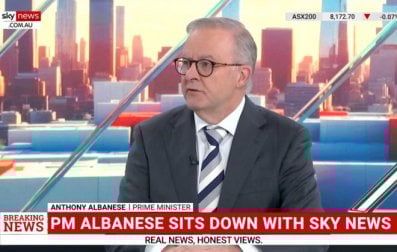
When asked last month whether Morrison could be a useful diplomatic tool in a second Trump presidency, Albanese said he would “leave diplomacy, funnily enough, to diplomatic endeavours”.
As opposition leader, Albanese was sharply critical of Morrison for being too close to Trump, accusing the then prime minister of inappropriately attending partisan events.
“Scott Morrison went too far – partly out of his affinity with Donald Trump, partly because of the political constituency they share,” Albanese said ahead of President Joe Biden’s inauguration.
“There is no doubt Mr Morrison put this affinity and his political interests first when he effectively went on a campaign rally stage with Donald Trump in Ohio.”
Albanese also rebuked Morrison for refusing to “disavow President Trump’s incitement of the storming of the Capitol” on January 6, 2021, as well as Trump’s attempts to overturn the 2020 election result.
Rudd’s predecessor as ambassador to Washington, Arthur Sinodinos, a former senior minister in Malcolm Turnbull’s government and now a partner at Washington-based consultancy The Asia Group, where he heads the firm’s Australia practice, says it would be highly unlikely Albanese would move to recall Rudd.
“In the first instance, what the Australian government would probably say to the Americans is that Kevin has the confidence of the Australian government to represent Australia’s interest in DC,” Sinodinos says. “You have to remember that in Washington you’re always dealing with very transactional people. So it’s not necessarily what happened in the past but what have you done for me lately?”
With the Albanese government focused on preparing for a second Trump administration, both inside the executive and across the bureaucracy, Sinodinos believes the two most important policy areas that would affect Australia in such an event would be trade and national security.
On trade, Sinodinos points to people such as former US trade representative Robert Lighthizer and Peter Navarro, who was director of Trump’s National Trade Council and will likely exert considerable influence in a second Trump administration.
“They’re all pretty hot to trot on doing more on the protectionist side, there’s no doubt about it,” Sinodinos says. “How that plays out, whether that leads to more of a trade war, depends on how allies and partners get treated in the process.”
Options for Trump would include linking trade with broader issues, such as security.
“At this stage, we don’t know whether Trump would look at these issues as a whole, or whether he would just focus on doing a big trade deal with China, shorn of any security or other issues,” Sinodinos says. “So that’s a major question mark.”
In terms of Trump’s broader national security agenda, Sinodinos believes Australia should start by taking Trump and his inner circle at their word in terms of what they say they are going to do.
“On Russia–Ukraine, it’s pretty clear Trump would want it settled sooner rather than later. He’s talked about doing it in one day, which is his way of saying that he will do it as quickly as he can,” Sinodinos says. “That suggests he wouldn’t necessarily want to do it at a time when Ukraine can negotiate from a position of strength. So would he be trying to impose some sort of solution between the two countries? And would that be a solution, on balance, that is favourable to Putin?”
Closer to home, on issues such as the Indo-Pacific and Taiwan, Sinodinos believes Trump would stand by existing US alliances, particularly its alliance with Australia. “I think the countries in this region are well placed, and I do think AUKUS will survive.”
With leading conservatives such as Elbridge Colby already on the record expressing a degree of ambivalence towards AUKUS – Colby served as deputy assistant secretary of defence in the first Trump administration and would be expected to take on a senior role if Trump wins in November – Sinodinos says one of the first things Albanese should do is restate plainly and clearly to an incoming Trump administration the strategic rationale for AUKUS, explaining “why it can work, why it can work for the Americans, and why it works for countering China”.
Wilson Beaver, a policy adviser at the conservative Heritage Foundation, which is leading a transition blueprint known as Project 2025 that it hopes will institutionalise Trumpism, tells The Saturday Paper the one thing Australians need to understand about American conservatives is they see Australia in a very different light to the way they see other countries, particularly members of the North Atlantic Treaty Organization.
“American conservatives have directed a lot of criticism towards NATO for failing to meet spending targets on defence, and for not really acting as equal partners in their alliance with the United States,” says Beaver.
The general sense among American conservatives, Beaver says, is this is not the case with Australia, which is now spending more than 2 per cent of gross domestic product on defence, a key benchmark set by Trump in his first term.
“I’m quite sure what members of the Trump administration – if there were a second one – would quite like is the fact that Australia is investing money in the American submarine industrial base as part of the AUKUS agreement,” Beaver says. “That would just be seen as a huge difference from the way people complain about certain members of NATO being net takers of American security and money. Australia is not that way at all.”
A glaring difference between a second Trump administration and the current Biden administration, argues Beaver, would be the expectation that Europe would have to take the lead in supplying military aid to Ukraine, thus freeing up American defence resources to focus on the Indo-Pacific in a way that has not been happening.
“We might finally see the pivot to the Indo-Pacific that we’ve been talking about for more than a decade now. It’s been written into American policy documents, we’ve been discussing it for the last three administrations,” Beaver says. “There is now a consensus among American conservatives that China is the primary challenge to the security of the United States, and that we therefore need to pivot resources, and also military assets to the Indo-Pacific.”
Contacted for comment on how Albanese should approach any future meeting with Trump, Malcolm Turnbull, who was prime minister when Trump won the 2016 US election, pointed to his recent essay published in Foreign Affairs.
“Men like Trump invite sycophancy,” Turnbull wrote. “They use their power and caprice to encourage others to tell them what they want to hear. But this is precisely the wrong way to deal with Trump, or any other bully. Whether in the Oval Office or on the playground, giving in to bullies encourages more bullying. The only way to win the respect of people such as Trump is to stand up to them.”
Turnbull wrote that the key to understanding Trump was that, unlike with other foreign leaders where the outcome of a meeting is highly scripted, in Trump’s White House he was the only decision-maker. Staff – and their advice – were often ignored.
“In my experience with Trump, this meant that ambassadors and foreign ministers, no matter how capable, could offer much less assistance or influence,” wrote Turnbull. “The key relationship lay between Trump and the foreign leader.”
On this issue, some senior Canberra insiders worry whether Albanese is capable of preparing himself mentally for dealing with Trump.
“The PM has to step up personally,” said one Canberra observer close to Australia’s defence and national security establishment. “If the strategic points in his head are the same as the talking points that he uses in public, then I think we have a problem.”
According to Sinodinos, the best thing Albanese can do is be himself.
“There’s no point trying to be anybody else. You’ve got to try and establish a personal connection and that’s best done by being authentic,” said Sinodinos. “But I do think he has to prosecute the case for why the Australia–US relationship remains current, why it’s important, and burnishing Australia’s credentials as a strong partner for the US in the Indo-Pacific.”
This article was first published in the print edition of The Saturday Paper on June 22, 2024 as "Exclusive: Morrison to serve Albanese as Trump envoy".
For almost a decade, The Saturday Paper has published Australia’s leading writers and thinkers. We have pursued stories that are ignored elsewhere, covering them with sensitivity and depth. We have done this on refugee policy, on government integrity, on robo-debt, on aged care, on climate change, on the pandemic.
All our journalism is fiercely independent. It relies on the support of readers. By subscribing to The Saturday Paper, you are ensuring that we can continue to produce essential, issue-defining coverage, to dig out stories that take time, to doggedly hold to account politicians and the political class.
There are very few titles that have the freedom and the space to produce journalism like this. In a country with a concentration of media ownership unlike anything else in the world, it is vitally important. Your subscription helps make it possible.
Subscriber exclusive
Send this article to a friend for free.
Share this subscriber exclusive article with a friend or family member using share credits.