Profile
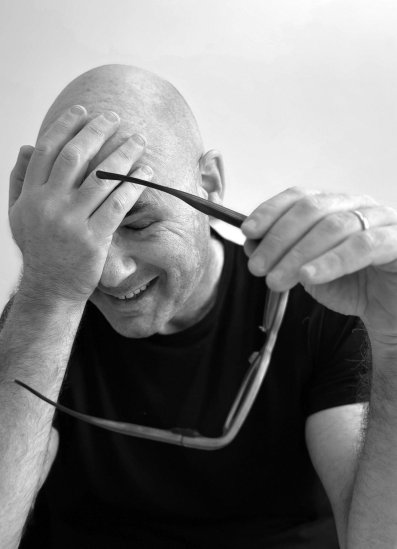
Prolific French choreographer Benjamin Millepied, who is bringing a new version of the dance trilogy Gems to the Brisbane Festival, says dance is the bedrock of his life. By Kate Holden.
Choreographer Benjamin Millepied is in perpetual motion
Benjamin Millepied is busy. “I had an outrageous month,” he pleads, when after two postponements The Saturday Paper finally captures him for an interview. “I have three major, major, major projects. I mean, I just finished with the opening ceremony with 60 dancers at a stadium sports event. It was just really nuts.” He eyes my glass of whisky appreciatively – it is 6pm in Sydney but only 10am in Paris – and laughs. “I’m not relaxing for a while.”
It’s understandable. The man is glamorous and reputable and in hot demand in his late 40s, tumbling through a panoply of visions and commitments, landing on his feet but perhaps a little distracted. In his fourth decade of professional dance, Millepied is in the enviable position of having the established status, the venues and the dance companies, the contacts, the contexts and the fortitude to make the art he wants to make. And, in keeping with this era of mosaic multimedia, that art might take any of a multitude of forms.
La Ville dansée – a yearly program in Paris blending “dance, music and civic debate” and held again in June – prominently featured his American dance company and his choreography, stimulated by the 1982 cult film Koyaanisqatsi and its soundtrack by Philip Glass. Now Millepied’s bringing Gems, his trilogy of works inspired by the jewellery of Van Cleef & Arpels and their 1967 commission of George Balanchine’s original, Jewels, to be performed in freshly revised versions at Brisbane Festival in September.
Of all the bustling activities, “my work as a choreographer is what is most important to me”, Millepied says. He is probably best known for his dance design for film in Darren Aronofsky’s Black Swan and Denis Villeneuve’s Dune, but also for a formidable body of choreographic work – 55 and counting – and he is a former star professional dancer who joined the New York City Ballet at 18 and became principal dancer there. He was the director of dance at the legendary Paris Opera Ballet for two years and still frequently moves between Paris and the United States, where he runs L.A. Dance Project, an energetic and progressive company of not just dancers but artists of varied disciplines, which he founded in 2011.
Millepied also makes films – his 2022 directorial feature debut, Carmen, starring Paul Mescal and Melissa Barrera, was shot in Australia a few years ago when Millepied was living in Sydney with his then wife Natalie Portman. He also has a filmography of short productions and music videos, such as the stunning Bach Studies with hip-hop dancer Aïdan Carberry performing in an empty house to Bach’s Prelude No. 1.
His productions, such as last year’s Romeo & Juliet Suite at Sydney Opera House, often morph canonical works into fresh forms, combining film footage, live streaming, muscular dance, opera lyrics, notable art design and an emphasis on music. “Last year was really a breakthrough. I don’t hear music, I don’t choreograph, the same way; I’m more rigorous, there’s a clarity that now I have. I always think of Rilke’s Letters to a Young Poet: if it’s a matter of life and death, I have to do this – and then the journey is really pretty fascinating.”
It’s been a journey with many landmarks so far. Millepied began his career with a close relationship with Jerome Robbins and has continued a pas de deux between the classical ballet and contemporary dance worlds since. He collaborates with top-tier artists, including choreography icon William Forsythe, visual artist Barbara Kruger, fashion designer Alessandro Sartori, composer David Lang. He won the Prix de Lausanne as a teenager. He is a Chevalier de l’Ordre des Arts et des Lettres in France. He’s reading philosophy and social criticism; an astute scholarship of art cinema and classical music ripples through his work, while he is also a devoted gardener. There are fancy social events and media appearances and paparazzi and collaborations with famous jewellery houses. He is a father. It’s a busy life, and life and art is his theme today – he’s writing an essay on it – and the way art must express and stage the personal evolution of an artist and the evolving personality of the world.
His dance work is never without philosophy. Conscience and empathy recur in our conversation. “We completely overlook social fabric,” he says. “The lack of empathy is our biggest trap as a society. Within a city, symbolic and social violence can exist and in completely different ways for completely different people. When you think of social inequality, people have no idea, no idea what other people’s experiences are. And today it’s even worse. Social media, technology – there’s full disconnection. Capitalism really isolates people; technology isolates people and makes them even more individualistic. I’ve met so many people who have political views in place of empathy.” Living in America he was outraged by fakeness and complacence. But “that’s why I like Australia, by the way,” he says, adding he may yet come to live here. “I feel there’s a level of harmony, of safety. You do have an experience of life in nature and community that is not something you find elsewhere.”
France is a conformist society, he observes, and though society teaches its subject to obey, art is one way to maintain defiance. Millepied has established education programs to bring dance to children, to support “what they have, which is an organic relation to movement, and to have this connection to your body, to respect your body, to have other people respect your body; a reappropriation of the body.” All his life, since his childhood in Senegal within a culture where movement and music are utterly planted as part of natural life, dance has been his place to experiment and strive. For all the engagement with critical practice, “I don’t go in, trying to express things in any literal way. I keep a very instinctual, emotional response to my work. I can only make things happen if they’re ideas, emotional ideas that are so powerful they have to happen. If I were like, ‘oh I’m doing this for these reasons’, it would be impossible to do them.”
Some artists, he says, have an emotional process grounded in their personal lives. Others are more rigorous but have nothing to say. Some artists, he says cheerfully, are quite lazy. “I prefer the ones that are emotional. I’ve made 50 ballets, and I’m 48, and I feel like I’m in the most complete period of my life.” Last year his ballerina mother died; last year his divorce with Portman was finalised. It’s a moment, poised en pointe, to consider everything. “I’m going back to look at some pieces I haven’t seen in a long time and starting to bring them back.”
Dance is, of course, a phenomenon of bodies and souls. “So the more connected to yourself you are, or connected to the people in front of you, the more you are going to tell stories. And the emotional journey, the growth as a person continues to allow you to dive deeper.”
The first iteration of La Ville dansée explored lesser-noticed experiences of Paris: “What are people’s experiences in the city, in places?” He considers the experience someone from Haiti might have in Paris.
“The Eiffel Tower was financed through a very corrupt and horrible story linked with slavery in Haiti: the financial system that completely ruined Haiti to this day. You can’t disconnect these things. Of course, people don’t know the story, but the story is very dark, and you have this monument of France that is to the glory of France. You have museums that are filled with work that was looted from all these different countries and contributes to the idea of the glory of France.
“And then you have whole generations of African kids who didn’t grow up with their stories and their narratives and their gods and their statues. They grew up with Walt Disney! All this kind of thing is really interesting, when you think about making art and we talk about what stories we tell. It’s about the sensibility and interest and the work of what it is to have real empathy.”
His Romeo and Juliet Suite drew comment for its jettisoning of cishet assumptions – Millepied explains he simply faced the assembly of his dancers and reflected their variety. For a new work, a portrait of French chanteuse Barbara, he’s considering the primacy of the female perspective, weighting the cast to endow this, and working with a woman in her 70s. With age, he feels, is coming perspective and a corrective humility. Some of the work at Paris Opera, he admits, he was too young to make well. He feels the same about his relationship with Bach. “I revisit Bach all the time. The breakthrough with Bach was really last year when I was in Australia, listening to the Goldberg Variations all the time. There’s a spiritual quality that is above and beyond. There’s no point in choreographing the Goldberg Variations if you can’t, as a dancer, touch on that. I’d like to do it someday, but” – though you can watch him having a brief personal try on YouTube in a short piece called “Details” – “it’s not time yet.”
For now, he’s occupied, not least with the new edition of Gems and its evocation of the energy of, respectively, diamonds, rubies and emeralds. The performances in Brisbane are a result of his reconsideration. With the original works, variously dating back more than 10 years, “I did things that I didn’t understand then as well as I understand them now. But it’s three pieces that I love with collaborators that I love. The most profound music, perhaps, is ‘On the Other Side’, the last piece in the program, which I’m reworking for the occasion. Like Bach, it touches on the beauty and tragedy of humanity in a way that’s really unique. I think [Philip] Glass really can do that.”
Millepied’s great hero is Mikhail Baryshnikov, the Latvian–American icon of ballet and choreography whose career exemplifies the questing, princely and superlative daring of a great artist. Seeing him as a child, Millepied loved Baryshnikov for his graceful masculinity; “a man who danced”. Gene Kelly and Fred Astaire were other early models. But Baryshnikov’s coherence married athleticism and grace in a way that, Millepied knows, absolutely inspired his entire life in dance. “It’s so easy to look behind,” he says. “He’s always looked ahead. He’s always got the curiosity: this constant interrogation of himself, of his art, and his generosity of providing for others. That’s a very, very powerful thing.” Millepied knows him well now; he will be presenting work and making a speech for the 20th anniversary of Baryshnikov’s arts hub.
“Baryshnikov touched me and I became a dancer; in an audience of thousands there might be one person [to whom] you make a difference. So, we talk about measures of impact – well, of course there’s impact. It’s not a movie theatre, people don’t reach for their phones so easily; it’s a poem, it’s a poem to collective experience. It’s powerful. It’s meaningful. Theatre, live arts, are very, very important places. I believe in dance as a place to expose the beauty of our differences, the singularity of each human being and, in the end, my role is just to continue to do what I’m doing.”
How art saves you, he muses: “For me, dance is my most important rock. Obviously my mother, who unfortunately passed last year, was; my children, my children... but I would say dance has been my most important rock, in terms of what keeps you, gives you resilience, what keeps you on track in a positive way. I think in my childhood, a childhood that was chaotic, music and dance preserved me, and then through the rest of my life it kept me. It’s really a marvellous journey: life and craft.”
He returns at the end of the conversation to the Goldberg Variations and what Bach’s art does to him. “Really it’s the story of the world. It’s both the beauty and the tragedy. There’s something in the piece, to me, when I hear it, a moment where it’s also, like, the dignity and the celebration of how beautiful it all is.”
This article was first published in the print edition of The Saturday Paper on August 16, 2025 as "Perpetual motion".
For almost a decade, The Saturday Paper has published Australia’s leading writers and thinkers. We have pursued stories that are ignored elsewhere, covering them with sensitivity and depth. We have done this on refugee policy, on government integrity, on robo-debt, on aged care, on climate change, on the pandemic.
All our journalism is fiercely independent. It relies on the support of readers. By subscribing to The Saturday Paper, you are ensuring that we can continue to produce essential, issue-defining coverage, to dig out stories that take time, to doggedly hold to account politicians and the political class.
There are very few titles that have the freedom and the space to produce journalism like this. In a country with a concentration of media ownership unlike anything else in the world, it is vitally important. Your subscription helps make it possible.
Subscriber exclusive
Send this article to a friend for free.
Share this subscriber exclusive article with a friend or family member using share credits.