Film
Todd Phillips’ Joker: Folie à Deux is a star-crossed and strangely saggy affair, soaked in faux gravitas. By Keva York.
Todd Phillips’ Joker: Folie à Deux a mediocre look into mania
A year after Taxi Driver (1976), Martin Scorsese returned with New York, New York, a film that also stars Robert De Niro and takes place largely in the titular city, it has remained somewhat overlooked. Perhaps the disappointing reception, initially at least, had something to do with its harnessing of a different cinematic idiom than the director’s scuzzy, Palme d’Or-winning neo-noir: New York, New York is a 1940s-set musical melodrama, pairing De Niro with Liza Minnelli as partners in jazz and love. But it’s a rare and dazzling achievement – and offers a canny iteration of the hotheaded Scorsese–De Niro archetype.
Joker: Folie à Deux wanted to be Todd Phillips’ New York, New York. Announced in 2022 as a musical that would bring Joaquin Phoenix, returning in the title role, together with Lady Gaga, as his paramour, it promised to extend and complicate the Scorsese-cribbing depiction of cracked masculinity mounted in Joker (2019), via the kind big, bold swing only afforded a director coming off the back of a billion-dollar hit.
As per the one-two punch that was Taxi Driver and New York, New York, there was something appealingly transgressive about the idea of Phoenix’s psycho-realist Batman villain being loosed upon the musical – which for nigh on 60 years has been regarded by the mainstream as the height of fuddy-duddy artificiality. This seemed a similarly daring but frankly less boneheaded idea than Phillips’ initial gambit of crossbreeding Scorsese’s New York with Gotham.
Alas, Folie à Deux is a star-crossed and strangely saggy affair, soaked in faux gravitas. It proceeds in fits and starts as a series of unfinished thoughts, or maybe jokes – as with the diary scribblings of Arthur Fleck, the civilian name of Phoenix’s sad, bad clown, it’s hard to tell. The musical numbers, framed as Arthur’s fantasies, do offer animating jolts of panache – there’s Joker and his Harley leaning all the way into a sweet-and-sour Sonny and Cher routine and careening through fire and rain to “For Once in My Life” – but whatever exhilaration they provide is hollow, rapidly dispelled by the thin, plodding drama that encases them.
Split between the penitentiary and the courtroom, the film picks up two years into Arthur’s incarceration at Arkham Asylum, awaiting trial for the headline-grabbing murder spree of Joker. His meds regimen has sapped him of the comedic impulse that had long fuelled his stand-up dreams, while his time behind bars shows all too clearly on what was already a painfully bony frame. Phoenix, compelled to intensify the bodily grotesquerie of the previous film, looks almost reptilian in the grimy green light of the institution.
Arthur gets his creepy groove back, at least temporarily, when he locks eyes with Gaga’s Lee Quinzel, a wily fellow inmate positioned as the proto-Harley Quinn. After she sets a diversionary fire at Arkham simply in order to flirt with him, Arthur asks, with a shimmer of hope, “Are you crazy?” But the budding couple don’t get much screen time together, at least not outside Arthur’s imagination, and their sex scene is uncomfortable enough to make me wish they had even less.
Gaga’s star turn in Bradley Cooper’s A Star Is Born (2018) proved her a compelling screen presence and scene partner, but Phillips ends up giving her little more to do than play the Squeaky Fromme to Phoenix’s Charles Manson act in the courtroom drama that takes up the movie’s second half. When Arthur determines to represent himself in full Joker-face during his televised trial, it seems fantasy and reality are at last about to merge – the court jester has arrived! – but he only puts on a lawyerly Southern gentleman accent, a poor cover for the dullness of the proceedings.
In New York, New York, what initially seems to be the story of another of De Niro’s intermittently charming menaces becomes a tribute to the 1954 version of A Star Is Born, which starred Judy Garland, Minnelli’s mother. The struggles of Minnelli’s character to escape their abusive relationship culminate in an extended old-Hollywood-style musical sequence from which De Niro is entirely absent. It’s almost a bait and switch, and can be read as a riposte to those who felt that Taxi Driver promoted too much empathy for Travis Bickle. Folie à Deux, conversely, clings to its antihero, even as he seems to be running out of juice in real time.
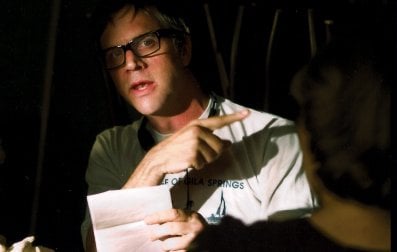
Like Scorsese, Phillips has long specialised in plumbing the dark, volatile depths of masculinity. The debauched Vegas bucks night of The Hangover (2009), his big-time breakout, made for a buddy comedy distinguished by an attunement to the callousness and insecurities of the main characters. Frat House (1998, co-directed with Andrew Gurland) investigated fraternity hazing – and won the top documentary prize at Sundance, though it was never released due to allegations that certain scenes had been staged (it’s available in bootleg form). Real or staged, it yields imagery shocking in its presentiment of what was to come out of Abu Ghraib.
Joker, for all his id-fuelled antics – though to be clear, Folie à Deux is light on those, it’s virtually incel-proof – is different. In both Frat House and The Hangover, deviance functions as the privilege of any self-respecting, red-blooded young man – you gotta act out to fit in. Joker is a product of socioeconomic impotence: his greasepainted act expresses and certifies his outsider status, rather than ritualising any powers vested in him by the patriarchy.
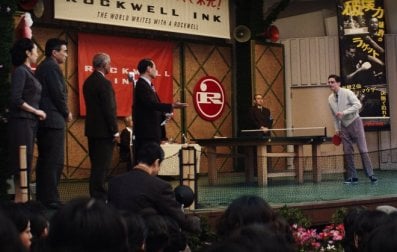
If this shift across Phillips’ body of work might be read as connoting masculinity brought to the point of crisis, it mustn’t be overlooked that Arthur Fleck hearkens back to the subject of his first film, Hated: GG Allin and the Murder Junkies (1993). Like Arthur, GG Allin made a violent art of his outsider status: at the shock-rocker’s infamous live shows, a pungent mess of piss, faeces, blood and beer, the music was more or less a pretext for his purgative, unhygienic acts of self-abasement. While his performances recall Viennese Actionism, they were the product of mental illness and drug addiction, fuelled by the poverty and florid abuse he’d suffered as a child.
Hardly any time is devoted to the grim details of Allin’s early life in Phillips’ crude documentary portrait, made while the director was still a student at New York University. Hated prefers to revel in the geek show. The Joker films, by contrast, present themselves as an “origin story” – and so a character whose outlandish villainy was once explained by a tumble into a vat of acid now must be given psychologically grounded motivations.
What Phillips (and co-writers Scott Silver and Bob Kane) found behind the painted grin was a mentally ill, deeply traumatised man – what else? – and that’s no laughing matter. No wonder this Joker’s having an existential crisis. Phillips, for his part, seems to be performing a kind of penance for having mined the poor fellow’s plight for entertainment – in effect by chastising the viewer, Michael Haneke-style, for doing the same. If New York, New York is a riposte, then Folie à Deux is a vexing volte-face.
Joker: Folie à Deux is screening in cinemas nationally.
For almost a decade, The Saturday Paper has published Australia’s leading writers and thinkers. We have pursued stories that are ignored elsewhere, covering them with sensitivity and depth. We have done this on refugee policy, on government integrity, on robo-debt, on aged care, on climate change, on the pandemic.
All our journalism is fiercely independent. It relies on the support of readers. By subscribing to The Saturday Paper, you are ensuring that we can continue to produce essential, issue-defining coverage, to dig out stories that take time, to doggedly hold to account politicians and the political class.
There are very few titles that have the freedom and the space to produce journalism like this. In a country with a concentration of media ownership unlike anything else in the world, it is vitally important. Your subscription helps make it possible.
Subscriber exclusive
Send this article to a friend for free.
Share this subscriber exclusive article with a friend or family member using share credits.